Posts Tagged ‘Afghanistan’

Country-to-country cash and corruption: Differentiating CIA payments from poverty-reducing aid

May 3rd, 2013 | by

Tariq Sayed Ahmad is a Researcher with the Aid Effectiveness Team at Oxfam America.

The New York Times this week published an incriminating article about the CIA giving “wads of American dollars” directly to Afghan President Karzai to win influence over the palace and his network of leaders in Afghanistan. The article argues these funds have fueled corruption over the course of a decade, potentially undermining the prospects for development in a country long plagued with violence and conflict.

Photo: Creative Commons via Flickr

Photo: Creative Commons via Flickr

It’s unfortunate that corruption occurs in Afghanistan, where it is widely accepted as one of the major constraints to economic growth in a country plagued with violence and stuck in vicious cycles of poverty. According to Transparency International, Afghanistan ranks only above Somalia in their corruption perception index. And it’s more unfortunate that US policy is implicated in these corrupt practices.

This type of grand corruption is precisely the kind of thing that makes US policy makers’ skeptical of providing US foreign assistance directly to country governments. And rightly so. When a political corruption scandal such as this breaks, all government-to-government programs are implicated, including the type USAID is pursuing.

Of course not all government-to-government funds transfers are alike.

Helping domestic institutions deliver services to their citizens is one of the primary objectives of USAID’s new reform efforts. Through USAID’s local solutions efforts, the agency isn’t simply throwing money at corrupt regimes, rather, they are using a new range of analytical tools to intelligently invest in government systems. Oxfam’s inquiry last year found that USAID is investing in analytical tools such as the Public Financial Management Risk Assessment Framework (PFMRAF) and the Fixed Amount Reimbursement Agreement (FARA) to test and strengthen capacities of government institutions. Giving US officials new impetus and tools to appropriately manage the risks involved in using country systems maximizes the US’s ability to help strengthen partner governments’ institutions so that they can provide for their citizens accountably.

When the CIA provided money to Karzai, little, if any, of those funds were used to help the Afghan people hold their institutions in check. Yet when USAID helped build the capacity of the Afghan Ministry of Health, infant mortality decreased by 57%, child mortality by 62%, and maternal mortality dropped by 22% since 2002.

Oxfam recently conducted interviews in seven countries and found that policy reforms, like those that help the US more closely partner with accountable government institutions, are being well-received. 83% of people Oxfam surveyed said the US is becoming a better donor than they were 4-5 years ago. In addition, Oxfam uncovered a number of cases when using government systems resulted in some early indications of strengthened and more accountable institutions.

  • In Peru, for example, mayors are better able to deliver the types of services their citizens have demanded.
  • In Bangladesh, the US helped strengthen the financial system in the Ministry of Agriculture. Now the Ministry is able to leverage more resources from other donors.

At the same time, USAID, admittedly, still has a lot to learn and is still facing a number of challenges when it comes to building country systems appropriately. They are continuing to build their own expertise. This is precisely the premise behind USAID forums on country systems strengthening and utilizing ongoing research on institution building.

While USAID still has a long way to go to make sure citizens and their governments are at the helm of their own development, they are making progress. Unfortunately, the only way this progress will be protected and maintained is if members of the US congress are able to distinguish between types of foreign assistance. As with Karzai, we see that politically-motivated “wads of cash” within government-to-government partnerships actually fuel corruption and a lack of accountability.

But the US government is also capable of government-to-government partnerships that promote accountability, strengthen systems, and ultimately lead to promising developmental outcomes—a much more worthy investment of taxpayer dollars.

The Growing Battle between Mining and Agriculture

April 17th, 2013 | by

By Keith Slack, Global Program Manager, Extractive IndustriesThis post originally appeared on the blog of the US Institute of Peace’s International Network for Economics and Conflict.

“Si a la vida, no a la mina” (Yes to life, no to the mine) is a rallying cry heard across many parts of rural Latin America these days. Mining, as well as oil and gas extraction, has exploded across the region in the last decade, driven by high prices for gold and industrial metals like copper that are needed primarily to feed the Chinese economy. This boom has also been experienced in Africa and Asia, where governments have sought to exploit their resource endowments to drive development. Fragile states like SudanBurma and Afghanistan have also begun to develop their mining sectors. The expanding mining sector has contributed to strong economic growth in some countries but has also generated social conflicts in rural areas that must be urgently addressed.

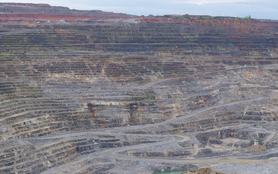
Area near Tintaya Copper Mine (Espinar), Cusco, Peru. Photo: Chris Hufstader / Oxfam America

The heart of the issue is that mining activity has come into direct competition with another predominant means of economic development in rural areas: small-scale agriculture. Tensions over control of land and, most importantly, water have led to community protests and violent conflict. Reconciling these two important development drivers has become a critical governance issue, particularly in the most fragile states where the conflicts between the two can often be seen most starkly.

In theory, both mining and agriculture can provide pathways out of poverty. The World Bank and development-focused academic researchers have emphasized the critical role of agriculture in promoting rural development. (Three-quarters of the world’s poor live in rural areas.) Agriculture provides direct benefits to those who engage in it. Farmers receive payments for crops they produce, which they can then use to invest in future production and to pay for their families’ basic needs. Mining can also play a role in promoting development, although more indirectly, by generating revenues for governments. Governments can use taxes and royalties paid by mining companies for infrastructure investments and other productive purposes. Mining companies also pay for community development programs, build schools and roads, and make other investments.

Unfortunately, the compatibility of these two development paths, which tend to take place in the same rural areas, is at best questionable. Mining generates significant “externalities,” e.g. water pollution, that can have a direct impact on agricultural production. These negative impacts can be permanent and render previously fertile agricultural land unusable. Mining also requires large amounts of land that could otherwise be used for agricultural production. This sets up a direct competition with small-scale agriculture for control and use of land. In some countries such as Ghana, farmers displaced by mining projects turn to small-scale mining as a replacement livelihood. This can perpetuate a cycle of poverty and conflict in which these farmers-turned-miners are forcibly evicted and beaten by police for coming onto land claimed by large-scale mining projects.

Mining companies argue that mining and agriculture are not necessarily incompatible. But there are few examples of where this has been the case, particularly in developing countries, where oversight of the mining industry is often very weak. Finding ways to reconcile these two economic activities is urgently needed to reduce conflicts and ensure that mining’s benefits contribute to long-term sustainable development in rural economies.

Communities relocated to make way for gold mines in Ghana struggle with loss of agricultural land, unemployment, and environmental damage. Photo: Neil Brander / Oxfam America

Governments and companies should take specific steps now to address this situation. First, the environmental impact assessment process for mining projects needs to be significantly strengthened and made more independent. At present, governments rely on information provided by companies, which is most often not reviewed by an independent third-party. Companies thus have an incentive to downplay potential impacts of their operations on land and water in agricultural areas. In countries such as Peru, local agricultural communities’ lack of confidence in these environmental reviews contributes to anxieties about the impacts of mining, which in turn contributes to conflict. Additionally, mining is increasingly done in “clusters,” meaning several mines operate in the same geographic area in order to take advantage of shared infrastructure and processing facilities. The cumulative impacts on land and water of several mines operating in the same area have not been thoroughly examined. The use of what are known as “strategic” environmental impact assessments, which take into account these cumulative impacts, would be an important step to increasing communities’ confidence.

Improved planning on how land will be used is another crucial step that governments should take. Mining concessions are often awarded without consideration for impacts on agricultural production. Later this year Oxfam America will publish research that shows graphically how mining and oil concessions have expanded dramatically in recent years in agriculturally productive areas of Peru and Ghana. Zoning land for particular uses, e.g. mining or agriculture, would help reduce conflict by establishing clear rules for how land will be used. Greater dialogue between the mining and agricultural sectors would be helpful. In Peru recently, the mining and agriculture ministries have signed a cooperation agreement. This is potentially a positive, although overdue, step.

Reconciling mining with agriculture in developing countries, particularly in the most fragile states, won’t be easy. It may ultimately require the admission that the two simply are incompatible over the long-term in particular areas. What is clear is that these discussions are urgently needed now so that conflict and violence produced by the juxtaposition of these two sectors diminishes and that countries can benefit from both their above-and below-the-ground resources.

Climate Conversations: From Darkening to Enlightenment

February 20th, 2013 | by

Paul O’Brien is the Vice President for Policy and Campaigns at Oxfam America.

On a Friday afternoon in 2004, I was sitting on a Hill looking out over downtown Kabul.  The city was blanketed in smog with mountains rising in the backdrop.

Smog over Kabul. Photo courtesy of the Geo-Images Project http://bit.ly/VKijKQ

“Beautiful,” my Afghan friend said.

“Except for the smog,” I said.  “Our daughters are down there breathing that air.”

“The smog is beautiful too,” he said, “and they will survive. Three years ago, there were no cars in Kabul.  Today, we have your problem—too many cars.  It’s a better problem to have.”

Climate change activism has a challenge.  How do we tell a new story that works globally in our multi-polar, hungry world?

I just spent a few days thinking about this very question at a Climate Gathering in Ireland.  While the discussion critically lacked southern voices, it was a still a useful gathering of North American and European thinkers, activists, and artists trying to find new ways to mobilize a new conversation on climate.

I was unnerved when the meeting started by showing us the “darkening” room, or the place we were to go to voice frustrations.  It was well populated in the beginning sessions.  Early on I sensed that our perpetual brinkmanship may be politically bankrupt in the North.  The drumbeats of “failed consciousness” and “impending catastrophe” have become white noise for too many people.  We convince ourselves that words like “warming” and “change” will terrify millions, when we know in our hearts that our Southern allies want change more than anything.  We need a new story that comes not from failure, but the possibility of victory, not stasis but movement.

We played around with this notion; we are in a new age of enlightenment.  Once again in human history, our thinkers, activists, artists and benefactors—those guiding our private conversations—are outpacing our politicians and public conversations.  Art, technology, economics, and science are transforming not just what we can have, but what we want, or what “the good life” means.  For the first time ever, “global consciousness”—a key to solving uniquely global problems—is possible.

It’s a matter of time before politicians seek to line up incentives so that our planet wins from our innovation and endeavor.  Regulation will become our friend, and time is not our enemy.  What was unthinkable in the United States 10 years ago—a President mocking climate deniers, a global social media discussion on this issue, and locally-grown organic food in most communities, the simple life commercialized—is already happening.  Changing weather patterns don’t just insist on our attention, they are getting it and we are acting.

Of course, none of this is happening quickly enough or deeply enough for millions of people facing true crises today of hunger, forced migration, and loss of livelihoods.  Their stories can and must be told everywhere.  But if modern movement building requires more agency from Southern and Northern activists, we need more ways to mobilize people than the hope of individual outrage at our collective failure.

If climate change activism needs to become more ecumenical to be popular, it may need a more promiscuous sensibility.  It cannot always be so needy and judgmental.  Of course we must harness human “compassion,” but let’s not forget “force” and “laughter.”  Why not embrace “competition” as well as “collaboration”? How about “playfulness” as well as “responsibility”?  More people want to engage, but they don’t all want to weave every strand of their life together to do something good.  Many would engage in mindless random acts of political power if they knew something useful would happen as a consequence.  They may be responsible for the problem and may need to take responsibility, but they don’t want to be reminded of it all the time.

As we searched for an enlightenment story that cut across all our disciplines, the most resilient one was “home.”  I liked it. It works locally (the hearth), nationally (homeland) and globally (planet).  It evokes responsibility and protection.  It brings forth a different kind of voice and tone in the conversation.

Smog over Kabul. Photo courtesy Building Markets blog http://bit.ly/omDieg

When we talked of home, those who liked the big stage (most often men) shut up, while quieter voices (often women) spoke up and out.

I worry though that a story of home won’t bring in different voices, so much as convince the converted to stay the course. And that’s not enough.  Climate change needs stories of adventure and victory too—all sorts of heroes.

I was able to bring my daughter home from Kabul.  My friend and his daughter still live in a kerosene-heated home, darkening with dirty diesel every day.  They want life to keep changing more, not less.  Our enlightenment, our story of home, has to work for us both.

Aid to Afghanistan: A race for results means a failure for Afghans

June 13th, 2011 | by

Today’s guest blog is written by Shannon Scribner, Humanitarian Policy Manager

Last week, the Senate Foreign Relations Committee released a report on aid to Afghanistan. One major finding of the report was no surprise – nation-building programs in Afghanistan are not all sustainable. As the handover of security responsibility to the Afghan government approaches, there is even more political pressure on the United States and all donor countries to produce results on the ground. This focus on “quick impact” has led to a majority of aid being channeled through military actors to “win hearts and minds”, while civilian-led efforts to address the underlying causes of poverty and repair the destruction caused by 30 years of war have been sidelined.

Too many development programs are based on this notion that aid can be used to win the hearts and minds of the people. But this approach is at odds with accepted principles of sustainable development: aid should be based on need and implemented by aid professionals alongside the community. Instead, it is based on the assumption that by giving Afghans roads, bridges and cash, including paying off local leaders, they will denounce the Taliban and other armed groups and embrace a government and international forces that have not been able to protect them and in some cases have done them harm.

This gender equity, education, and food security project was funded by Oxfam America and implemented by an Oxfam partner (DACAR) in Shamali (north Kabul).  Photo by Mohammed Salim/Oxfam

This gender equity, education, and food security project was funded by Oxfam America and implemented by an Oxfam partner (DACAR) in Shamali (north Kabul). Photo by Mohammed Salim/Oxfam

I’ll never forget what an Oxfam staff member, who had been living in Afghanistan for several years, said to me about the role of the military: “Afghans get that international forces are there to go after the Taliban but they don’t understand why military forces involve themselves in community development projects and affairs. They don’t understand it, so they don’t trust it.” Without trust, you don’t have the commitment needed for sustainable reconstruction projects.

The Obama administration’s decision to focus development efforts in the war zones in the south and east of the country where they are trying to win hearts and minds has never made sense for successful development. To pump billions of dollars into areas where intense fighting is taking place and then expect projects to succeed goes against logic. Where fighting is the most intense, projects need to be smaller, cost less, take more time, and require community involvement at every step. The focus on the south and east also means that more secure parts of the country where conditions are more conducive to sustainable development projects receive less aid – a situation which, understandably, angers many Afghans. For example, in central Afghanistan, Daikundi is one of the poorest provinces in the country, but often is overlooked. Less than one percent of schools have buildings and there are no paved roads.

To further hinder the sustainability of programs in insecure areas, even when military forces aren’t directly involved, they rely on local contracting companies with limited capacities and weak links to the communities. They are widely viewed as wasteful, ineffective, and even corrupt. As one tribal leader in Paktia said to Oxfam staff, “We have a common saying – it is better to have less from a sustainable source than have a great deal just once…we really do not need somebody to distribute biscuits to us and do not need construction projects that fall down after a year.”

The real success stories in Afghanistan are the Back to School campaign that increased school enrollment of children from 900,000 under the Taliban to 6.7 million today. In particular, there are now 2.4 million girls in school – when in 2001 there were just a few thousand. Healthcare too has improved for many Afghans thanks to the Basic Package of Health Services managed by the Ministry of Public Health that ensures basic community-level health services are available and integrated into a national structure of healthcare provision. The focus here wasn’t to win over the people but to educate Afghan children and improve people’s health. Much progress has been made, but we still have a long way to go.

Looking at these failures and successes as well as the results of the Senate report, it is clear that the $3.2 billion the Obama administration has requested for Afghanistan reconstruction projects in the coming fiscal year should address alleviating poverty and improving education and healthcare. In a country where life expectancy is only 45 years of age, development needs are immense. Therefore, let’s not focus our efforts on quick results, but where we know we will have impact and where we know there is real need. For Afghans, success has nothing to do with winning their hearts and minds. Success means that they are able to feed their families, send their daughters to school, take their child to the health clinic when they are sick, and secure a future for their families.

It’s not too late for the rule of law in Afghanistan

May 10th, 2011 | by

This morning the Senate Foreign Relations Committee will hold a hearing on the steps needed for a successful transition out of Afghanistan in 2014. I hope this hearing does not fall into the trap of focusing narrowly on the impact of the death of Osama bin Laden on US efforts in Afghanistan. Questions of whether the armed groups will be more likely to negotiate now are important. Yet, since the Senate has close to no influence over the political calculations of the Taliban, I suggest Senators focus on areas where they can have impact. The top of my list would be to look at the capacity of the Afghan Government to provide protection and the rule of law to its people.

In January 2006 more than 50 nations gathered in London to discuss the rebuilding of Afghanistan. In the conference’s outcome document, participating nations affirmed their commitment to creating a ‘stable and prosperous Afghanistan, with good governance and human rights protection for all under the rule of law’. To that end, participants agreed that by the end of 2010, there should be a ‘nationally respected, professional, ethnically balanced Afghan National Army’ and a ‘professional, functional and ethnically balanced Afghan National Police’.

An Afghan soldier on patrol on the streets of Balkh province.  Photo by Gulbuddin Elham/Oxfam

An Afghan soldier on patrol on the streets of Balkh province. Photo by Gulbuddin Elham/Oxfam

Read the rest of this entry »

RSS Feed