Posts Tagged ‘women’

Mothers: A great return on investment

May 10th, 2013 | by

As a mother of two, I now know that all my years of schooling did not prepare me nearly as well for working life as being a mother. As all mothers know, mothers are the ultimate project managers and multi-taskers, juggling many tasks at once, carrying out strategies but always being nimble to change course on a dime in the face of a temper tantrum, dirty diaper, or sick child. But for mothers in the developing world there are even bigger and more dire challenges, like where the next meal will come from, how to get medicine for a sick child, or finding potable drinking water. And yet, mothers in the developing world learn to cope with these challenges daily. That’s why so many are now realizing that investing in women is the key to feeding the planet and to economic growth.

According to a recent Gates Foundation report, “When women don’t control resources and income, their households may suffer from malnutrition. Men are less likely than women to reinvest their income in the health of the family.”  In a report by the Food and Agriculture Organization of the UN, women are deemed to be the key to food security indicating that “if women had equal access to agricultural resources and services, food security would be greatly improved and societies would grow richer, and not only in economic terms.”

But it isn’t just NGO’s and UN bodies claiming a good return on investment when providing resources and opportunities to women, Goldman Sachs, the large investment firm also conducted research with the World Bank and concluded that “investments in women—particularly in education and labor force participation—lead to read GDP growth, as women take their earnings and invest them back in their families and communities.” And just last week the billionaire and investment guru, Warren Buffett also expressed his bullish take on women in an essay published in Fortune magazine where he declares his optimism for America’s future lies with American women, untapped resource!

So to all those mothers and multi-taskers, here is a list of 10 (thought there are undoubtedly more) tasks that women in the developing world take on each day:

1. Child rearing

Child Rearing


This mother and child fled their villages and had just arrived at the El Salaam camp in North Darfur. Photo: Eva-Lotta Jansson / Oxfam America


2. Cooking

Cooking


Cooking “arroz chaufa” (stir fried rice) in the communal pot, village of San Jacinto, Peru. Photo: Evan Abramson /Oxfam America


3. Growing commodity crops for sale

Crops


Etchi Avla on her cocoa farm in Botende, Ivory Coast. Photo: Peter DiCampo / Oxfam America


4. Selling at the market 

Market


Since she received an Oxfam cash grant, this market vendor in Darfur is able to support her children, brothers and sisters. Photo: Elizabeth Stevens/Oxfam America


5. Fetching water

Fetching Water


Jainaba Bojang carries a tub of water home from a bore hole and water pump in the village of Oupat, Gambia. Photo: Rebecca Blackwell:Oxfam America


6. Chopping and gathering firewood

Firewood


Howa Abdullha comes back to Kebkabiye, North Darfur, carrying firewood she has gathered outside town. Photo: Eva-Lotta Jansson / Oxfam America


7. Laundry

Laundry


Hencia Josena does laundry at work in a Haitian hospital. Photo: Liz Lucas/Oxfam America


8. Maintaining the house

House


Members of Ratnaweera family stand outside their new house in Sri Lanka.  Photo: Atul Loke/Panos for Oxfam America


9. Growing crops for food

Food


This Cambodian farmer used system of rice intensification (SRI) practices to cultivate rice. Photo: Patrick Brown/ Oxfam America


10. Caring for elders

elders


These three elders at the Internally Displaced Persons Magunga Camp noted that they had family looking after them. Photo: Liz Lucas/ Oxfam America

Hungry for justice: Food security and violence against women

October 11th, 2012 | by

Sarah Kalloch’s blog is cross-posted from Women Thrive Worldwide. Oxfam America is working with women’s groups that are actively working on ending violence against women and making links between violence against women and food security. 

World Food Day—October 16—falls right in the middle of Domestic Violence Awareness month. At first the connection between the two might seem tenuous. But as Oxfam’s GROW Campaign eloquently argues, “Hunger isn’t about too many people and too little food. Hunger is about inequality. And women and girls face the greatest inequalities of all”. When women are hungry, they are forced to make impossible choices and take untenable chances that make them vulnerable to violence.

Women grow the majority of the world’s food—and are also the majority of the world’s hungry because of vast inequalities in resources and power. Women farmers in the US still face a “grass ceiling”—denied access to billions in loans from the USDA.  And the situation is worse in developing countries, where women face discrimination in land ownership, lack of education, and little access to the capital, technology, and markets needed to make a living on the land. Women could feed up to 150 million more people if they had the same agricultural resources as men, according to a United Nations report.

But before women feed the world, they must feed themselves and their families—a simple act which exposes them up to violence, rape and abuse.

This month, join Oxfam’s GROW Campaign and hold a WFD dinner with friends and family. Take time to talk about the amazing culture, community and power of food. Food security is human security. Women feed the world—they deserve the chance to feed their families free of violence.

What powerful women look like

March 9th, 2012 | by

If none of us knew where we would be born, if we would be rich or poor, healthy or ill, male or female, short or tall, American or Kenyan or Indian or Chilean, what human rights would we want to have respected? That is the question posed by political theorist John Rawls, whose work redefined how we conceive of human rights, fate, and fairness. From behind that “veil of ignorance”, Rawls asked, what standards would we set for the world?

This week, to mark International Women’s Day, Oxfam celebrated the amazing contributions of two women—Anna Oloshuro Okaro and Kristin Davis. Anna and Kristin were born into different worlds; Anna was born a Masai woman in Tanzania, while Kristin was a white woman in America. And these two women have led dramatically different lives; Anna lost everything after a difficult divorce, while Kristin became world famous for her role as Charlotte York Goldenblatt in Sex and the City.

After Anna’s divorce, she fought cultural norms and laws to rebuild her life—and advocated for all women in her community to have better access to education and the right to own livestock and land. An Oxfam Global Ambassador since 2004, Kristin Davis has shone a spotlight on the worst humanitarian crises facing the world—from the tsunami in Asia to the earthquake in Haiti to the famine in East Africa—and has been a tireless advocate for women, men, and communities in crisis.

Despite all that separates them, Anna and Kristin’s paths have crossed in profound ways—and the world is much, much better for it. Last year, Kristin traveled to Tanzania with Oxfam and met Anna, her family, and her herd of cattle, sheep, and goats. Wednesday night, together on Capitol Hill, Anna and Kristin were awarded the Oxfam Women’s Leadership Award for their amazing work to advocate for women worldwide and change the rules and laws that keep women trapped in poverty.

Kristin and Anna are not alone. They were joined by 70+ Oxfam Sisters on the Planet Ambassadors and supporters who convened in Washington for Oxfam’s International Women’s Day Summit and subsequent Lobby Day. Like Kristin and Anna, these women came from all walks of life: they included authors, fighter pilots, politicians, farmers, faith leaders, professors, entrepreneurs, chefs, and leaders of national non-profit organizations. Representing more than 30 states and from across the globe, they came together to ensure that US policy supports women’s ability to access the resources and rights they need to feed the world—a key component of Oxfam’s GROW campaign.

Valerie Jarrett, Senior Advisor to President Obama, gave an inspiring keynote speech at Wednesday’s Summit. Yesterday, on International Women’s Day itself, we flexed our considerable muscle. In over 100 meetings on Capitol Hill, our Ambassadors asked Congress to support Feed the Future, which builds the capacity of small scale women farmers, and to reform food aid to include expanded regional and local purchase options.

Women living in poverty do not have $1million to donate to a Super PAC, but yesterday, they had 70+ women using their considerable passion, voice, and influence to speak to the some of the most powerful people in the world about improving US policy so women worldwide can feed their families and communities. As Anna said, “If we raise the voices of women and ensure they have the resources and rights that they are due, anything is possible.”

Valerie Jarrett blogs for women

March 8th, 2012 | by

A more complete wrap up of Oxfam’s efforts around International Women’s Day coming tomorrow. But for now, a treat from the White House blog and our keynote speaker, Valerie Jarrett.

http://www.whitehouse.gov/blog/2012/03/08/working-oxfam-fight-hunger-around-world

This morning, I had the opportunity to address Oxfam’s Sister Ambassadors at their International Women’s Day Summit in Washington, D.C. I was proud to be able to say that over the last three years, our work with organizations like Oxfam has resulted in more international support for food security, more game-changing innovations, and most importantly, more people living without hunger.

However, we have much more work to do, particularly when it comes to confronting the often tragic circumstances facing women and girls around the world.

Today, women make up the majority of those living below the poverty line. Women grow more than half the food produced in many developing countries, but when prices rise, they are often the first to go hungry. Discrimination, both legal and cultural, still prevents too many women from contributing fully to their families and their communities.

President Obama believes that the United States must fight hunger, both at home and abroad, and he believes we can only win that fight if we empower women to be true agents of change. From the day he took office, the President has worked to, as he has put it, “strengthen our common security by investing in our common humanity.”

Read the full blog here.

Actor Kristin Davis, Oxfam America President Ray Offenheiser, and Valerie Jarrett. Photo: Shiloh Strong/ Oxfam

Actor Kristin Davis, Oxfam America President Ray Offenheiser, and Senior Advisor to the President Valerie Jarrett. Photo: Shiloh Strong/ Oxfam

Amping up the fight for food aid reform

March 8th, 2012 | by

The momentum for reform to our food aid program is getting stronger. Usually discussions over food aid are relegated to the back burner in negotiations over the Farm Bill. But that is changing thanks to the more than 70 women who are in DC today to lobby members of congress for reforms to food aid. Yesterday Oxfam Global Ambassador Kristin Davis and Oxfam America President Raymond C. Offenheiser went on MSNBC’s Andrea Mitchell Reports to bring Oxfam’s message of reform to a national audience. Watch what happened:

Visit msnbc.com for breaking news, world news, and news about the economy

The best International Women’s Day gift? Resources and rights

March 5th, 2012 | by

The truth is that in the villages women work very hard. At times they work for 12 to 14 hours a day. They even work on Sundays and public holidays. Women who live in the villages work harder than anybody else…

-Former Tanzanian President Julius Nyerere

March 8 marks the 101st International Women’s Day (IWD). IWD is not a typical Hallmark moment in the US (though you can honor a special woman in your life with an Oxfam E-card). But in many countries, it is a national holiday. And in China, Nepal, and Madagascar, only women get the day off—which is ironic for many women living in poverty, for whom there is no such thing as a day off.

When many Americans picture a farmer, they see a man, possibly in overalls, frequently on a tractor, often in Iowa (I’ve asked a lot of audiences this question—that is what I always get in response). But the truth is that every day, holiday or not, women work hard to feed their families—and the world. In sub-Saharan African countries, women constitute 75% of the agricultural workers. Across all developing countries, the average is 43%.

Women can help set a table for 9 billion people by 2050, but they need two things: resources and rights. According to the Food and Agriculture Organization, if women had access to the same resources as men, they could potentially feed 100-150 million more people. If women’s rights to land, education and other key inputs were respected, they could set a bountiful table. So if you want to honor women on IWD, the real gift is equal access to rights and resources.

On March 8, over 75 women leaders from the US and around the world will convene in Washington for Oxfam’s International Women’s Day Summit. These amazing women—leaders from the business, non-profit, political, faith, military, and philanthropic sectors—will walk the halls of Capitol Hill, urging the US government to help women access the resources and rights they need to feed the world. Oxfam will focus on two policy innovations that will help women farmers build their capacity and access markets while increasing global food security:

Support Feed the Future: President Obama’s 2013 budget includes $1.2 billion for Feed the Future, a program that invests in farmers—especially women—to improve agricultural productivity, build resilience to climate change, expand markets and trade, and increase economic resilience in vulnerable rural communities.

Reform Food Aid: As Farm Bill hearings start in DC, Oxfam is advocating to increase regional and local purchase of food aid and end give-aways to commodity and shipping interests that come at the expense of women and communities worldwide. These reforms can cut costs, save more lives, and ensure our aid helps build self-reliance and enable local farmers—inducing women—to thrive.

So this IWD, let’s forget roses and start a new tradition that gives women what they really deserve: a level playing field and the rights and resources they need to set the table not just for their families, but for the world.

US Congresswoman, Barbara Lee, introduces House Resolution 84 on women and climate change

November 8th, 2011 | by

On Friday November 4, Oxfam Sister on the Planet Ambassador and US Representative Barbara Lee (D-CA), introduced a new Congressional Resolution, which recognizes the disproportionate impact of climate change on women and the efforts of women around the world to address this issue.

In her press release, Rep. Lee urged Congress to ensure women are at the center of climate change decision making, saying, “While women are bearing the brunt of climate change’s effects, they are often underrepresented in the development of climate change adaptation policy. This is unacceptable.”

House Resolution 84 is a must-read for anyone who cares about climate change. Women produce much of the food in many poor countries, despite typically having restricted access to markets, land, and credit and less decision-making power at the household and community levels. As a result, they lack access to resources that can help them adapt when drought or floods threaten their harvest. As the agriculture sector gets hit by climate change, it “may lead to migration, refugee crises, and conflicts over scarce natural resources including land and water.” This could in turn affect America’s national security.

Women around the world are leading their countries and communities to innovative climate change solutions. Photo by Ilene Perlman/Oxfam America.

Women around the world are leading their countries and communities to innovative climate change solutions. Photo by Ilene Perlman/Oxfam America.

But, the news is not all bad. HR 84 emphasizes “the unique capacity and knowledge (of women) to promote and provide for adaptation to climate change” and urges Congress to leverage this in climate change policy-making and programming. Oxfam has long supported women worldwide combating climate change. Watch this Sisters on the Planet video for stories of women leading their communities and countries to innovative climate change and food security solutions.

Excited about this resolution? So are we! If you have a moment, we encourage you to call Rep. Lee’s office in Washington DC (202-225-2661) and thank her for introducing House Resolution 84 and for her incredible commitment to women and climate change. And leave a comment on this blog to let us know that you took action. After all, it’s not every day that we have a reason to call a Member of Congress and tell them what they’re doing right.

Nine Members of Congress have signed on as original co-sponsors: Oxfam Sisters on the Planet Ambassadors Rep. Lois Capps (D-CA) and Rep Lynn Woolsey (D-CA), Rep. Russ Carnahan (D-MO), Rep. Raul Grijalva (D-AZ), Rep. Michael Honda (D-CA), Rep. Steve Israel (D-NY), Rep. Carolyn Maloney (D-NY), Rep Donald Payne (D-NJ), and Rep Jackie Speier (D-CA). If you are in their district, thank them for their commitment to HR 84: call the U.S. Capitol Switchboard at (202)224-3121 and ask for your Representative’s office. Don’t see your Representative? Call them via the Switchboard and tell them to join as a co-sponsor.

Flex your political muscles so that women worldwide have the opportunities to flex theirs. As Rep. Lee remarked, “Women must be included in creating and implementing climate change policies and practices if we hope to help communities adapt to climate impacts and embark on a path towards clean and sustainable development.”

Gender justice and mining

November 3rd, 2011 | by

Kathryn Martorana was the former extractive industries campaign coordinator at Oxfam America.

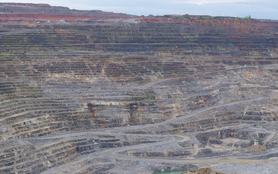
As global demand for energy and natural resources continues to grow, oil and mining companies are moving into remote areas of the world. Mining impacts men and women differently because of their roles and relationships in the family and community. Projects can bring benefits to the community in terms of revenues and jobs, but they can also have severe negative impacts on rights of local communities, particularly women, deepening their vulnerability to poverty. Experience and research indicates that social and environmental risks of mining often fall heavily on the women, elderly, and children.

Joanna Manu from Ghana. Along with other activists, she identified two cyanide spills in 2004 and 2006. They went to court and were eventually able to negotiate settlements and close the mine. Photo by Jane Hahn/Oxfam America.

Joanna Manu from Ghana. Along with other activists, she identified two cyanide spills in 2004 and 2006. They went to court and were eventually able to negotiate settlements and close the mine. Photo by Jane Hahn/Oxfam America.

Oxfam America is getting ready to kick off a 10-day Gender Justice and Mining Tour. Starting on November 5, women representatives from Peruvian and Ghanaian civil society groups will speak at university, diaspora, and policy events in Washington, DC, New Jersey, and Massachusetts, with the intention of spreading awareness about the rights of women and the continued roles they play in advocating for fair and accountable practices around oil and mining operations.

Across the globe, women in oil and mining-affected communities are making their voices heard by raising awareness in their communities, disseminating information among women, and generating alliances with local social organizations, communities, and local authorities to counter the negative impacts of mining. In Ghana, Peru, Guatemala, and Cambodia, women advocates are standing up for their rights and holding their governments accountable for fair compensation, equitable access to water, and proper distribution of revenues. In La Oroya, Peru, Rosa Amaro, President of the Movement for the Health of La Oroya, is seeking to hold US-based Doe Run corporation accountable for polluting the Peruvian town with high lead levels, forcing residents to leave their homes, an area now named one of the ten most polluted areas in the world.

Women in rural communities, being responsible for traditional duties such as preparing food, raising children, and tending to a farm, often feel the presence of mining operations most acutely. When human rights and environmental standards are not respected, mining operations can have detrimental impact on the surrounding environment, as seen in La Oroya. Lack of prior consultation with a community, water contamination, and forced relocation can subject women to walking miles to find alternate water sources and arable land to farm, leading to reduced time for other chores, education, and leisure. Traditionally marginalized from decision-making, it is often exceptionally difficult for women to advocate for their rights within their community.

Oxfam America’s Peru office has been supporting women’s organizations such as the Movement for the Health of La Oroya and CooperAccion for over a decade around the environmental clean-up of La Oroya.

It is our hope that the Oxfam America Speakers Tour will foster a deeper understanding of the impact of mining on women and bring larger visibility to their plight.

99 politicos speak out

September 21st, 2011 | by

This blog is written by Vicky Rateau, GROW Campaign Manager.

While Congress is paralyzed over how to solve the US budget deficit, engagement and will to address global poverty outside the Beltway are strong. Today, Members of Congress and their staff on Capitol Hill opened one of their favorite Hill rags, Politico, for political news and tidbits, and saw a full page ad calling on them to protect life-saving funding for millions of women and children around the world. It lists nearly 100 women’s names with impressive titles, impressive enough that it may cause some to pause and skim the list. And that is the point.

From the beginning of the long US budget planning process, a number of women from different walks of life–leaders in their cities, states, and fields–have vocally supported a strong US role in tackling global hunger, poverty, disaster relief, and the destructive effects of a changing climate. Inspired by the need and sisters here and abroad, they have been raising awareness for years about these issues. And they have been vocal in Congress, with members of the Obama Administration, and in their communities. Members of Congress have listened and responded individually and with resolutions supporting our intent. These leaders are ambassadors for the world’s poorest and hardest hit by rising food prices and climate change, those who don’t have well-heeled lobbyists pounding the halls of Congress. Many of these women leaders are Oxfam’s Sisters on the Planet ambassadors. Among them are writers and thought leaders, leaders from the League of Women Voters from around the country, corporate CEO’s and executives, local business leaders, grassroots leaders, and also Members of Congress. They are Democrat and Republican. The Sisters on the Planet Ambassadors Program is currently 277 strong.

Sharon Hanshaw, Executive Director of Coastal Women for Change and Sister on the Planet who called on Congress not to cut lifesaving aid. Photo by Liliana Rodriguez/Oxfam America.

Sharon Hanshaw, Executive Director of Coastal Women for Change and Sister on the Planet who called on Congress not to cut lifesaving aid. Photo by Liliana Rodriguez/Oxfam America.

Read the rest of this entry »

So, what’s in a number?

March 8th, 2011 | by

On this 100th anniversary of International Women’s Day, people around the world are celebrating accomplishments, marking progress and stock taking on where more work remains to ensure women are full and equal members of society. Among the organizations contributing to this dialogue, the FAO released its State of Food and Agriculture (SOFA) report, this year on the theme of Women in Agriculture: Closing the Gender Gap for Development. The SOFA report concisely documents a number of salient facts that put in stark light the importance of supporting women as farmers, food producers and caregivers. Among the important takeaways:

Organic cotton farmer Fanta Sinayogo in Mali.  Photo by Rebecca Blackwell/Oxfam America.

Organic cotton farmer Fanta Sinayogo in Mali. Photo by Rebecca Blackwell/Oxfam America.

• Women make up 43 percent of the agricultural labor force, though this is likely a low estimate given that women self-reporting on their labor in agriculture may not report all activities or may not count some activities as work.

• Systematic discrimination – legal and/or social – preclude women from receiving the same access as men to the resources they need in order to be fully productive. Whether it is land, extension and financial services, agricultural inputs, secure land tenure, labor-saving technologies, formal education, or even access to markets to sell their goods, women receive less access, less protection, and less support. In Africa, for example, women hold as little as five percent of land in some countries, with an average across the continent of 15 percent. As a result, women do not achieve their full productive potential.

• And the real kicker is that this has very definite, and roughly quantifiable, impacts on the amount of food produced and the number of hungry people around the world. In a survey of the literature, the report finds that men produce on average about 25 percent more than women, but that this difference is largely accounted for by gaps in the use of agricultural inputs. Closing this gap could significantly increase farm yields with a marked impact, potentially reducing the number of hungry people by between 100 and 150 million. Caveats about data quality and methodologies aside, this is a significant indicator of what can be achieved by providing women with equal access to resources.

The SOFA goes on to identify ways of closing the gender gap. None of them will be surprising, most derive directly from the identified need to increase women’s access and use of key agricultural inputs. Buried among the list of recommendations is the call to strengthen women’s rights and voice, the importance of which is hard to overstate.

Read the rest of this entry »

RSS Feed