Erratic weather and drought in the US heartland
This is the first in a series of blogs considering the options for and barriers to agricultural resiliency from the perspective of a US farmer. Last year, I wrote a Politics of Poverty blog on the drought that devastated my crops and range here in south-central Kansas and extended down through Oklahoma and Texas and […]
This is the first in a series of blogs considering the options for and barriers to agricultural resiliency from the perspective of a US farmer.
Last year, I wrote a Politics of Poverty blog on the drought that devastated my crops and range here in south-central Kansas and extended down through Oklahoma and Texas and into Mexico. The drought complex has not ended. It continues this year, with temperatures now reaching over 100 degrees in the upper Midwest (As I write this on the afternoon of June 25, the thermometer reads 108 degrees F). By the third week of June much of Texas, Colorado, Kansas, Illinois, Indiana, and New Mexico experienced moderate to extreme drought (see image). A six week animation captures the spread of dry weather.

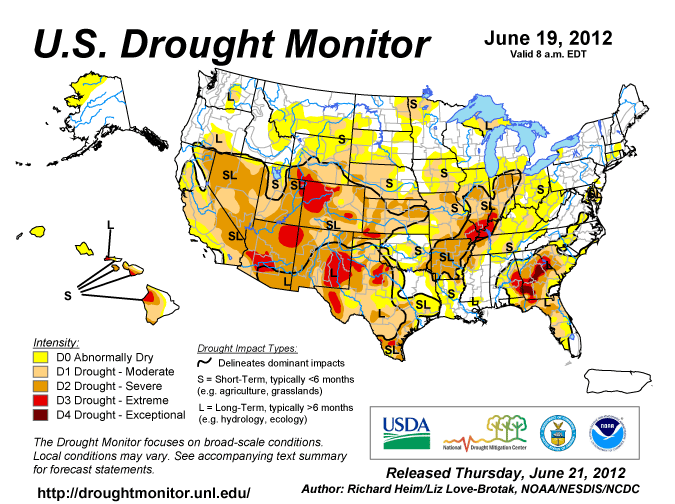
Yesterday, USDA released its weekly crop condition report and the areas of declining production predictably match the areas of drought. In particular, Illinois and Indiana, two large Midwest grain producing states that were challenged by poor planting conditions in the early spring, now face increased lack of moisture. The entire region experienced one of the warmest winters on record, so corn that is now pollinating and beans in the full bloom stage are very vulnerable. Even with adequate moisture, excessive heat during this stage can lead to partially filled ears of corn and sloughed soybean blossoms. In the extreme heat that Kansas experienced last year, many irrigated fields failed because the transpiration rate exceeded the amount of water that could be pumped on to the crop.
What should we try to conclude from only a two-year deviation? First, it is as important as ever that policy makers continue to pursue mechanisms for building global agricultural resiliency and food security in the face of a changing climate. Second, areas in the US that have traditionally produced the highest crop yields may be changing.
Third, drought is not solely confined to the US. Reinvigorating the investments in agriculture within our foreign assistance budget, if done well, could help the world’s farmers—especially women—become more productive and resilient. Meeting the challenges of hunger and erratic weather is a global challenge requiring global solutions.