Posts Tagged ‘community consent’

Peru backslides on indigenous rights

May 8th, 2013 | by

Emily Greenspan is an extractive industries policy and advocacy advisor with Oxfam America.

Recent statements from the Peruvian government do not bode well for implementation of Peru’s new Indigenous Peoples Consultation Law (Consultation Law). The landmark law, passed in 2011 and now being implemented, requires the Peruvian government to consult indigenous peoples affected directly by development policies and projects such as oil drilling, mining, roads and forestry. Consultations must aim to achieve agreement or consent. If implemented effectively, the law could help reduce the number of violent conflicts that frequently emerge in the country’s oil and mining industries.

However, last week Peru’s Vice Minister of Culture Ivan Lanegra—responsible for overseeing implementation of Peru’s Consultation Law—resigned in protest following Executive branch declarations that highland (or campesina) communities do not qualify as indigenous peoples. At the same time, the Peruvian government announced that it will proceed with 14 mining projects located in the Peruvian highlands without prior consultation with neighboring communities.

The Peruvian government should recognize publicly that many highland communities meet national and international criteria for identifying indigenous peoples, and should immediately begin prior consultation processes in accordance with the law. At the same time, the less progressive companies currently fighting the law in Peru should recognize that if they do not comply with law they will be at a competitive disadvantage in the end.

Worrisome signals from the government

Jessica Erickson / Oxfam America

Photo: Jessica Erickson / Oxfam America

In a speech on April 28, President Humala stated that, “Basically there are no native communities…in the sierra [highlands], the majority are agrarian communities resulting from agrarian reform. For the most part native communities are found in the jungle, those called ‘no contactados’ [uncontacted communities living in voluntary isolation]”. This worrisome statement fails to recognize that communities living in voluntary isolation represent only a small percentage of indigenous communities inhabiting forested areas in Peru, and directly contradicts the Consultation Law which states that highland or Andean communities may be considered indigenous peoples as long as they meet certain objective criteria specified in the law. Peru also has a law protecting indigenous knowledge of biological resources which states that highland communities may be considered indigenous peoples.

Peru’s Cabinet (Consejo de Ministros) claims that by moving ahead with 14 mining projects without prior consultation with communities they are attempting to “unfetter” these projects from bureaucratic requirements. However, the government’s approach is shortsighted. If it chooses to proceed with projects impacting indigenous peoples without consultation it would violate not only its own laws, but also international human rights law.

Human rights and business case for community consent

United Nations Special Rapporteur on the rights of indigenous peoples James Anaya stated in a public speech in Lima on April 25:

In my work as special rapporteur on the rights of indigenous peoples for the United Nations, the majority of the problems that reach my attention reflect a lack of adequate consultation with indigenous peoples, in particular on decisions related to development or natural resource extraction projects on their territories…Various treaties, in addition to [International Labor Organization] Convention 169, support the consultation standard…Consultation and its link to the principle of free, prior and informed consent are central elements for a new model of relationships and development.

In fact, if Peru proceeds with mining projects without consulting indigenous communities, the government will risk being taken to the Inter-American Court of Human Rights, which has interpreted Free Prior and Informed Consent (FPIC) to apply to development projects with significant impacts and has, in several instances, ruled that states failed to meet their FPIC obligations.

In addition, while the government may hope to woo mining companies by bypassing consultation processes, ultimately this approach will be to the detriment of mining companies’ bottom lines as well given the high economic cost of social conflict in the extractive industries. A 2011 study by researchers from Harvard Kennedy School and the University of Queensland found that a world-class mining project (capital expenditure between US$3-5 billion) stands to lose approximately US$20 million per week in lost productivity as a result of delayed production from social conflict. In Peru, mining giant Newmont reported that it lost approximately $2 million per day in the first few days alone after local protests paralyzed its Conga mining project.

In recent years, several oil and mining companies have adopted public policies in favor of securing community approval prior to moving projects forward. We recently released a report showing that 13 of 28 oil and mining companies reviewed have made public commitments to FPIC (five with explicit commitments and an additional eight with indirect or qualified commitments). Companies are beginning to get the message – those that fail to consult communities early and adequately risk facing delays and huge costs down the road.

Implications for the Latin America region

Currently, several other countries in Latin America are considering developing consultation laws similar to Peru’s Consultation Law. Peru has emerged as a leader in the region on community consultation issues, but stands to lose that position if the law is not implemented adequately. A rollback of the law could have serious repercussions for many indigenous communities affected by oil and mining projects throughout Latin America.


Defending community rights in Ghana: 3 Lessons for us all

April 29th, 2013 | by

“You cannot link the extraction of minerals and community development—not at all,” says Augustine Niber.

Augustine Niber, Executive Director of the Centre for Public Interest Law in Accra, Ghana. Photo: Jennifer Lentfer / Oxfam America

Augustine Niber, Executive Director of the Centre for Public Interest Law in Accra, Ghana. Photo: Jennifer Lentfer / Oxfam America

Earlier this month, Oxfam America’s Extractive Industries campaign had the privilege of hosting Niber in Washington, DC to participate in a series of events, including an Oxfam-sponsored panel on land, natural resources, and food justice during Ecumenical Advocacy Days and the launch of an Oxfam report measuring the effectiveness of National Human Rights Institutions that features a case study in Ghana.  Here in the Oxfam offices in DC, amidst all his other activities, I had the opportunity to sit down with Augustine Niber and learn more about him, his work, and the issues communities affected by mining face in Ghana.

Founded in 1999, CEPIL is a non-profit public interest and human rights NGO and one of CEPIL’s key initiatives, the Mining Communities Human Rights and Legal Support Program, has provided free legal services, including court room representation, to communities negatively impacted by mining companies in Ghana. CEPIL also provides legal literacy training and human rights education to these communities to enable them to demand their rights.

“For state institutions in Ghana, the driving force has always been to promote mining activity,” says Niber, “but that type of development paradigm has not succeeded.”

So what does bring about development for communities affected by mining?

Below are three lessons I took away from hearing more about Augustine’s experience as a lawyer and an advocate, pertinent even beyond the mining sector:

1. Good governance and transparency are key.

Ghana is often referred to as the beacon of democracy in Africa. Niber shared that this has fostered a shift in the space for debate on extractive issues, and the role of civil society in this debate.

“The democratic environment we have enjoyed for twenty years now is a factor. Before, if you spoke about mining, you were seen as anti-development. Government has come to realize that civil society organizations working on extractive industries issues are not anti-development or mining, but development partners.”

Civil society participation and pressure have played an important role in pushing forward legislation promoting transparency of extractive resources revenues, particularly regarding oil extraction, which is relatively new to Ghana.

“As civil society organizations, we are working to ensure that the nature of violations for community rights in solid mineral extraction do not happen in oil extraction. Oil revenues should not be misused the way mining revenues have been used.”

Indeed, Ghanaian civil society was deeply involved in moving the passage of the Petroleum Revenue Bill in 2011, requiring petroleum revenue receipts and expenditures to be made public. The bill also called for the creation of a Public Interest and Accountability Committee to independently monitor and regulate the sector.

But Niber cautions that transparency is only the first step to accountability.

“Transparency is an important policy initiative, but it is not just about the policies in Ghana. It is about implementation of the policies.”

2. Community consultation and consent are key.

“Communities are not benefiting [from the industry]. [They] are not part of the decision making process. There have been human rights violations where community members have lost farmland.”

Artisinal miners working in the tailings impoundment of AngloGold Ashanti's Obuasi Mine in Obuasi, Ghana. Many artisinal miners in Ghana are farmers that have been displaced by large scale mining. Oxfam America is working in Ghana and other countries to help protect rural agricultural livelihoods from the negative impacts of mining and to ensure that mining contributes positively to rural development. Photo: Keith Slack / Oxfam America

Artisinal miners working in the tailings impoundment of AngloGold Ashanti’s Obuasi Mine in Obuasi, Ghana. Many artisinal miners in Ghana are farmers that have been displaced by large scale mining. Photo: Keith Slack / Oxfam America

The extraction of natural resources can only contribute to development if a community’s fundamental rights are respected, Niber explained. The lack of consultation and consent often leads to the displacement of communities without just compensation. Niber also explained that some community members take part in “galamsey”, or artisanal mining, which can be a very dangerous undertaking.

“These community members are often harassed by state and private security employed by mining companies. Communities become disgruntled and protest. Some people have gotten shot.”

In addition, mining companies often fall short in their promise of jobs for the communities in which they operate. This can also create tension and unrest between the communities and the extractive companies. This is why Niber says companies and governments should be required to obtain the Free, Prior and Informed Consent (FPIC) of communities affected by oil and mining activity.

3. Taking the long view is key.

Achieving true, long-term social justice cannot be done overnight, something Niber knows all too well. Providing legal assistance and court representation for individuals and communities negatively affected by mining is a lengthy process, and a case can easily last a few years before a decision is reached.

“There are delays. Companies and their lawyers know how to frustrate the cases through the legal process and court system. It is possible to cause litigation fatigue with vulnerable communities.”

Though attaining results can take a long time, the payoff can be great and well worth the effort and wait. Such is the case with Niber’s most memorable case at CEPIL. “It was against the [Ghanaian] Environmental Protection Agency (EPA) and a defunct company that operated and left. The Minerals Commission, [responsible for the regulation and management of the mineral resources of Ghana], and the government were held jointly responsible for the destruction that took place.”

The effects of this case went well beyond mining. “CEPIL instituted the case in our name and the court ruled in our favor. The case has become a precedent that other civil society organizations are now using, and it has expanded the frontier of jurisprudence of Ghanaian courts.”

(Bonus lesson!) 4. Bringing global pressure is key.

Niber said that global pressure is important to his work, and encouraged us that here in the US, we can play a part. We can push our policy makers in DC to encourage African governments to agree to a common mining code in ECOWAS, push to protect the 1504 transparency provision, and pressure API to drop the lawsuit against it.

Oxfam has been supporting CEPIL since 2006. To learn more about their work, see: www.cepil.org.gh

Social conflict, extractive industries, national human rights institutions and most importantly…communities

April 9th, 2013 | by

Emily Greenspan is an extractive industries policy and advocacy advisor with Oxfam America.

Oxfam America’s Extractive Industries Team today released new research:

Human Rights and Social Conflict in the Oil, Gas, and Mining Industries: Policy recommendations for national human rights institutions.

Let me try to break down what the paper is all about.

Godfried Ofori, of the Concerned Citizens Association of Prestea, stands in front of a mine pit and waste dump area near Golden Star Resources mine in southwest Ghana. Photo: Jane Hahn / Oxfam America

What do we mean by social conflict?

More than 500 protesters took to the streets in Prestea in the western region of Ghana in 2005 to demonstrate against Bogoso Gold Mines (a subsidiary of Golden Star Resources), resulting in injuries to seven protesters. Tensions grew as a result of alleged water pollution and damage to homes from mining explosives and eventually led to project suspension.

Social conflicts and controversies surrounding large-scale oil and mining projects often stem from concerns around potential or actual environmental impacts and land acquisition disputes, and sometimes erupt into violence. Past Oxfam blogs have highlighted examples of this in countries where we work like Peru and Ghana.

Oxfam America’s recommendations for companies and government agencies charged with managing the oil and mining industries primarily aim to increase community participation in decision making around projects, and ultimately at preventing social conflicts. National human rights institutions (NHRIs) represented one interesting policy avenue that we had yet to address.

What do we mean by a national human rights institution?

State-sponsored NHRIs–tasked with protecting and promoting human rights– have grown in popularity in recent decades. To date, the UN International Coordinating Committee on NHRIs has accredited 99 of these institutions globally. The closest equivalent agency in the US would likely be the US Commission on Civil Rights, which is tasked with informing national civil rights policy and studying alleged deprivations of voting rights and discrimination.

While NHRIs take on a diversity of forms and functions, they will often provide human rights education, hear human rights complaints, mediate complaint resolution, and/or enforce remedies. Some of these institutions are charged with a narrow mandate to protect the human rights of particular groups (e.g., minorities or persons with disabilities) or to protect particular rights (e.g., anti-discrimination), while others have a broad mandate to protect and promote all human rights for all persons. Some NHRIs, like Ghana’s, have a formal mandate to investigate complaints about human rights abuses by private entities, including businesses, while others do not.

In the context of the extractive industries, NHRIs may be called on to address a wide range of human rights abuses. These could include, for example, impacts on the right to property such as by forced displacement or damage to crops or houses, or violence directed at local communities by police or security forces.

How can NHRIs better address social conflicts related to extractive industries?

The new Oxfam research launched in Washington, DC today presents a framework for evaluating NHRIs’ impact on promoting and protecting human rights in the context of the extractive industries, and how this framework can be applied in individual country contexts. The research identifies five categories of determinants for NHRI effectiveness: independence, power, promotion, empowerment, and remediation. These were based on a growing body of literature on effectiveness factors for NHRIs, and then prioritized based on the unique features of oil and mining projects, e.g. their long-term, large-scale nature and their tendency to impact remote and marginalized communities.

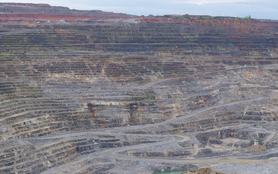
An open pit mine in the town of Prestea, Ghana, where Oxfam parter organization, WACAM, has been supporting the Concerned Citizens Association of Prestea in its efforts to negotiate with a mining company around issues related to air and water pollution, and the proposed expansion of mining operations. Photo: Jeff Deutsch / Oxfam America

The research includes a case study on Ghana’s NHRI, the Commission on Human Rights and Administrative Justice (CHRAJ). Based on a literature review and interviews with civil society leaders, mining industry representatives, and CHRAJ officials in Ghana, researchers applied their new framework with CHRAJ to come up with recommendations to strengthen its effectiveness in the mining and emerging oil sectors. Results indicate that CHRAJ should develop a systematic and targeted strategy for communicating with communities affected by oil, gas, and mining operations. Information provided by CHRAJ should ideally provide community members with a clear understanding of their rights, how extractive projects may violate them, and how to seek remedy if these rights are violated.


Why should NHRIs engage more with communities?

While the new framework for evaluating NHRI effectiveness will generate different results based on differing country contexts, the finding in the Ghanaian context that community engagement should be a key priority for NHRIs will likely resonate in many of the countries that experience human rights abuses and conflict around mining and oil projects. Often the complex impacts of extractive projects are difficult for community members to anticipate or respond to, particularly when they involve politically-charged issues such as resettlement or technical issues such as water pollution from mine runoff. When NHRIs engage with more informed and active communities, they will find their education and enforcement mandates much easier to fulfill.

If more NHRIs begin to effectively and proactively engage with project-affected communities in preventing human rights abuses and conflict, not only local communities and host governments will benefit. The global community will also benefit from the subsequent increase in stability around the extraction of the oil and mineral resources on which we all rely.

From Pennsylvania to Peru: “Promised Land” Movie Highlights Universal Extraction Challenges

February 5th, 2013 | by

Emily Greenspan is an extractive industries policy and advocacy advisor with Oxfam America.

Promised Land is now in theaters and I couldn’t wait to see it given my day job at Oxfam. Matt Damon and John Krasinski star. The movie depicts a small rural town in Pennsylvania as an international gas company comes in, promising to make millionaires of the struggling local farmers off of the shale deposits under their lands. Some eagerly jump to sign leases with the company while others worry about potential environmental impacts on their lands and waters.

The film really struck a chord with me because it highlights some of the seemingly insurmountable challenges that rural communities, in the US or elsewhere, face when deciding whether to make a deal with big oil. In Promised Land, the local high school teacher has a PhD from MIT, past experience as a Boeing engineer, and the time to do some internet sleuthing on the potential benefits and impacts of fracking. Many communities faced with the prospect of becoming oil boom towns, however, are not so lucky.

[youtube]http://www.youtube.com/watch?v=AHQt1NAkhIo[/youtube]Citizens in developing countries face even more daunting information asymmetry challenges when oil and mining companies come to town. Often governments sign oil deals with companies directly and choose to keep the terms of these agreements and the amount of revenues generated by projects secret from their citizens. Logistical challenges like high illiteracy levels and limited internet access compound the situation, making it very difficult for communities to engage in negotiations with project sponsors on an equal footing.

In Peru, for example, the multi-billion dollar Peru LNG pipeline project crosses through two of Peru’s poorest regions, Ayacucho and Huancavelica. Communities in these two regions faced serious challenges when engaging in consultation processes with the company, given that approximately one-third of women in the regions are illiterate and only around 10% of the population uses internet services.

Also, almost all governments in the world have legal regimes that provide for government ownership of oil, gas, and mineral deposits. This means that oil companies can bypass making deals with landowners and negotiate directly with government. Communities that oppose development projects on their lands risk being displaced. The beleaguered town in Promised Land faces a number of disadvantages as they attempt to negotiate with a multinational company willing to bribe and cajole its way to community approval. The town must contend with a local leader with dubious ethics and competes with the high school basketball team for meeting space. However, ultimately they at least have the right to decide whether or not to sign a lease with the company.

Weighing potential costs and benefits around high-risk extractive industry projects is a challenging endeavor for any community. However, a few key measures to promote transparency and community engagement can go a long way:

― Governments should disclose the oil and mining contracts that they sign with companies. This will increase government accountability to their citizens by creating positive incentives for good deals and closing off possible avenues of corruption. Over the long term, contract disclosure will also contribute to a more stable investment climate since better deals are less likely to be overturned by future governments.

― Governments should disclose the revenues they receive from oil and mining companies, and companies should disclose the revenues that they pay to governments. Landmark section 1504 (“Cardin-Lugar”) of the 2010 Dodd-Frank Wall Street Reform Act goes a long way towards promoting good governance of the extractive industries by requiring companies registered with the US Securities and Exchange Commission to disclose their payments to governments. Beyond this, the more companies and governments that adopt revenue disclosure policies the better, both for citizens and for responsible companies which would benefit from a level playing field.

― Finally, governments and companies should commit to obtaining the Free, Prior and Informed Consent of local communities before implementing oil and mining projects on their lands. Consultations with local communities should be inclusive and adequately informed, and if communities decide against a development project, their decision should be respected.

These measures will not solve all of the challenges associated with oil development for communities around the world, nor the ones portrayed by Hollywood. However, they will create a framework that helps to ensure that local communities affected by oil projects are more informed about these projects, and have control over decisions that govern their lands, their health, and their livelihoods.

Is sustainability just a sideshow at African mining conference?

January 29th, 2013 | by

A guest post by Keith Slack, Global Program Manager, Extractive Industries

Mining industry big-wigs will gather in South Africa next week for Mining Indaba, billed as the “world’s largest mining investment conference.”  As has become de rigeur in recent years at this kind of event, there will be some discussion of social and environmental “sustainability” issues.  The final day of the event is in fact devoted to this and boasts an impressive-sounding set of panels featuring mining company CEOs, World Bank executives, government officials, and a smattering of NGOs.  This is consistent with a recent spate of mining sector sustainability initiatives including, among several others, the International Council on Mining and Metals’ Resource Endowment series, which looked at how mining can contribute more to economic development.

While this attention to sustainability is in general positive, it hasn’t driven the fundamental change in industry practice that is urgently needed.  US-based Newmont Mining’s history in Peru is one example.  Following a series of problems in Peru and elsewhere in the mid-2000s, the company commissioned a report that produced recommendations on improving its relationships with local communities.  The company’s implementation of these recommendations has been spotty at best.  Last year it was forced to postpone its massive Mina Conga project in the face of community opposition.  In December the company released another damning external review that described a “state of fear” among communities living near the mine.  Clearly the learning from past reviews hasn’t sunk in with company management.

To address this situation and the critical sustainability challenges facing the mining sector, we offer a few recommendations for the mining execs gathered in in Cape Town to consider as they schmooze, golf, and down some of those delicious South African red wines.  (Goats do Roam is my personal favorite.)

Dominic Nyame, a member of the Concerned Citizens Association of Prestea, an organization in southwest Ghana negotiating with a mining company around issues related to air and water pollution, and the proposed expansion of mining operations. Photo: Jeff Deutsch / Oxfam America

First, mining companies need to start fully respecting community consent.  While industry rhetoric on this point has improved significantly in recent years (which Oxfam has highlighted in a recent report), good examples of implementation are still lacking. Industry types often make the practice out to be more difficult than it really is and worries about communities vetoing a project are overblown.  Newmont’s problems at Mina Conga in Peru exist not because communities there are inherently anti-mining.  Rather they stem from the company’s bungled handling of community relations (by its own admission) during the early days of its presence in the community.  Getting these relationships right from the beginning and actively addressing to community concerns are critical to avoiding these problems.

Ensuring respect for the rights of women in the communities where companies operate is also critical for ensuring sustainability.  Women are often the guardians of communities’ long-term interests.  They suffer most directly from the negative impacts of mining, via the domestic violence and alcoholism to which mining often contributes.  Mining companies must carry out more rigorous and independent gender impact assessments.

Transparency has become somewhat of a cliché in discussions of sustainability in the extractive industries, but it’s an area, like women’s rights, where much work still remains to be done.  Mining companies should fully disclose all payments they make to governments – down to the project level where their impacts are felt.  To its credit, the mining industry hasn’t joined the American Petroleum Institute’s odious lawsuit seeking to block a new US law requiring these disclosures.  This is positive and should be coupled with all companies publicly embracing the law and disclosing this information beginning this year.

The thirsty folks gathered in South Africa will know that there is no sustainability issue more critical to the mining industry than protecting water resources.  South Africa itself is awash in acid mine drainage, or sulfuric acid that leaches out of mine sites and destroys ground and surface water.  This problem is a ticking time bomb in developing countries and it is incredibly expensive to fix once it starts.  Once it does, the acid needs to be treated forever.  Mining companies have the technology now to know when mining in particular ore bodies is likely to cause this problem.  They also know they shouldn’t mine there.

Finally, if mining companies want to contribute more to sustainable development, they should accept the fact that that may mean reduced profits for themselves.  Mining companies are masters at negotiating deals that enable them to avoid paying significant amounts of taxes.  In contract negotiations, industry lawyers routinely take under-trained and under-resourced government officials to the cleaners.  Yes, companies should be able to make profits, but they shouldn’t do so by exploiting unfair advantages.

Ultimately, making progress on these issues will depend on the degree to which mining companies incorporate community consent, the rights of women, transparency, and protection of water resources into their business models.  Creating incentives for performance on these issues will be critical.  Investors can play a role by only buying shares of companies with independently-verified performance metrics on sustainability, including demonstrable progress on the issues listed above.  Companies themselves can link compensation and career advancement to performance on sustainability.

It’s time for sustainability to become a central part of mining industry standards in Africa and elsewhere, rather than a sideshow.

RSS Feed