Posts Tagged ‘human rights’

Salvadoran activist to DC policymakers: “We are on a journey together.”

May 16th, 2013 | by
Sandra Ascencio of the Justice Office of Peace and Integrity of the Creation Order of Young Friars in El Salvador. Photo: Jennifer Lentfer / Oxfam America

Sandra Ascencio of the Justice Office of Peace and Integrity of the Creation Order of Young Friars in El Salvador. Photo: Jennifer Lentfer / Oxfam America

Sandra Carolina Ascencio has worked for more than ten years to protect the health of her people and her county of El Salvador from mineral mining, which is one of the most environmentally-destructive industries on the planet. Nowhere is this more apparent than in El Salvador where runoff from mining operations has polluted the San Sebastian River with dangerous levels of cyanide and iron.

As a member of the National Roundtable on Metallic Mining in El Salvador (La Mesa), Ascencio was part of a group of community activists from El Salvador who participated in a speaking tour in Canada and the US in March and April, entitled “Water is More Precious than Gold.” They shared stories from the frontlines and the ways in which the mining industry is bullying their way into Latin American communities. As part of the speaking tour, Ascencio appeared on an Oxfam-sponsored panel on land, natural resources, and food justice during Ecumenical Advocacy Days in Washington DC.

Ascencio serves as a pastoral agent with the Office of Justice, Peace and Integrity of the Creation of the Order of Friars Minor, supporting parish communities and environmental and human rights educators throughout El Salvador. Oxfam was fortunate to have Ascencio share her experiences with us in our offices.

***

Jennifer Lentfer: Tell us why you’ve come to Washington, DC.  

Sandra Ascencio: People doing advocacy work in Canada and the US want to know more about how we are organizing communities and what inspires them to resist mining. The message is the same no matter where I go. I want people to know why it is that we want open-pit, metallic mining to be banned in El Salvador.

We need real transformation in government policies of all developed countries. In the case of the US, for example, towards the kind of development the Millennium Challenge Corporation is promoting. As of now, these policies are supporting infrastructure development that benefits the mining companies, instead of looking at a true development that focuses on eradicating poverty and promoting a better quality of life in the Salvadoran population.

Lentfer: What will you remember most from your time in the US and Canada?

What I have found out in our visits to the US and Canada is that people want to know what they can do to help us and how we can work together in a global resistance movement. When I shared my experiences with the faith-based community at Ecumenical Advocacy Days, I saw how people got inspired and how they demonstrated their solidarity with us. It’s important to transmit those emotions into the work. For us, promoting everybody’s well-being remains the center of faith. Only that way, people can keep in mind that the most important things for humans to survive are water, air, and land.

Lentfer: Tell us more about the Justice Office of Peace and Integrity of the Creation of the Order of Friars Minor and the National Roundtable on Metallic Mining. What are these bodies trying to achieve?

Ascencio: The Office of Justice, Peace and Integrity of the Creation was founded in 1987 to continue spreading the voice of the church and build rapport with communities to promote justice, peace and the protection of the environment. The Mesa was formed in 2005. The Office joined the Mesa in 2007, when we realized that contamination from mining was a big issue to address when it came to our food and water and our health.

At the Order of Friars Minor, we try to maintain a spirituality based on St. Francis de Assisi, focused on serving others and relating to nature and the environment. It’s what motivates us to protect creation. The rights of the earth and the rights of human beings are one in the same.

Lentfer: Where is the national-level debate about mining in El Salvador today?

Ascencio: Currently El Salvador does not have a law to regulate water management and so that’s where the National Assembly is focused right now. Within the proposed law there is a provision that mining is not promoted. La Mesa is trying to include mining provisions in all laws.

The proposal to ban mining has been offered, but has not moved forward in the legislature. After years of remaining silent about this, the Industrial Association of El Salvador is now actively asking the government to think twice about importance of mining to the development of our country. The civil society is watching their next steps closely, due to the level of influence the Association has on the national policies, in particular in regards to the management of the use of water and land.

Lentfer: What do you say when someone tells you that mining is a “good option” for development?

Ascencio: From my spiritual perspective, mining is not a viable option. Millions of years have to pass for the equilibrium to be re-established following the impacts of contamination, and our generations will never see repair. There is already enough minerals/metals extracted that could be re-utilized. There is no need to keep extracting more. What matters most is our ways of consumption and demand for such things.

A community meeting on mining near Ilobasco, El Salvador. Photo: Jeff Deutsch / Oxfam America

A community meeting on mining near Ilobasco, El Salvador. Photo: Jeff Deutsch / Oxfam America

Lentfer: What are some of the consequences of industrialized mining that you have seen at the community level in El Salvador?

Ascencio: In the Department of La Unión [in the north-east of El Salvador], there is still proof of contamination of a mine that operated decades ago. The river there is completely contaminated and potable water is now very scarce. After that experience, for everyone that struggles on a daily basis to get drinking water, to think of another mining project coming becomes an issue of life and death.

New mining projects are proposed in Northern areas, where there is a lot of poverty and the soils already need lots of fertilizers. These are the same areas that were very much affected by the civil war.

Lentfer: I’m sure that the environmental educators you work with are discussing much more than the environment when they meet with communities. How do you prepare them? What are some of the biggest challenges they face?

Ascencio: We educate them a lot about health problems from contamination and how to identify sicknesses. We also talk about the rights of people and the rights of the Earth and how to protect them so we have a better quality of life. If we protect the three basic elements—water, air, land—we will also have access to good food. We teach them how to open up these issues and talk about them with communities.

However, mining projects can break the social fabric of communities and divide them. Some people will always prioritize the so-called economic benefits of mining—employment and secondary businesses. What our educators must also share with the communities is the true price of mining—construction of dams that take their water, destruction of natural resources to make roads for big trucks, displacement of communities. For people with the hope of getting a job and having some security, it’s a big challenge weigh short- and long-term costs and benefits of mining. So we have to prepare our educators to talk frankly about the consequences of mining that people cannot often see.

Lentfer: So many people who have been fighting to protect their communities in El Salvador have been threatened, and even killed. Despite these risks, what drives you to continue?

Ascencio: A total commitment. My work is primarily spiritual and by conviction. God gives us each abilities to use according to our faith. When I die, I don’t want to go [up] there and think I didn’t do anything.

I’m preparing my two children to know that my work is for God. They also need to learn the values of service and discernment. I tell them that if something happens to me, then they know that it was worthwhile. But it’s better not to think of those things otherwise you could lose your energy and motivation.

Lentfer: What do policymakers in Washington DC need to know or do to best assist you in your efforts in El Salvador?

Ascencio: You are not the only country and the only generation of this planet. What they have is enough to exist in this world. We want to see a change towards solidarity in US economic and foreign policies.

Lentfer: What gives you hope for the future?

Ascencio: I think that every person is good, in their essence. My work is not because I’m a lawyer or a scientist, but because I believe in solidarity and harmony as the principles of life. We all are on a journey to encounter our common well-being.

Thanks to Sofia Vergara for assisting with translation.

Defending community rights in Ghana: 3 Lessons for us all

April 29th, 2013 | by

“You cannot link the extraction of minerals and community development—not at all,” says Augustine Niber.

Augustine Niber, Executive Director of the Centre for Public Interest Law in Accra, Ghana. Photo: Jennifer Lentfer / Oxfam America

Augustine Niber, Executive Director of the Centre for Public Interest Law in Accra, Ghana. Photo: Jennifer Lentfer / Oxfam America

Earlier this month, Oxfam America’s Extractive Industries campaign had the privilege of hosting Niber in Washington, DC to participate in a series of events, including an Oxfam-sponsored panel on land, natural resources, and food justice during Ecumenical Advocacy Days and the launch of an Oxfam report measuring the effectiveness of National Human Rights Institutions that features a case study in Ghana.  Here in the Oxfam offices in DC, amidst all his other activities, I had the opportunity to sit down with Augustine Niber and learn more about him, his work, and the issues communities affected by mining face in Ghana.

Founded in 1999, CEPIL is a non-profit public interest and human rights NGO and one of CEPIL’s key initiatives, the Mining Communities Human Rights and Legal Support Program, has provided free legal services, including court room representation, to communities negatively impacted by mining companies in Ghana. CEPIL also provides legal literacy training and human rights education to these communities to enable them to demand their rights.

“For state institutions in Ghana, the driving force has always been to promote mining activity,” says Niber, “but that type of development paradigm has not succeeded.”

So what does bring about development for communities affected by mining?

Below are three lessons I took away from hearing more about Augustine’s experience as a lawyer and an advocate, pertinent even beyond the mining sector:

1. Good governance and transparency are key.

Ghana is often referred to as the beacon of democracy in Africa. Niber shared that this has fostered a shift in the space for debate on extractive issues, and the role of civil society in this debate.

“The democratic environment we have enjoyed for twenty years now is a factor. Before, if you spoke about mining, you were seen as anti-development. Government has come to realize that civil society organizations working on extractive industries issues are not anti-development or mining, but development partners.”

Civil society participation and pressure have played an important role in pushing forward legislation promoting transparency of extractive resources revenues, particularly regarding oil extraction, which is relatively new to Ghana.

“As civil society organizations, we are working to ensure that the nature of violations for community rights in solid mineral extraction do not happen in oil extraction. Oil revenues should not be misused the way mining revenues have been used.”

Indeed, Ghanaian civil society was deeply involved in moving the passage of the Petroleum Revenue Bill in 2011, requiring petroleum revenue receipts and expenditures to be made public. The bill also called for the creation of a Public Interest and Accountability Committee to independently monitor and regulate the sector.

But Niber cautions that transparency is only the first step to accountability.

“Transparency is an important policy initiative, but it is not just about the policies in Ghana. It is about implementation of the policies.”

2. Community consultation and consent are key.

“Communities are not benefiting [from the industry]. [They] are not part of the decision making process. There have been human rights violations where community members have lost farmland.”

Artisinal miners working in the tailings impoundment of AngloGold Ashanti's Obuasi Mine in Obuasi, Ghana. Many artisinal miners in Ghana are farmers that have been displaced by large scale mining. Oxfam America is working in Ghana and other countries to help protect rural agricultural livelihoods from the negative impacts of mining and to ensure that mining contributes positively to rural development. Photo: Keith Slack / Oxfam America

Artisinal miners working in the tailings impoundment of AngloGold Ashanti’s Obuasi Mine in Obuasi, Ghana. Many artisinal miners in Ghana are farmers that have been displaced by large scale mining. Photo: Keith Slack / Oxfam America

The extraction of natural resources can only contribute to development if a community’s fundamental rights are respected, Niber explained. The lack of consultation and consent often leads to the displacement of communities without just compensation. Niber also explained that some community members take part in “galamsey”, or artisanal mining, which can be a very dangerous undertaking.

“These community members are often harassed by state and private security employed by mining companies. Communities become disgruntled and protest. Some people have gotten shot.”

In addition, mining companies often fall short in their promise of jobs for the communities in which they operate. This can also create tension and unrest between the communities and the extractive companies. This is why Niber says companies and governments should be required to obtain the Free, Prior and Informed Consent (FPIC) of communities affected by oil and mining activity.

3. Taking the long view is key.

Achieving true, long-term social justice cannot be done overnight, something Niber knows all too well. Providing legal assistance and court representation for individuals and communities negatively affected by mining is a lengthy process, and a case can easily last a few years before a decision is reached.

“There are delays. Companies and their lawyers know how to frustrate the cases through the legal process and court system. It is possible to cause litigation fatigue with vulnerable communities.”

Though attaining results can take a long time, the payoff can be great and well worth the effort and wait. Such is the case with Niber’s most memorable case at CEPIL. “It was against the [Ghanaian] Environmental Protection Agency (EPA) and a defunct company that operated and left. The Minerals Commission, [responsible for the regulation and management of the mineral resources of Ghana], and the government were held jointly responsible for the destruction that took place.”

The effects of this case went well beyond mining. “CEPIL instituted the case in our name and the court ruled in our favor. The case has become a precedent that other civil society organizations are now using, and it has expanded the frontier of jurisprudence of Ghanaian courts.”

(Bonus lesson!) 4. Bringing global pressure is key.

Niber said that global pressure is important to his work, and encouraged us that here in the US, we can play a part. We can push our policy makers in DC to encourage African governments to agree to a common mining code in ECOWAS, push to protect the 1504 transparency provision, and pressure API to drop the lawsuit against it.

Oxfam has been supporting CEPIL since 2006. To learn more about their work, see: www.cepil.org.gh

Social conflict, extractive industries, national human rights institutions and most importantly…communities

April 9th, 2013 | by

Emily Greenspan is an extractive industries policy and advocacy advisor with Oxfam America.

Oxfam America’s Extractive Industries Team today released new research:

Human Rights and Social Conflict in the Oil, Gas, and Mining Industries: Policy recommendations for national human rights institutions.

Let me try to break down what the paper is all about.

Godfried Ofori, of the Concerned Citizens Association of Prestea, stands in front of a mine pit and waste dump area near Golden Star Resources mine in southwest Ghana. Photo: Jane Hahn / Oxfam America

What do we mean by social conflict?

More than 500 protesters took to the streets in Prestea in the western region of Ghana in 2005 to demonstrate against Bogoso Gold Mines (a subsidiary of Golden Star Resources), resulting in injuries to seven protesters. Tensions grew as a result of alleged water pollution and damage to homes from mining explosives and eventually led to project suspension.

Social conflicts and controversies surrounding large-scale oil and mining projects often stem from concerns around potential or actual environmental impacts and land acquisition disputes, and sometimes erupt into violence. Past Oxfam blogs have highlighted examples of this in countries where we work like Peru and Ghana.

Oxfam America’s recommendations for companies and government agencies charged with managing the oil and mining industries primarily aim to increase community participation in decision making around projects, and ultimately at preventing social conflicts. National human rights institutions (NHRIs) represented one interesting policy avenue that we had yet to address.

What do we mean by a national human rights institution?

State-sponsored NHRIs–tasked with protecting and promoting human rights– have grown in popularity in recent decades. To date, the UN International Coordinating Committee on NHRIs has accredited 99 of these institutions globally. The closest equivalent agency in the US would likely be the US Commission on Civil Rights, which is tasked with informing national civil rights policy and studying alleged deprivations of voting rights and discrimination.

While NHRIs take on a diversity of forms and functions, they will often provide human rights education, hear human rights complaints, mediate complaint resolution, and/or enforce remedies. Some of these institutions are charged with a narrow mandate to protect the human rights of particular groups (e.g., minorities or persons with disabilities) or to protect particular rights (e.g., anti-discrimination), while others have a broad mandate to protect and promote all human rights for all persons. Some NHRIs, like Ghana’s, have a formal mandate to investigate complaints about human rights abuses by private entities, including businesses, while others do not.

In the context of the extractive industries, NHRIs may be called on to address a wide range of human rights abuses. These could include, for example, impacts on the right to property such as by forced displacement or damage to crops or houses, or violence directed at local communities by police or security forces.

How can NHRIs better address social conflicts related to extractive industries?

The new Oxfam research launched in Washington, DC today presents a framework for evaluating NHRIs’ impact on promoting and protecting human rights in the context of the extractive industries, and how this framework can be applied in individual country contexts. The research identifies five categories of determinants for NHRI effectiveness: independence, power, promotion, empowerment, and remediation. These were based on a growing body of literature on effectiveness factors for NHRIs, and then prioritized based on the unique features of oil and mining projects, e.g. their long-term, large-scale nature and their tendency to impact remote and marginalized communities.

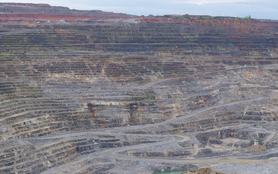
An open pit mine in the town of Prestea, Ghana, where Oxfam parter organization, WACAM, has been supporting the Concerned Citizens Association of Prestea in its efforts to negotiate with a mining company around issues related to air and water pollution, and the proposed expansion of mining operations. Photo: Jeff Deutsch / Oxfam America

The research includes a case study on Ghana’s NHRI, the Commission on Human Rights and Administrative Justice (CHRAJ). Based on a literature review and interviews with civil society leaders, mining industry representatives, and CHRAJ officials in Ghana, researchers applied their new framework with CHRAJ to come up with recommendations to strengthen its effectiveness in the mining and emerging oil sectors. Results indicate that CHRAJ should develop a systematic and targeted strategy for communicating with communities affected by oil, gas, and mining operations. Information provided by CHRAJ should ideally provide community members with a clear understanding of their rights, how extractive projects may violate them, and how to seek remedy if these rights are violated.


Why should NHRIs engage more with communities?

While the new framework for evaluating NHRI effectiveness will generate different results based on differing country contexts, the finding in the Ghanaian context that community engagement should be a key priority for NHRIs will likely resonate in many of the countries that experience human rights abuses and conflict around mining and oil projects. Often the complex impacts of extractive projects are difficult for community members to anticipate or respond to, particularly when they involve politically-charged issues such as resettlement or technical issues such as water pollution from mine runoff. When NHRIs engage with more informed and active communities, they will find their education and enforcement mandates much easier to fulfill.

If more NHRIs begin to effectively and proactively engage with project-affected communities in preventing human rights abuses and conflict, not only local communities and host governments will benefit. The global community will also benefit from the subsequent increase in stability around the extraction of the oil and mineral resources on which we all rely.

Behind the Brands: The Human Right to Water AND Supply Chain Responsibility

March 18th, 2013 | by

Suzanne Zweben is a Senior Advisor in the Private Sector Department of Oxfam America. 

Lake Izabal in Guatemala is an area of great biodiversity and natural resource wealth. Photo: Edgar Orellana / Oxfam America

Companies included in the Behind the Brands scorecard have for the most part made progress on managing water resources.  Largely they recognize that access to water will be one of the greatest challenges of our time.  It’s projected that by 2025, just 12 years away, that 1.8 billion people will be living in countries or regions with absolute water scarcity.  Two-thirds of the world’s population is expected to have limited access to clean water.

This is one sustainability issue food and beverage companies grasp as core to their business; it will impact their ability to make products and touch the lives of their employees, consumers and the communities where they operate and from which they source.  Approximately 70 percent of the world’s freshwater is used for irrigation compared to 22 percent for other industrial use and only 8 percent for domestic use.  In developing countries, 70 percent of industrial wastes are dumped untreated into waters where they pollute the usable water supply, with the food sector estimated as responsible for 54 percent of organic water pollutants.

Oxfam’s Scorecard assessed three main aspects related to water:

(1) Human Right to Water: Has the company recognized the human right to water as defined by the UN?  Has the company committed to consult communities on plans to develop water resources, i.e. before a project has started?  Have grievance mechanisms been established in cases where water rights have been violated?  (A recent report by The Special Rapporteur on the human right to safe drinking water and sanitation, On the Right Track, addresses good practices in implementing the human right to water.  See Chapter 3 especially.)

(2) Transparency: Does the company disclose information on water withdrawals, discharges (i.e. the quality of water released into lakes and rivers), water-stressed regions where the company has operations, regions where the company operates that are at risk for water stress, and raw materials that come from regions subject to water-related risk?  (Seven of the ten companies companies assessed through the Behind the Brands scorecard disclose information through the Water Program of the Carbon Disclosure Project.)

(3) Supply Chain Management:  Does the company require its suppliers to report on their water use, risks and management?  Are requirements on water rights and use specified in a company’s supplier code?  Has the company set a specific target to reduce its water use along its whole value chain?

Food and beverage companies have played a central role in the CEO Water Mandate, which was launched by the UN Secretary-General to assist companies in the development, implementation, and disclosure of water sustainability policies and practices.  Yet no one company has taken significant steps on both the human right to water and supply chain management.  PepsiCo and The Coca-Cola Company have developed policies that take into account the effect of their activities on local communities’ access to water.  Nestle and Unilever have supplier codes or guidelines with specific requirements on water management.

Yet there is still a long way to go.  Because some progress has been made, many companies consider themselves leaders in the realm of sustainable water management, even if they are only addressing one or two of the three aspects of this challenge. But I’m waiting to see who the real leader is going to be—this company will leverage their influence across their supply chain to take on all three of the key fundamental issues of the human right to water, transparency, AND supply chain management.

***

This post by Suzanne Zweben is part of a Behind the Brands blog series on Politics of Poverty that examines the seven issues relating to poverty and big food companies’ supply chains. Read more on landwomenfarmerstransparency, workers, and climate change!

Land Rights Behind the Brands: No one has their lights on!

March 4th, 2013 | by

Monique van Zijl is the Policy Advisor for Economic Justice at Oxfam Novib.


Huh? It can’t be! I’m astounded. According to the Oxfam Behind the Brands Scorecard, none, not one of the Big 10 food companies has adequate policies to prevent or protect local communities from land grabs along their supply chains. As a land policy advisor for Oxfam, the scorecard gave me a chance to see just what ten of the world’s biggest food and beverage companies are doing to prevent land grabs along their supply chains.

All ten companies are driving in the dark.

Once upon a time, the food and beverage industry gained unrestricted access to cheap land, i.e. other people’s land, which allowed them to make huge profits at the expense of others. But that was before the problem of land grabs was all over the news. That was before companies and consumers knew better.

In the past decade, an area of land eight times the size of the United Kingdom has been sold off globally. This is enough land to feed nearly a billion people—the same number of people who go to bed hungry each night. The vast majority of large-scale land deals are taking place in countries with ‘alarming’ or ‘serious’ levels of hunger, and yet a majority of foreign land investors plan to export what they produce. Land sold as ‘unused’ or ‘undeveloped’ is often that of poor families. These families are forcibly kicked off the land, often violently, and if there are promises of jobs or compensation, these are often broken.

Companies can no longer claim to be unaware of these risks.  Yet no single company assessed in the scorecard has sufficient policies to prevent land grabs.

Oxfam’s Behind the Brands Scorecard measures whether companies have sufficient policies in place to ensure that their supply chains are free from ‘land grabs’. This includes policies that promote free, prior and informed consent throughout the entire supply chain and zero tolerance for those suppliers who obtain land through land rights violations. We are asking companies to turn their lights on: to adopt preventative policies; to seek the consent of local communities; to undertake transparent and comprehensive social and environmental impact assessments; and, if things do go wrong, to provide appropriate grievance mechanisms. In short, we are asking companies to be responsible investors, producers and, buyers.

Driving in the dark with no lights is reckless. Food companies, it’s time to switch the lights on.

***

This post by Monique van Zijl is part of a Behind the Brands blog series on Politics of Poverty that examines the seven issues relating to poverty and big food companies’ supply chains. Read more on womenfarmerstransparencywaterworkers, and climate change!

Food companies can’t escape the bigger questions

February 27th, 2013 | by

Yesterday Oxfam released the Behind the Brands Report and Scorecard aimed at shedding light on the global food system and its massive social and environmental footprint. The food system employs one billion workers (or a third of the global work force), uses 70% of the world’s fresh water, emits close to 30% of all greenhouse gases, and sources from hundreds of millions of smallholder farmers, many living on the edge of survival. Oxfam’s campaign is aimed at giving consumers and investors a little more power to influence the companies controlling that system.

The Scorecard is built on an interactive web platform, allowing anyone to trace their favorite products and brands back to the parent company. On the site, the Scorecard ranks the top ten largest food and beverage companies (the “Big 10”) by evaluating the companies’ policies, commitments, and suppliers. People can dig deeper into the scoring of a specific company across seven themes relating to poverty and their supply chains: smallholder farmers, workers, women, land, water, climate change and transparency. The site enables people to then send messages about the issues most important to them directly to the companies.

A scorecard of this nature is sure to provoke pushback, and here are a few things we have heard or anticipate hearing from company executives:

First, the Big 10 will point the finger at other powerful actors in the food system such as governments, retailers, traders, etc. Oxfam also works to hold these actors accountable. (See our prior report on the big traders.) But the major food and beverage companies exert enormous influence, particularly with respect to certain commodities. The food system can be roughly illustrated below, with billions of consumers at one end, 1.5 billion farmers at the other, and a small group of companies in the middle. We estimate that 500 companies control 70% of that food system. In some sectors as in cocoa, three companies, Nestle, Mondelez and Mars, purchase 30% of the global cocoa supply. We also know that these companies benefit from having great influence through their marketing, trade groups, public sector and business contacts—well beyond their particular market share. Ultimately, we chose to target the Big 10 since they serve as the critical bridge between consumers and the wider system.

Companies will also lament that we don’t give them sufficient credit for good work on the ground. There is merit to that critique. We know of good projects and we’ve even worked with companies on some of them. However, we couldn’t possibly measure all the projects across 14 commodities in the developing world, and that wasn’t our intention. These projects get plenty of visibility already. They benefit from the vast corporate marketing prowess of the major brands and we will highlight some of effective projects on our platform.

Our Scorecard asks the bigger questions: Are companies acknowledging the full range of their impacts? Are they measuring and reporting on those impacts? Are they committing to basic norms and standards? And are they using their influence and supplier codes to push those commitments down through their supply chains? Those are the building blocks for addressing these issues comprehensively. No company should be able to claim it is responsible if it doesn’t acknowledge the problem of land grabs, or assess discrimination against women, or disclose its major suppliers, no matter how many demonstration projects it has.

The flip side of our high level focus is that the Scorecard doesn’t examine particular scandals either. Coca Cola scores better than most among the companies on worker rights, despite a long-standing campaign (“Killer Coke”) for the murders of union organizers at a bottling plant in Colombia. Oxfam considers a company’s public commitments, transparency, and supplier codes as good proxies for practice, but we also recognize the limitations. The Behind the Brand Campaign offers a platform to raise both good and bad practices on the ground, and we will be digging in to certain Scorecard themes and company conduct over the course of the Campaign, starting with cocoa and gender.

Finally, companies (or more likely stakeholders) may complain that we are only looking at one end of the supply chain. We do in fact cover some issues more broadly, transparency and greenhouse gas emissions for example. But, we acknowledge that there is plenty more to consider with these brands, starting with nutrition and obesity. If anyone questions the capacity for mendacity of major food brands, the scathing New York Times cover article last week on the “hyper-engineered, savagely marketed, additive-creating battle for American ‘stomach share’” should put those doubts to rest. We simply weren’t able to tackle all of that in one Scorecard, but see this initiative as filling an important piece of the puzzle.

The Big 10 have already shown that they are willing and able to address complex issues, particularly when they see a business case or feel sufficient pressure. Oxfam’s Behind the Brands campaign is all about both sides of that—highlighting the bottom line and strengthening the consumer, investor, and public constituencies who bring the heat.

Education as the great equalizer? Or class enforcer?

December 18th, 2012 | by

Policy-makers put a lot of faith in education as a pathway toward prosperity—for individuals, for families, and even for entire countries. And for many, education offers the possibility of economic mobility and, perhaps equality of opportunity.

For Oxfam building human capital through education is not just good for society and families, but should be considered as something closer to a human right.

'Numbers and letters' class (pre-primary) at N. V. Massaquoi School, West Point, Monrovia, Liberia. Aubrey Wade/Oxfam GB

This case is easier to make—and more salient—for primary and secondary education. For more advanced education, a careful analysis is worthwhile to make sure the value to individuals, families, and societies is worth it. In general, the presumed answer is yes. But, as the costs of getting a college education rise, the question increasingly gets asked and doubts creep in about whether it’s worth it.

I came across a report released earlier this year on “the economic case for higher education” in the USA produced by the US Departments of Treasury and the US Department of Education.  Those are formidable authors, so I thought it would be an impressive document. And it is.

The paper finds that college tuition has increased rapidly since 1991. This is offset a bit by increased financial aid (from various sources) and government tax breaks. But even taking these into account, college tuition has increased by 58 percent since 1991 for public schools and 25 percent for private schools. Public schools educate the large majority of students, so rising public school costs affect more people. Rising costs in public schools reflect the relentless budget cutting happening in the states, as well as increasing costs and administration of those schools.

Despite increasing cost, college education has a high return-on-investment. Incomes for people who have college education are 64 percent higher than for those who do not. And people with college education often receive other benefits, like pensions, health insurance, paid time off. And they are employed more, or rather, experience less unemployment.

In general, the wage premium for going to college has accelerated since the early 1980s. This might imply a shortage of college-educated people for the labor force, but it also reflects the stagnation of wages for non-college educated people.

For individuals and families, it’s clear that college is a good bet. Individuals that start life in a poor family (in the lowest income quartile), but who get a college education, reduce the chance that they will also be poor by more than half.

But the positive story of college education and prosperity begins to fray with this graph:

Here we see that college is still a distant dream for the overwhelming majority of poor Americans (bottom or first quartile on the left).  Less than one-third starts college, and less than one-tenth graduate. Compared to people in families with more money, poorer kids enroll at much lower rates, and once they enroll have a much harder time graduating. While the trend has been upward for poor people over three decades of college enrollment and graduation, the improvement has been for every income level, not just poor families (the orange v. blue bars). In fact, the improvements have been faster for higher income levels—with the rate of  improvement in college entry and graduation highest for kids in families in the third quartile.

Despite increasing cost, college education has a high return-on-investment. But it is still a distant dream for the majority of poor Americans. Photo: Nikki Eads/Oxfam America.

So richer kids have an easier time getting to college, more success sticking with it, and get higher incomes as a result. Things have been getting better for them over the years.

A college education is a great opportunity and is an engine for class mobility. It could be an engine for increased equality. But is an engine that is unavailable to kids from the lowest class really an engine of opportunity at all? If college delivers higher income to graduates, but is denied to poorer families, then does it actually help transmit increased inequality?

Will Obama’s stance on the Arms Trade Treaty erode his own National Security Strategy?

July 24th, 2012 | by

“We reject the notion that lasting security and prosperity can be found by turning away from universal rights…our support for universal rights is both fundamental to American leadership and a source of our strength in the world.” President Barack Obama, May 2010 National Security Strategy.

President Obama has made it clear that security does not exist without respect for the rights of people throughout the globe. Tragically, this statement is currently at risk of being eroded by some in the administration who do not want to be restrained from selling or giving arms to bad guys.

This is the final week of the historic effort to develop a global Arms Trade Treaty. Governments have been huddled together in overcrowded rooms until the early hours of the morning hammering out a text. The goals of the negotiations are clear: develop a treaty that would prevent arms transfers to places where there is a substantial risk that the weapons will be used to seriously violate human rights or the laws of war. While the majority of states, including all of the US’ closest allies, are pushing for strong text that would prevent irresponsible arms transfers, the Obama administration is publicly stating that it wants loopholes in the treaty that would allow human rights to be ignored when national security interests are at stake. Specifically, Ambassador Donald Mahley said to the United Nations on July 12, that “it would be inconsistent with the principle of sovereign national implementation to require that [human rights and humanitarian law] criteria take precedence over criteria such as regional stability and national security.

Since when was adherence to the laws of war and protecting human rights an adversary to national and global security?

Most of the world ardently wants an Arms Trade Treaty. Millions of people have stood up and called for governments to put an end to the irresponsible arms trade and to develop rules of behavior that puts human rights and the protection of civilians at the center of arms trade decisions. The most heart-rending appeals are from the civilians who have endured the chaos and horror of unregulated combat, irregular combatants, and loose arms flowing over borders and from hand to hand.

Nepal: Maoist insurgents gather in Rukum district. It is estimated that the Maoist guerrillas of Nepal have around 10,000 hard-core fighters, including many women, backed by 50,000 'militia'. The prevalence of small arms that are affordable and easy to carry and use has changed the landscape of warfare, allowing women and children to be recruited as combatants. Credit: Ami Vitale


The US agrees with a treaty in principle. Secretary Clinton has clearly stated that an Arms Trade Treaty is needed “to ensure that all countries can be held to standards that will actually improve the global situation by denying arms to those who would abuse them.”

It seems to me that the US statement calling for human rights to be demoted below national security is heavily influenced by those in the administration’s national security team who want freedom to transfer arms to whom it wishes, even if the arms will be used in ways abhorrent to American values and interests. I am not naïve. I know that addressing national security always calls for some balancing of interests. However, the current US proposal would not only be in contrast to the Obama administration’s recent practice, but also allow nondemocratic or authoritarian governments who do not have the same reverence for human rights and want to sell or give weapons to war criminals or armed groups.

A treaty that does not clearly state that arms transfers to actors committing atrocities against their own people is unacceptable behavior is not worth having at all.  For example, what will keep Russia from claiming national security need when confronted with its arms transfers to Syria if the US creates a loophole in the international law?

According to President Obama, “the US has a commitment to an international order based upon rights and responsibilities.” It is time, Mr. President, to show that commitment and tell those who are opposing strong human rights provisions to get on board with your national security strategy and support a strong Arms Trade Treaty. The US has an opportunity to lead and to craft a global order based on the rule of law and human rights. It must seize the moment and support a strong treaty today. With only 4 days left for negotiations, time is running out.

Chevron’s last gasps in its fight against the Amazon?

January 17th, 2012 | by

For almost two decades, communities from the Ecuadorian Amazon have been fighting a long-shot legal battle against Chevron-Texaco for the billions of gallons of oil and toxic wastes dumped into their lands and water (well described in a recent New Yorker piece by Patrick Radden Keefe). With last week’s decision by an Ecuadorian Appellate Court upholding an $18 billion judgment (see prior Oxfam blogging on the case here and here), these communities may finally have what they need to hold the company accountable. Because Chevron has no operations in Ecuador, plaintiffs will need to have the judgment enforced elsewhere. With this decision in hand, they can seek Chevron assets in dozens of countries, including the United States. A memo drafted by plaintiff lawyers details the many options now available to them.

Chevron has gone to unprecedented lengths in fighting this case and its public response to the ruling shows no sign of wavering. Last year, Chevron managed to convince a US federal judge to block enforcement of the case anywhere in the world! That decision—a gross overreach—was fortunately overturned by the US Court of Appeals, making last week’s ruling all the more significant. Chevron continues to litigate the case in the United States and in The Hague, but its prospects for escape are rapidly diminishing. With Chevron also facing a multi-billion dollar lawsuit by the Brazilian government over a recent spill, settling the Ecuador case has to be high on people’s minds.

Read the rest of this entry »

More trade, more mining company lawsuits

October 11th, 2011 | by

This blog post is written by Keith Slack, extractive industries program manager.

This week, the US Congress will take up a free trade agreement between the US and Colombia. This agreement has been widely opposed by human rights and labor groups because of Colombia’s poor human rights record. Oxfam has also opposed this agreement out of concerns about its potential impact on small farmers, particularly women.

But, one issue that has received less attention is the potential of the agreement to undermine Colombia’s progressive legislation on indigenous peoples and its ability to take action to protect human rights and the environment. Tucked into the agreement–as in almost all trade agreements of this type–is the “investor-state” clause. This provision will enable foreign investors to sue the Colombian government for violating their ‘rights’ and demand compensation for any measures taken that may affect anticipated future profits. Mining companies could file suit for failure to approve an environmental permit or new legislation that would impose environmental or public health requirements on a mining project. Such actions constitute, in trade jargon, a violation of the standard of “fair treatment” and/or a “taking” of a company’s property, and governments can become the target of lawsuits which are settled at international tribunals.

Mining companies have aggressively used these “investor-state” provisions. In 2003, Glamis Gold sued the United States under the North American Free Trade Agreement (NAFTA) over action by the state of California to require the company to backfill mining pits at its operation in the southern part of the state. The case dragged on for six years until the US government ultimately won in 2009. In El Salvador, Canadian mining company Pacific Rim is using the investor-state provision of the Central American Free Trade Agreement (CAFTA) to seek $77 million in damages from the government for failing to approve an environmental license. The company’s proposed project has contributed to tensions, violence, and killings in the northern Salvadoran region of Cabanas. A decision on the admissibility of the case is currently pending.

La Oroya, one of the most polluted towns in the world and the site of the Doe Run lead smelter.  Photo by Keith Slack.

La Oroya, one of the most polluted towns in the world and the site of the Doe Run lead smelter. Photo by Keith Slack.

In one of the most egregious cases, US company Doe Run has filed an $800 million suit under the US-Peru Free Trade Agreement against the Peruvian government, alleging that it failed to clean up the town of La Oroya where the company operates a 100-year-old lead smelter. The town is one of the most polluted in the world. The Peruvian government and local civil society organizations argue that Doe Run failed to comply with its environmental clean-up commitments.

Colombia could soon face suits like this as well. In March 2011, the Colombian government denied an environmental permit to Canadian mining company Greystar. Had the US-Colombia FTA been in place, the company might have brought an investor-state suit against the government. The fact that the company is Canadian wouldn’t have mattered. Mining companies use legal chicanery to incorporate themselves in whatever country suits their purposes. In the Pacific Rim case in El Salvador, the company actually suing the government is not the Vancouver-based one, but a “US-based” subsidiary, which seems to exist for the sole purpose of filing the CAFTA claim. (See an amicus brief submitted in this case.) Such transparently bogus attempts by mining companies to claim “residency” would be laughable if their potential impacts weren’t so serious.

Because of the “chilling effect” that investor-state provisions in free trade agreements can have on government efforts to regulate industry to protect the environment and public health (particularly in high-impact sectors like mining), a broad range of groups have called for their elimination. We support this position, even though we think it’s unlikely that corporations will allow governments to drop such sweeping protections.

If investor-state provisions can’t be eliminated entirely, then the capacities of governments to negotiate better contracts with mining companies should be strengthened. Governments, which now have more leverage than in the past due to high minerals prices, should push to include provisions in mining contracts that protect public health and environmental regulations. Doing so could help ensure that foreign investment actually benefits the country and local communities, and does not merely line the pockets of shady corporate operators.

RSS Feed