Posts Tagged ‘indigenous people’

Chevron’s last gasps in its fight against the Amazon?

January 17th, 2012 | by

For almost two decades, communities from the Ecuadorian Amazon have been fighting a long-shot legal battle against Chevron-Texaco for the billions of gallons of oil and toxic wastes dumped into their lands and water (well described in a recent New Yorker piece by Patrick Radden Keefe). With last week’s decision by an Ecuadorian Appellate Court upholding an $18 billion judgment (see prior Oxfam blogging on the case here and here), these communities may finally have what they need to hold the company accountable. Because Chevron has no operations in Ecuador, plaintiffs will need to have the judgment enforced elsewhere. With this decision in hand, they can seek Chevron assets in dozens of countries, including the United States. A memo drafted by plaintiff lawyers details the many options now available to them.

Chevron has gone to unprecedented lengths in fighting this case and its public response to the ruling shows no sign of wavering. Last year, Chevron managed to convince a US federal judge to block enforcement of the case anywhere in the world! That decision—a gross overreach—was fortunately overturned by the US Court of Appeals, making last week’s ruling all the more significant. Chevron continues to litigate the case in the United States and in The Hague, but its prospects for escape are rapidly diminishing. With Chevron also facing a multi-billion dollar lawsuit by the Brazilian government over a recent spill, settling the Ecuador case has to be high on people’s minds.

Read the rest of this entry »

More trade, more mining company lawsuits

October 11th, 2011 | by

This blog post is written by Keith Slack, extractive industries program manager.

This week, the US Congress will take up a free trade agreement between the US and Colombia. This agreement has been widely opposed by human rights and labor groups because of Colombia’s poor human rights record. Oxfam has also opposed this agreement out of concerns about its potential impact on small farmers, particularly women.

But, one issue that has received less attention is the potential of the agreement to undermine Colombia’s progressive legislation on indigenous peoples and its ability to take action to protect human rights and the environment. Tucked into the agreement–as in almost all trade agreements of this type–is the “investor-state” clause. This provision will enable foreign investors to sue the Colombian government for violating their ‘rights’ and demand compensation for any measures taken that may affect anticipated future profits. Mining companies could file suit for failure to approve an environmental permit or new legislation that would impose environmental or public health requirements on a mining project. Such actions constitute, in trade jargon, a violation of the standard of “fair treatment” and/or a “taking” of a company’s property, and governments can become the target of lawsuits which are settled at international tribunals.

Mining companies have aggressively used these “investor-state” provisions. In 2003, Glamis Gold sued the United States under the North American Free Trade Agreement (NAFTA) over action by the state of California to require the company to backfill mining pits at its operation in the southern part of the state. The case dragged on for six years until the US government ultimately won in 2009. In El Salvador, Canadian mining company Pacific Rim is using the investor-state provision of the Central American Free Trade Agreement (CAFTA) to seek $77 million in damages from the government for failing to approve an environmental license. The company’s proposed project has contributed to tensions, violence, and killings in the northern Salvadoran region of Cabanas. A decision on the admissibility of the case is currently pending.

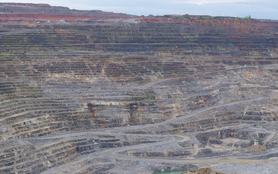
La Oroya, one of the most polluted towns in the world and the site of the Doe Run lead smelter.  Photo by Keith Slack.

La Oroya, one of the most polluted towns in the world and the site of the Doe Run lead smelter. Photo by Keith Slack.

In one of the most egregious cases, US company Doe Run has filed an $800 million suit under the US-Peru Free Trade Agreement against the Peruvian government, alleging that it failed to clean up the town of La Oroya where the company operates a 100-year-old lead smelter. The town is one of the most polluted in the world. The Peruvian government and local civil society organizations argue that Doe Run failed to comply with its environmental clean-up commitments.

Colombia could soon face suits like this as well. In March 2011, the Colombian government denied an environmental permit to Canadian mining company Greystar. Had the US-Colombia FTA been in place, the company might have brought an investor-state suit against the government. The fact that the company is Canadian wouldn’t have mattered. Mining companies use legal chicanery to incorporate themselves in whatever country suits their purposes. In the Pacific Rim case in El Salvador, the company actually suing the government is not the Vancouver-based one, but a “US-based” subsidiary, which seems to exist for the sole purpose of filing the CAFTA claim. (See an amicus brief submitted in this case.) Such transparently bogus attempts by mining companies to claim “residency” would be laughable if their potential impacts weren’t so serious.

Because of the “chilling effect” that investor-state provisions in free trade agreements can have on government efforts to regulate industry to protect the environment and public health (particularly in high-impact sectors like mining), a broad range of groups have called for their elimination. We support this position, even though we think it’s unlikely that corporations will allow governments to drop such sweeping protections.

If investor-state provisions can’t be eliminated entirely, then the capacities of governments to negotiate better contracts with mining companies should be strengthened. Governments, which now have more leverage than in the past due to high minerals prices, should push to include provisions in mining contracts that protect public health and environmental regulations. Doing so could help ensure that foreign investment actually benefits the country and local communities, and does not merely line the pockets of shady corporate operators.

Guatemala: Gold and Conflict

May 19th, 2011 | by

Today’s guest blog post is written by Keith Slack, Extractive Industries Campaign Manager.

This Friday marks the one-year anniversary of a ruling by the Inter-American Commission on Human Rights calling on the government of Guatemala to suspend operations at the Marlin Gold Mine, a large “open-pit” mining operation in the western part of the country. The ruling is unprecedented: never before has an international human rights body taken such a strong action on human rights problems related to a large-scale resource extraction project. As such, the ruling was a major victory for human rights activists who have been documenting human rights violations in the extractive industries for years. Unfortunately, however, Guatemala’s government has largely ignored the ruling and the mine continues to operate, contributing to further tension and violence as local communities – mainly indigenous peoples — raise concerns about the mine’s impacts on the land and water that they depend on for their survival.

Read the rest of this entry »

An $8 billion decision against Chevron – what does it mean?

March 7th, 2011 | by
One of hundreds of open oil pits left by Texaco in the Amazon.  Photo by Coco Laso/Oxfam America.

One of hundreds of open oil pits left by Texaco in the Amazon. Photo by Coco Laso/Oxfam America.

As David and Goliath stories go, it would be tough to match the struggle between poor, marginalized communities and one of the most powerful companies in the world, Texaco (now merged with Chevron), facing off in the Ecuadorian Amazon. That those communities just won a record-breaking $8.6 billion decision against the company is remarkable. The case is far from over – Chevron will continue to “fight until hell freezes over, and then skate on the ice” (in the words of its prior General Counsel) – but some initial reflections are in order.

I made my first trip to the region in 1993 as part of a rag-tag team of lawyers searching for potential plaintiffs for this quixotic case against Texaco. At the time, Texaco had just departed Ecuador, leaving over 900 open waste pits scattered through the jungle and an estimated 18.5 billion gallons of toxic waste dumped into surrounding rivers and streams over a 25-year period. The company, with annual earnings three times the GDP of Ecuador, had been given free rein to open up the Amazon and dispensed with any efforts to protect the environment or population.

We had no trouble finding plaintiffs – people were surrounded by the waste and contamination, which was openly seeping into their only sources of water. An estimated 30,000 people were affected by Texaco’s operations (one group of indigenous peoples disappeared). When the company finished it simply walked away.
Read the rest of this entry »

RSS Feed