Posts Tagged ‘Sudan’

The Growing Battle between Mining and Agriculture

April 17th, 2013 | by

By Keith Slack, Global Program Manager, Extractive IndustriesThis post originally appeared on the blog of the US Institute of Peace’s International Network for Economics and Conflict.

“Si a la vida, no a la mina” (Yes to life, no to the mine) is a rallying cry heard across many parts of rural Latin America these days. Mining, as well as oil and gas extraction, has exploded across the region in the last decade, driven by high prices for gold and industrial metals like copper that are needed primarily to feed the Chinese economy. This boom has also been experienced in Africa and Asia, where governments have sought to exploit their resource endowments to drive development. Fragile states like SudanBurma and Afghanistan have also begun to develop their mining sectors. The expanding mining sector has contributed to strong economic growth in some countries but has also generated social conflicts in rural areas that must be urgently addressed.

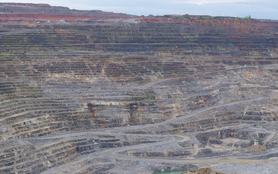
Area near Tintaya Copper Mine (Espinar), Cusco, Peru. Photo: Chris Hufstader / Oxfam America

The heart of the issue is that mining activity has come into direct competition with another predominant means of economic development in rural areas: small-scale agriculture. Tensions over control of land and, most importantly, water have led to community protests and violent conflict. Reconciling these two important development drivers has become a critical governance issue, particularly in the most fragile states where the conflicts between the two can often be seen most starkly.

In theory, both mining and agriculture can provide pathways out of poverty. The World Bank and development-focused academic researchers have emphasized the critical role of agriculture in promoting rural development. (Three-quarters of the world’s poor live in rural areas.) Agriculture provides direct benefits to those who engage in it. Farmers receive payments for crops they produce, which they can then use to invest in future production and to pay for their families’ basic needs. Mining can also play a role in promoting development, although more indirectly, by generating revenues for governments. Governments can use taxes and royalties paid by mining companies for infrastructure investments and other productive purposes. Mining companies also pay for community development programs, build schools and roads, and make other investments.

Unfortunately, the compatibility of these two development paths, which tend to take place in the same rural areas, is at best questionable. Mining generates significant “externalities,” e.g. water pollution, that can have a direct impact on agricultural production. These negative impacts can be permanent and render previously fertile agricultural land unusable. Mining also requires large amounts of land that could otherwise be used for agricultural production. This sets up a direct competition with small-scale agriculture for control and use of land. In some countries such as Ghana, farmers displaced by mining projects turn to small-scale mining as a replacement livelihood. This can perpetuate a cycle of poverty and conflict in which these farmers-turned-miners are forcibly evicted and beaten by police for coming onto land claimed by large-scale mining projects.

Mining companies argue that mining and agriculture are not necessarily incompatible. But there are few examples of where this has been the case, particularly in developing countries, where oversight of the mining industry is often very weak. Finding ways to reconcile these two economic activities is urgently needed to reduce conflicts and ensure that mining’s benefits contribute to long-term sustainable development in rural economies.

Communities relocated to make way for gold mines in Ghana struggle with loss of agricultural land, unemployment, and environmental damage. Photo: Neil Brander / Oxfam America

Governments and companies should take specific steps now to address this situation. First, the environmental impact assessment process for mining projects needs to be significantly strengthened and made more independent. At present, governments rely on information provided by companies, which is most often not reviewed by an independent third-party. Companies thus have an incentive to downplay potential impacts of their operations on land and water in agricultural areas. In countries such as Peru, local agricultural communities’ lack of confidence in these environmental reviews contributes to anxieties about the impacts of mining, which in turn contributes to conflict. Additionally, mining is increasingly done in “clusters,” meaning several mines operate in the same geographic area in order to take advantage of shared infrastructure and processing facilities. The cumulative impacts on land and water of several mines operating in the same area have not been thoroughly examined. The use of what are known as “strategic” environmental impact assessments, which take into account these cumulative impacts, would be an important step to increasing communities’ confidence.

Improved planning on how land will be used is another crucial step that governments should take. Mining concessions are often awarded without consideration for impacts on agricultural production. Later this year Oxfam America will publish research that shows graphically how mining and oil concessions have expanded dramatically in recent years in agriculturally productive areas of Peru and Ghana. Zoning land for particular uses, e.g. mining or agriculture, would help reduce conflict by establishing clear rules for how land will be used. Greater dialogue between the mining and agricultural sectors would be helpful. In Peru recently, the mining and agriculture ministries have signed a cooperation agreement. This is potentially a positive, although overdue, step.

Reconciling mining with agriculture in developing countries, particularly in the most fragile states, won’t be easy. It may ultimately require the admission that the two simply are incompatible over the long-term in particular areas. What is clear is that these discussions are urgently needed now so that conflict and violence produced by the juxtaposition of these two sectors diminishes and that countries can benefit from both their above-and below-the-ground resources.

Secretary Clinton in South Sudan: Speaking hard truths as a friend

August 2nd, 2012 | by

Secretary of State Hillary Clinton makes her first visit to South Sudan Friday, making her the highest-ranking US official to visit the world’s newest country. Her trip could not come at a more important time. The UN Security Council gave South Sudan and Sudan until August 2 to move forward with political negotiations and enabling humanitarian access to Southern Kordofan and Blue Nile, where more than 665,000 people have been internally displaced or severely affected by conflict according to the UN. Both countries are now in violation of this ultimatum, putting them at risk of UN sanctions. In the meantime, civilians on both sides of the border are suffering, including 4.7 million people in South Sudan—half the country’s population—who do not have enough food to eat.

A new borehole drilled by Oxfam in Warrap State, South Sudan. Photo by Noah Gottschalk

The official purpose of the trip—part of a seven-nation tour of Africa—is to “reaffirm U.S. support and encourage progress in negotiations  with Sudan to reach agreement on issues related to security, oil and citizenship.” The US has remained deeply invested, both through ongoing high-level diplomacy and through the provision of significant humanitarian and development assistance, in trying to help South Sudan find its way out of the worst crisis since the end of the two decades’ long civil war. By sending America’s most senior diplomat, however, Washington is signaling its escalating concern as well as its impatience with the slow pace of progress.

In his remarks marking the country’s independence just over one year ago, President Obama expressed his confidence that “the bonds of friendship between South Sudan and the United States will only deepen in the years to come.” But being a true friend means speaking hard truths, and Secretary Clinton must use the opportunity of her visit to express concern with the political developments which are having such a massive humanitarian impact on South Sudanese civilians and putting at risk the hard-won gains of peace.

In December, I watched Secretary Clinton address the International Engagement Conference on South Sudan in Washington. In one of the most frank speeches of the two-day event, she welcomed the new nation to the international stage while clearly outlining the challenges ahead. While lauding the new country on achieving its “quest for peace and dignity”, she urged South Sudan to “move forward”, “leave war behind”, and “finalize [the] hard-won peace”. Her discussions with senior South Sudanese officials in Juba, including President Salva Kiir, will not be easy. As Clinton herself recognized, South Sudan has many reasons to be skeptical of continued diplomacy, and progress depends on a “willing partner in Khartoum”. Nevertheless, both countries have no other option but to end their political and economic crisis through negotiations. By sending this message, Secretary Clinton joins the growing voices in South Sudanese civil society urging the government to make the difficult compromises necessary to stop the spiraling crisis in the immediate term, and over the long run, to enable a brighter future for the people of both Sudan and South Sudan.

South Sudan: Returning to hunger

July 6th, 2012 | by

Credit: Noah Gottschalk

As South Sudan celebrates the first anniversary of its separation from Sudan, the world’s newest nation faces multiple challenges including simmering tensions along the border, the influx of an estimated 165,500 refugees from ongoing conflict in Sudan, inter-communal conflicts, and an economy crippled by the closure of the border and shutdown of oil production. Perhaps most alarming, however, is the escalating food crisis threatening nearly half of the country’s 9.7 million inhabitants according to recent UN estimates. As the government, UN, and NGOs struggle to respond, the country is anticipating the arrival of hundreds of thousands of South Sudanese who are among the last remaining in Sudan and now face an uncertain future back ‘home’. These returnees are triply vulnerable. The already difficult return and reintegration process ahead of them is exacerbated by the economic crisis in South Sudan, while the multiple and overlapping challenges facing the fledgling state means that returnees’ needs are being overshadowed by broader crises. Instead of a joyful homecoming, they face a future of uncertainty as the country marks the anniversary of its political independence with only the certainty that it will remain dependent on foreign assistance for the foreseeable future.

I recently traveled to South Sudan, where I had a chance to speak with some of the newly arriving returnees. They told me about their journey and about their friends and relatives still on the way. In Wau, I spoke to returnees unloading their possessions from a train that had just arrived from Sudan. They described the economic and political pressures to leave Sudan, including the loss of Sudanese citizenship, and the difficult, 18-day train journey ‘home’. A tall Dinka woman wearing a brightly-colored Sudanese tobe and a black ski cap eloquently described her journey from a South Sudanese area of Khartoum all the way to Wau. She had never been to South Sudan and spoke Dinka with noticeable difficulty. Like many others I spoke with, she had little idea of what she would do in South Sudan. Her husband had returned many months earlier, but she had no means of finding him after her mobile phone, which contained his contact details, was stolen. A short while later, a shy 17 year old boy told me how he had come to South Sudan alone, and had no idea where to go and no way of finding friends or relatives. He was coming to the station whenever a new train of returnees arrived in the hopes of running into someone he knew who might be able to help him.

Such stories of people trying to establish a new life in an unfamiliar and challenging new environment were common throughout the years between the signing of the Comprehensive Peace Agreement (CPA) in 2005 and the referendum on the future of South Sudan in 2011. In that six year period, the return of Southern Sudanese was a political imperative for the Government of Southern Sudan and hundreds of thousands returned from Ethiopia, Kenya, Uganda, the Republic of Sudan, Egypt, and further afield with significant attention and financial support from the government and the international community. Events since then, however, have created an environment where the needs of returnees have been overshadowed. Nevertheless, tens of thousands of South Sudanese continue to return. Once their journey is over, they join nearly a million recent returnees struggling to find their feet in a land that is technically at peace but still very much in crisis.

Despite South Sudan’s huge potential and abundant natural resources, half a century of marginalization and conflict has left the country severely impoverished, with extremely low literacy rates, high levels of displacement, and woefully inadequate infrastructure and public services. Although the seven years since the signing of the CPA enabled greater efforts to address these fundamental issues, investment has fallen short of needs. In the year since South Sudan gained its independence, however, the country risks backsliding  in the face of an economic outlook and austerity measures that slashed budgets for almost all social services. At the same time, politicized tribal conflict, ongoing militia activity, and conflict along the border with Sudan threaten the physical safety of civilians across South Sudan. For returnees, this means returning to a volatile and potentially dangerous independent homeland with only minimal support.

Reintegration and absorption capacity within South Sudan is already extremely limited. The disproportionate focus on the physical return of displaced southerners over their reintegration which characterized the CPA period continues today, and as a result many thousands of returnees are still awaiting assistance and access to land.

Those reintegration efforts that do exist tend to be heavily focused on return to rural areas, with far too little attention on either the link between rural livelihoods and constraints on access to land, or on return to urban areas. Returnees who do not want to settle in rural areas—either because they are uncomfortable with a rural lifestyle, lack connections to those ‘areas of origin’, or because those areas lack basic services—regularly face difficulty in acquiring land in towns. This is for multiple reasons, including government policies which seek to avoid overcrowding of towns, particularly state capitals. The scarcity of job opportunities in urban areas and insufficient programming to target returnees seeking to live in towns, particularly in places like Kuajok and Aweil, have the potential to leave large numbers of recent returnees without any means of sustainably supporting themselves and their families. The Government of South Sudan has a policy that commits it to providing basic services and assistance to returnees. But its ability to deliver is now in question under the austerity budget. Therefore, the government must urgently revisit and outline its reintegration plan, with both humanitarian and development actors involved, to assess the ability to support new arrivals and provide resolution to outstanding issues, such as land distribution, for those returnees already in South Sudan.

More broadly, the oil shutdown in South Sudan brings into critical focus the need for South Sudan to diversify its economy, and particularly to  develop its full agricultural potential for the benefit of all South Sudanese, including returnees. Ultimately, South Sudan must escape cyclical food insecurity and dependence on emergency food aid. It needs to support vibrant markets and a diverse economy, while building a social safety net. For this to become a reality, the international community must continue to pursue all channels to support negotiated solutions to the conflict between Sudan and South Sudan and the resolution of the outstanding CPA issues. Without real peace, there can be no full humanitarian access, durable solutions for Sudanese refugees, or the sustainable development solutions necessary to build a resilient and self-sufficient South Sudan.

Read more about what Oxfam is doing in Sudan and South Sudan.

Wanted: Peacekeepers who keep peace

June 16th, 2011 | by

This blog was written by Noah Gottschalk, Senior policy advisor for humanitarian response.

The Republic of South Sudan will become the world’s newest country on July 9, just over three weeks from today. Casting a shadow over the celebrations that should mark South Sudan’s first independence day will be the situation along the new country’s border with the north.

Since I last wrote about the contested area of Abyei, from which the United Nations now estimates over 100,000 people have been displaced, the situation has deteriorated, with fighting spreading to neighboring South Kordofan. Latest reports indicate 6,000 people are seeking safe haven around the UN compound in the state capital Kadugli, with estimates of nearly 60,000 more displaced and unknown numbers seeking refuge in the Nuba Mountains, their exact whereabouts and condition unknown. To further complicate matters, ongoing violence and serious fuel shortages are making it harder for people to flee fighting and for aid groups to reach people in need. Higher fuel costs also mean higher commodity prices, a serious problem in a place where 90% of people live on less than one dollar a day.

While aid efforts are underway to assist people who have fled Abyei, the UN has been investigating why its peacekeepers were unable to prevent the crisis from escalating in the first place. Last week, General Babacar Gaye, the former commander of UN troops in neighboring Democratic Republic of Congo and currently the top adviser to the UN’s Department of Peacekeeping Operations (DPKO) visited Sudan to find out for himself. His conclusions were damning. A spokesman said the peacekeepers “could have and should have had more visibility to deter any violence against civilians” and insisted that they would learn from these mistakes.

This family recently returned to southern Sudan after 21 years of living in the north, in the hope that after independence they would be able to have a better future.  Photo by Caroline Gluck/Oxfam

This family recently returned to southern Sudan after 21 years of living in the north, in the hope that after independence they would be able to have a better future. Photo by Caroline Gluck/Oxfam

Discussions in New York over the coming weeks will have a big role in determining if this will actually happen. South Sudan will get a new UN Peacekeeping mission when it becomes a new country. At issue is whether the new mission prioritizes the protection of civilians from violence with a mandate under Chapter VII of the UN Charter to physically intervene – with force if necessary – when civilians’ lives – including aid workers – are under threat. Some within the US government are reluctant to give the new mission the mandate to do so, worrying that it might be seen as undermining the new government of South Sudan. The reality, however, is that the new government, despite its laudable public commitments to protecting its people from violence, still needs support from the international community. The new government continues to work to transform its fighting forces into a professional army and to develop a civilian police service, and faces significant challenges in protecting southern Sudanese against the wide array of threats they face. North-South tensions are not the only such threats: civilians are also increasingly put at risk by violence between the SPLA and other armed groups, large scale clashes between communities, and the ongoing threat of the Lord’s Resistance Army.

As one of my colleagues working in Juba recently said, “Protection of civilians is an extremely complex, resource-intensive and politically sensitive task, one which arguably UNMIS was not set up to effectively do.” We can change that if the new mission gets it right from the start. It should have a mandate both to protect civilians from violence and to work with the new government to make it better able to protect its own people in the longer term, so in the future it can do so without a peacekeeping force.

In January, President Obama described the relatively peaceful referendum in which southern Sudanese overwhelmingly voted for secession as giving “the world renewed faith in the prospect of a peaceful, prosperous future for all of the Sudanese people — a future that the American people long to see in Sudan.” That future is at risk right now. But our government can and must make the right decisions to support the world’s newest country and its people, and to restore the hope we all felt just five months ago. Supporting a Chapter VII mandate is the best way to start.

Sudan: What’s next for Abyei?

May 31st, 2011 | by

This blog was written by Noah Gottschalk, Senior policy advisor for humanitarian response

Tensions are running high in Sudan, where an upsurge in violence in the border region of Abyei has displaced tens of thousands of people and raised fears of a return to all-out war.

With just over six weeks to go before South Sudan becomes the world’s newest country, the world’s focus has largely been on the incredible accomplishments of the largely peaceful referendum held last January to determine the future of Sudan. The results of that vote, which was a key provision of the 2005 Comprehensive Peace Agreement (CPA) that ended more than two decades of conflict, were overwhelmingly for secession, and southerners have been readying themselves for what they had hoped would be a peaceful independence day.

Yet with the violence in Abyei – an area roughly the size of Connecticut that was one of the worst-affected areas during the war and has long been seen as a key flashpoint of conflict –the security situation is on a knife-edge. The conflict in Abyei comes at a time when southern Sudan is facing its most violent year since the end of the civil war in 2005. Not including these recent events, over 1,400 people have been killed in southern Sudan so far this year – already more than in the whole of 2010 – and at least 117,000 have fled their homes, as violence has dramatically increased in recent months.

The Sudan referendum happened peacefully, but violence has broken out in the border region of Abyei. Photo by Alun McDonald/Oxfam

The Sudan referendum happened peacefully, but violence has broken out in the border region of Abyei. Photo by Alun McDonald/Oxfam


Read the rest of this entry »

Why Congress must find a way to save conflict prevention programs

March 17th, 2011 | by

The debate on the federal budget has become so boilerplate that I can’t force myself to read the opinion pages any more.

Michael Kinsley recently wrote a piece supporting the proposal to eliminate the US Institute of Peace. He’s dead-wrong on that, but he was right that most budget commentary these days is formulaic – checking off a list of requirements:

1. Expression of general support for deficit reduction.
2. Reference to babies and bathwater.
3. This program/agency/tax break is different. A bargain for the taxpayers. Pays for itself many times over. To eliminate or cut would be bad for children/our troops.
4. Cost is small (a) as percentage of total budget; (b) compared with budget of Pentagon; (c) compared with projected cost of health care.
5. Optional comparisons: to cost of just one jet fighter or 3.7 minutes of War on Terror.
6. Names of famous people who support this program or tax cut, especially Colin Powell.
7. This is about the other side irresponsibly pursuing an ideological agenda, penalizing programs it doesn’t like.

Ok – so today, I want to rebut a proposed budget cut. AND I want to accept Kinsley’s challenge not to use the checklist. Here I go…
Read the rest of this entry »

Great expectations in southern Sudan

February 10th, 2011 | by

The final results of the referendum in southern Sudan were released on February 7, with 98.83 percent of southerners voting for independence. The people in southern Sudan are jubilant. After years of fighting for self-determination the day has finally arrived; and it has finally come through a peaceful and credible democratic process.

That same day, Sudanese President Omer Hassan Al-Bashir wasted no time and officially accepted the final results. And President Obama offered a congratulatory statement and announced the intention of the United States to formally recognize Southern Sudan as a sovereign, independent state in July 2011.

Many southern Sudanese believe that independence will unlock a prosperous future for their children. They have heard promises from policymakers for years that the region will be transformed from one of the poorest places on earth to a breadbasket of Africa. Oxfam staff asked southern Sudanese about their hopes for the future. Watch the video below to see and hear what they had to say.


Read the rest of this entry »

Raise a glass to #193 and then get back to work

February 3rd, 2011 | by

Sudan’s referendum occurred peacefully, but the country will need significant international engagement and long-term support. Photo by Alun McDonald/Oxfam

Sudan’s referendum occurred peacefully, but the country will need significant international engagement and long-term support. Photo by Alun McDonald/Oxfam

By mid-February, the world will learn whether the people of southern Sudan voted to become the world’s 193rd independent state. Initial results came out this week and it looks like the vote was overwhelmingly for succeeding from the Republic of Sudan and forming their own independent country.

The referendum on southern independence is a significant milestone in the 2005 Comprehensive Peace Agreement (CPA) between the Northern dominated National Congress Party and the southern led Sudan People’s Liberation Movement. The CPA brought a formal end to a devastating 22-year civil war that killed more than two million people and drove more than four million from their homes. The United States put a lot of effort into ensuring the referendum occurred on time and peacefully. Amazingly, the weeklong independence referendum, which ended on Jan. 15, was completed without violence or other any significant disruptions. The fact that the vote did not spur any major violence is no small feat in a country where the majority of people have spent most, if not all, of their lives living in a situation of armed conflict.
Read the rest of this entry »

RSS Feed