Attacks on activists, journalists, and others defending human rights place the United States within a global trend of repression. Can we move from a sense of American exceptionalism to solidarity?
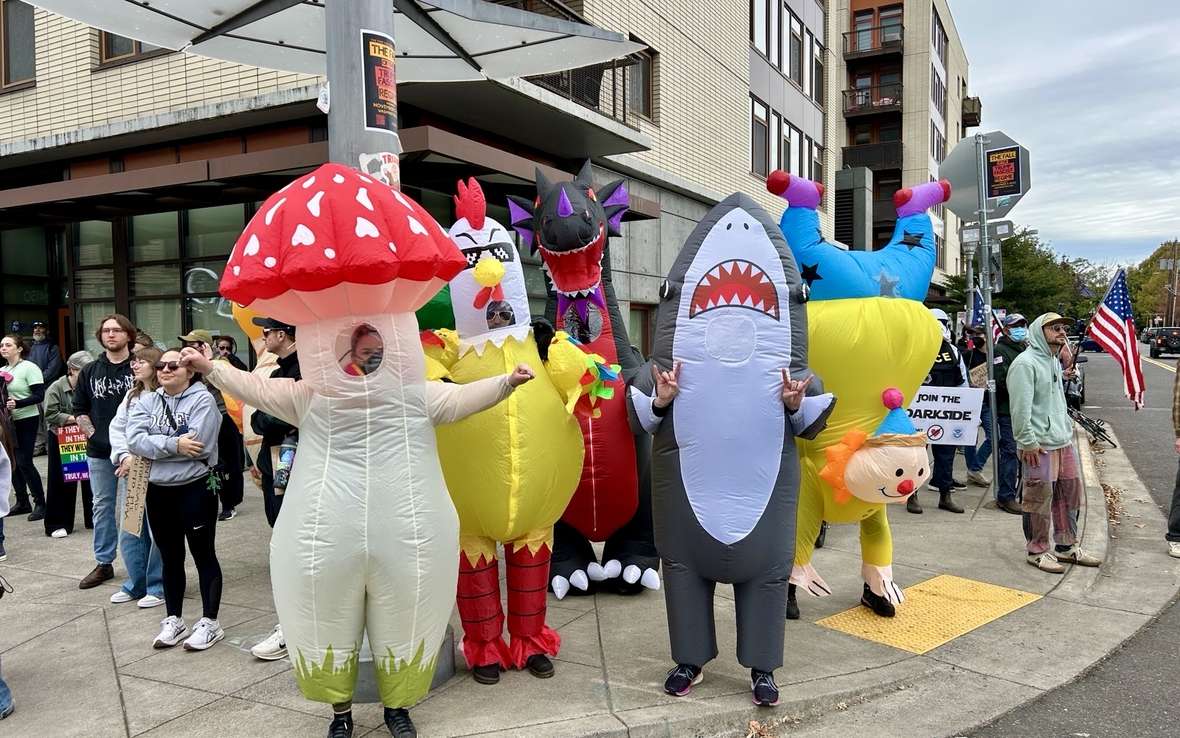
The use of chemical agents against protestors in Oregon, including children, and the extrajudicial killing of Alex Pretti in Minnesota by Immigration and Customs Enforcement (ICE) agents are tragedies of the current political era. They are also stark reminders, at least for those of us in the United States, that human rights and civil liberties are never fully guaranteed. They were secured by American activists, environmentalists, journalists, Indigenous and religious leaders, and labor organizers across generations – and these human rights defenders are now under renewed attack.
“Renewed” because these attacks have a long, dark history in the US. The military has been used to clamp down on striking miners and railroad workers in the past. Likewise, today’s unaccountable, masked ICE operations echo frontier militias in the American West and “slave patrols” in the American South.
Sadly, recent attacks on human rights defenders also place the US within a global trend of repression, which I have observed firsthand in 15 years of human rights advocacy.
According to the United Nations, at least 625 human rights defenders were killed or disappeared in 2024. That is at least one activist, journalist, or trade unionist every 14 hours. Alex Pretti, a Veterans Affairs nurse who appears to have been peacefully documenting human rights violations, is a tragic example of the authoritarian tactics that are undermining human rights protections everywhere. Authoritarians who want to hide acts of corruption, stifle dissenting voices, and cover up abuse view a strong and vibrant civil society as a threat—and see human rights defenders like Pretti as embodiments of that threat.
While neither a historical aberration nor a global outlier, the current human rights situation in the US is jarring and uniquely challenging. Jarring because the US has spent decades attempting to convince the world that human rights and democracy were central to our story and foreign policy. Uniquely challenging because the current Congressional majority is unwilling to hold this administration accountable for its lawlessness.
The foreign policy of the US has always fallen short of the rhetoric. I’ve been told countless times by US diplomats that competing economic or security interests outweighed speaking truth to power. I now worry that human rights defenders at home will receive the same treatment as those abroad, especially if the international community self-censors itself in deference to US interests.
US officials should be reminded in plain terms, that people like Pretti shouldn't be gunned down in the street for peacefully filming masked federal agents. That children attending peaceful protests with their parents should not be subject to tear gas. That ICE should stop murdering people without impunity and that there should be accountability and forceful, impartial, and investigations into these various allegations.
Of course, if one thing is exceptional about the US it is our economy, and even diplomats from the most rights-respecting countries will likely curtail their criticism on economic grounds. Barring a coalition of willing governments, protecting human rights defenders at risk in the United States will fall on civil society and business, who occupy a shared space under pressure.
At Oxfam, we frequently advocate “local-to-global” solutions because we know it works.
Local civil society groups – including human rights organizations in Portland, Oregon and Minneapolis, Minnesota – are best positioned to advocate for change within their communities and to document violations on the frontlines of protests, extractive projects, and conflict zones. These groups are perennially under-resourced while also bearing the brunt of crackdowns. Identifying and supporting these groups is critical.
Global civil society – organizations like Oxfam – must do a better job of connecting frontline human rights defenders with the mechanisms, tools, and international advocates that can help them hold the line. Authoritarians are learning from one another and expanding repression across borders; to counter this, activists are going to need more international learning opportunities, training, and solidarity with one another – to see their struggles as one in the same.
Businesses have a compelling role to play, too, especially given their relative power in the American economy. As we saw with companies calling for de-escalation in Minnesota, the private sector can leverage its powerful (but underutilized) voice for good and in defense of activists under attack. There is a business case for this in addition to a moral one: what is good for human rights is almost always good for the bottom line. Social conflict destabilizes operations and supply chains, undermines the social license to operate, frustrates consumer spending, and can cost companies millions.
Ultimately, we need to move from a sense of American exceptionalism to solidarity. The concept might be overused by civil society, but it seems essential to meeting the moment. Do businesses see themselves in their consumer or employee? Will diplomats treat abuses here as they do elsewhere? Can activists in Oregon and Minnesota identify and connect with struggles for freedom abroad – and vice versa?
Human rights defenders in the US are under attack, but they are not alone.


 via feedly