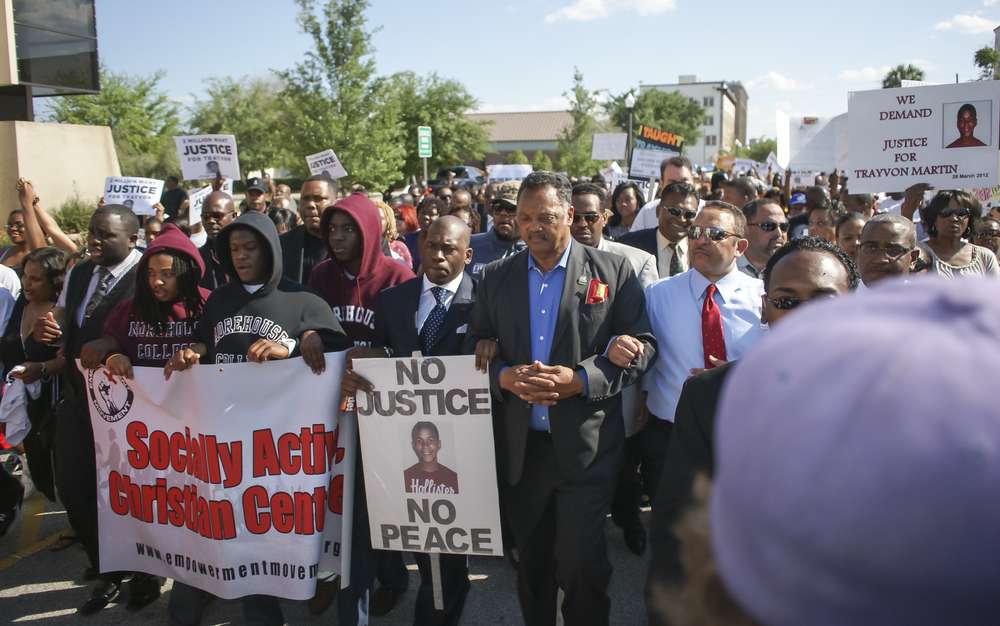
Rev. Jackson was a towering, enduring and multigenerational figure.
It should not be lost that the Rev. Jesse Louis Jackson passed away during the waning days of Black History Month. In the post-Dr. Martin Luther King, Jr-civil rights movement era, no one personified the global struggle for dignity, rights and freedom more than Rev. Jackson. Whether on the national or world stage, the unelected, non-royal Rev. Jackson amazingly commanded the honor and attention largely reserved for heads of state.
Rev. Jackson was a towering, enduring and multigenerational figure. He rose from being the brash 24-year-old aide to Dr. King’s leadership of the Southern Christian Leadership Conference (SCLC) then went on to become the most transformative progressive politician of the late 20th Century. Throughout his life, Rev. Jackson championed the needs of the dispossessed and channeled voices of the voiceless into the national political discourse.
For five decades, Rev. Jackson led the community-based organization Operation PUSH (People United to Save Humanity) in Chicago. PUSH hosted regular community action organizing activities and produced a host of local and state elected officials. PUSH kept Rev. Jackson cognizant of the changes occurring in urban America, as the federal government withdrew investment from inner cities. He became an early apostle against this shift and the country’s growing animosity toward the urban poor.
I have long felt a connection to Rev. Jackson. It was the Fall of 1971 when I was first introduced to him through a radio address. Then, Rev. Jackson was roiling a church congregation with his uplifting and motivational “I Am, Somebody” mantra. Ever since that day, I’ve been captivated by Rev. Jackson’s genius and ability to embolden people to believe in themselves and their sense of purpose.
For me, Rev. Jackson was the most curious leader I ever observed. He was a man who never let national boundaries limit his moral leadership. He was a Pan-Africanist and one of the most visible anti-Apartheid activists. He regularly donned daishikis and caftans on his numerous trips to Africa to strengthen ties with the United States. After Muhammed Ali, he was the most recognized Black American among African people. Rev. Jackson was one of the few who dared to speak out early in support of Palestinian self-determination and statehood. He withstood strong criticism for his views on Palestine. Rather, Rev. Jackson regarded himself as a bridge builder, which further served as a lifeline for the Palestinian cause.
On the home front, Rev. Jackson’s most indelible pursuits were his presidential campaigns of 1984 and 1988. Ever attached to his community and astute to national political headwinds, he launched presidential campaigns to keep Black political aspirations at the forefront of the nation’s conscience.
The 1984 campaign was launched at the height of President Ronald Reagan’s conservative revolution. Elected in 1980 in the wake of a sluggish economy and the Iran’s ouster of the Shah, Reagan blamed many of the legislative and social gains of the 1960’s and mid-1970’s for America’s decline. Most famous were his rhetorical tirades against waste, fraud and abuse. This was best characterized by his racist rhetoric depicting Cadillac driving welfare queens who unlawfully scammed the nation’s social safety net system.
Dismayed by Reagan’s offensive depiction of the Black inner city poor and the Democratic Party’s anemic embrace of its most loyal voting constituency, Rev. Jackson launched his campaign for president to articulate his opposition to Reagan’s assaults and galvanize the organization needed to breathe life into Black politics and the Democratic Party. While his campaign was too underfunded and disorganized to capture the Democratic nomination, his articulation of an inclusive vision and the power of hope, resonated well beyond his campaign.
Armed with lessons learned from 1984, Rev. Jackson entered the 1988 Democratic Primary with a new vision for what America could be. The strategy was to weave together segments of society that traditionally seldom worked together into an electoral force (a Rainbow Coalition) to transform America. Rev. Jackson appealed to farmers, labor organizations, immigrants, all religious groupings, women and minorities.
A college professor from Minnesota (Paul Wellstone) and the independent mayor of Burlington, Vermont (Bernie Sanders) were prominent supporters of Jackson ’88.
The campaign was better organized, funded and produced future Democratic Party luminaries such as Donna Brazile. Rev. Jackson’s effort turned the Democratic Primary on its head as he placed third overall. Former Massachusetts Governor Michael Dukakis won the nomination before going on to lose the general election to future President George H.W. Bush. Rev. Jackson’s messaging energized a new generation of voters and laid the groundwork for today’s progressive political movement.
During President Bill Clinton’s administration (1993-2001), Rev. Jackson was tapped to serve as Special Envoy for Africa. In this role, he oversaw Nigeria’s return to civilian rule (1999), the negotiated end to the civil war in Sierra Leone (1999), several missions to the Democratic Republic of Congo and mediation for the war between Ethiopia and Eritrea. In all, Rev. Jackson was welcomed with head of state status and indicated the level of seriousness the United States afforded Africa.
Black History Month 2026 will be remembered for the loss of a civil rights icon, a titan of American politics and one of the greatest Pan-Africanists. For 60 years, Rev. Jesse Louis Jackson told us, “I am Somebody,” worked tirelessly for freedom and dignity for all people, and demonstrated that we can never stop organizing.
In a final tribute to Rev. Jackson, I have attached to lyrics to Lift Every Voice and Sing. Sometimes referred to as the Black National Anthem, like Rev. Jackson, Lift Every Voice represents resilience, hope and triumph throughout the struggle for human dignity and universal freedom.
Verse 1
Lift every voice and sing
Till earth and Heaven ring
Ring with the harmonies of Liberty;
Let our rejoicing rise,
High as The listening skies,
let it resound loud as the Rolling sea
Sing a song
full of faith that the Dark past has taught us,
Sing a song
full of The hope that the present has brought Us;
Facing the rising sun
of our new day Begun,
Let us march on till victory is Won.
Verse 2
Stony the road we trod,
Bitter the Chast'ning rod,
Felt in the day that hope
Unborn had died;
Yet with a steady Beat,
Have not our weary feet,
Come to the Place on which our fathers sighed?
We have Come
over a way that with tears has been Watered,
We have come,
treading our path Through the blood of the slaughtered,
Out from The gloomy past,
till now we stand at Last
Where the white gleam
of our star is Cast.
Verse 3
God of our weary years,
God of Our silent tears,
Thou who has brought us thus
Far on the way;
Thou who has by thy Might,
Led us into the light,
Keep us Forever in the path, we pray
Lest our feet
Stray from the places, our God, where we met Thee,
Least our hearts,
drunk with the wine of The world, we forget thee,
Shadowed beneath the Hand,
May we forever stand,
True to our God,
True to our native land



 via feedly