Beyond funding cuts, the loss of USAID weakened U.S. leadership on advancing people-centered aid and shifting power to local actors.
This post is part of the Localization (R)evolution blog series, exploring why locally led humanitarian action - rooted in power, rights, and accountability - is essential to transforming the humanitarian system (read the introduction here and other posts in the series here).
One year after the elimination of the United States Agency for International Development (USAID), the global aid system is struggling to reinvent itself in the absence of billions of U.S. dollars. Food assistance stalled, health clinics closed, and disease outbreaks increased with the lack of clean water and sanitation services. A recent Oxfam analysis found that mortality in children under the age of 5 could increase for the first time in a century. In addition to the immediate effects on the daily lives of people living through humanitarian crisis, the loss of USAID has also shrunk the U.S. government’s focus on localization.
Why does localization matter?
The 2016 World Humanitarian Summit (WHS) launched the Grand Bargain, a series of commitments by humanitarian donors and aid agencies to make the humanitarian system more effective, efficient, and accountable. The U.S. government is a signatory to the Grand Bargain, formally recognizing the role of localization in strengthening foreign assistance. Its implementation plan included — among other reforms — a deliberate effort to engage local and national actors (specifically civil society groups and government entities) more equitably through increased direct funding, mutual capacity sharing, and shifting decision-making power to those most affected by crises. Localization is the transformation of the global international aid system to one that is collaborative, inclusive, agile and diverse in nature, and where aid decision-making processes are equitable and closer to affected people.
And the example the U.S., as the largest humanitarian donor globally, had set for other donors by taking up these WHS commitments was as important as the practice. The U.S. government was putting its international assistance on track to achieve more people-centered, equitable results.
The Past: U.S. policy shifted toward local
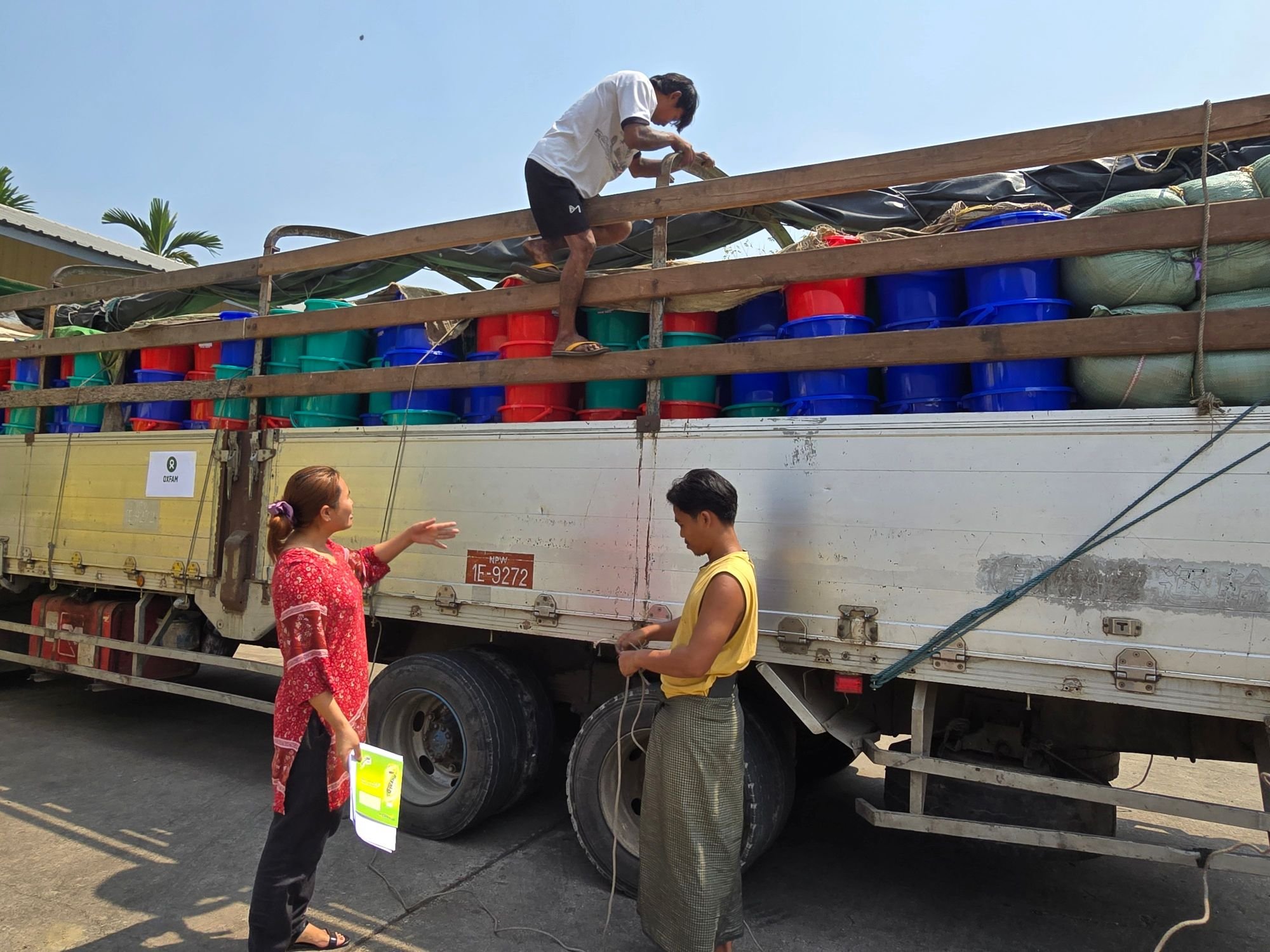
An important development was the 2021 announcement that USAID would include key targets for localization in the U.S. government’s international assistance policies and practices. Significant changes in USAID followed. In 2024, notable legislation improving local leadership was introduced. In 2025 there had been a small but noteworthy increase in the quality and quantity of its partnerships with local actors. More local and national NGOs were receiving funding from the U.S. government, more capacity sharing was underway so that donors and awardees alike could learn about best practices, and more partnerships were focused on making sure local communities and organizations designed and led responses.
However, over the past 10 years, local leadership has seen successes, but has not achieved the intended scale of change or the necessary shift of power. More investment in localization is required to catalyze that shift. Therefore, the drastic aid cuts – triggered in large part by the U.S. – poses great concern.
Trump Administration hamstrings progress on localization
It now appears that upholding the role of a positive changemaker in the global system is no longer a U.S. priority. The U.S. government’s funding cuts of 2025 forced many local NGOs to suspend or close operations, thereby shrinking both the opportunities for partnerships with those experiencing the effects of crises firsthand, and the number of capable actors available to respond.
In addition, the new administration’s narrow, U.S.-focused approach to international assistance runs the risk of not providing what communities actually need. The recent $2 billion pledge to fund U.N. humanitarian aid from the US barely scratches the surface of global need.
Dealing with the shockwaves: Local actors leading the way
Now, a full year after one of the most consequential changes in global international assistance in decades, local actors are trying to carry an even larger part of the responsibility for humanitarian action with even fewer resources. They are on the front lines supporting their communities and saving lives, while also trying to fill the many gaps left by the international NGOs and agencies affected by the U.S. funding cuts.
“Only local actors, local NGOS like us, were left trying to pick up pieces with fewer resources and rising needs.”
Aliona Paschenko, Program Manager of Tenth of April in Ukraine
One way to reduce this effect is to make sure local communities and organizations have real input into what activities are funded, how, and for whom. Localization in practice (not just in name) could help ensure that the limited amount of aid the U.S. now provides has impact on people’s daily lives.
These local organizations are more essential than ever; they are both the basis and the future of a better global system. But in its current approach to that system, the U.S. seems to have abandoned its role as a champion – or even just a proponent – of that stronger system.
U.S. investment in local humanitarian leadership benefits everyone: the assistance is more effective and appropriate, the support to local civil society contributes to capacity building that can reduce long-term dependence upon international assistance, and results are more sustainable in areas like health, food security and governance. And long-term stability abroad helps to make Americans safer by reducing challenges like global health threats and spillover of conflict.
What’s next: Difficult doesn’t mean impossible
While we should continue to advocate for the US government to get back to its localization agenda, it is up to the remaining donors, aid providers, and communities to keep the localization movement active in the face of the new funding and political realities in the U.S. and beyond. Oxfam will continue to adhere to its partnership principles, amplify and promote local voices in the humanitarian sector, and push for interventions that are locally led and owned. But the key to success in localization is a critical mass of humanitarians who speak with one voice and who do not accept that the new funding reality makes change too difficult. Difficult doesn’t mean impossible.
The local actors that have provided humanitarian and development assistance since long before the global system even existed remain the best option for ensuring that assistance continues to reach those who need it most, in the most effective way. A decade of struggle didn’t overhaul the system, but it moved the needle and proved that change is achievable. It taught us to listen to and be led by those who are living the reality of humanitarian crises. We started to learn what works and what doesn’t, and now we must continue to build on that foundation.
 via feedly