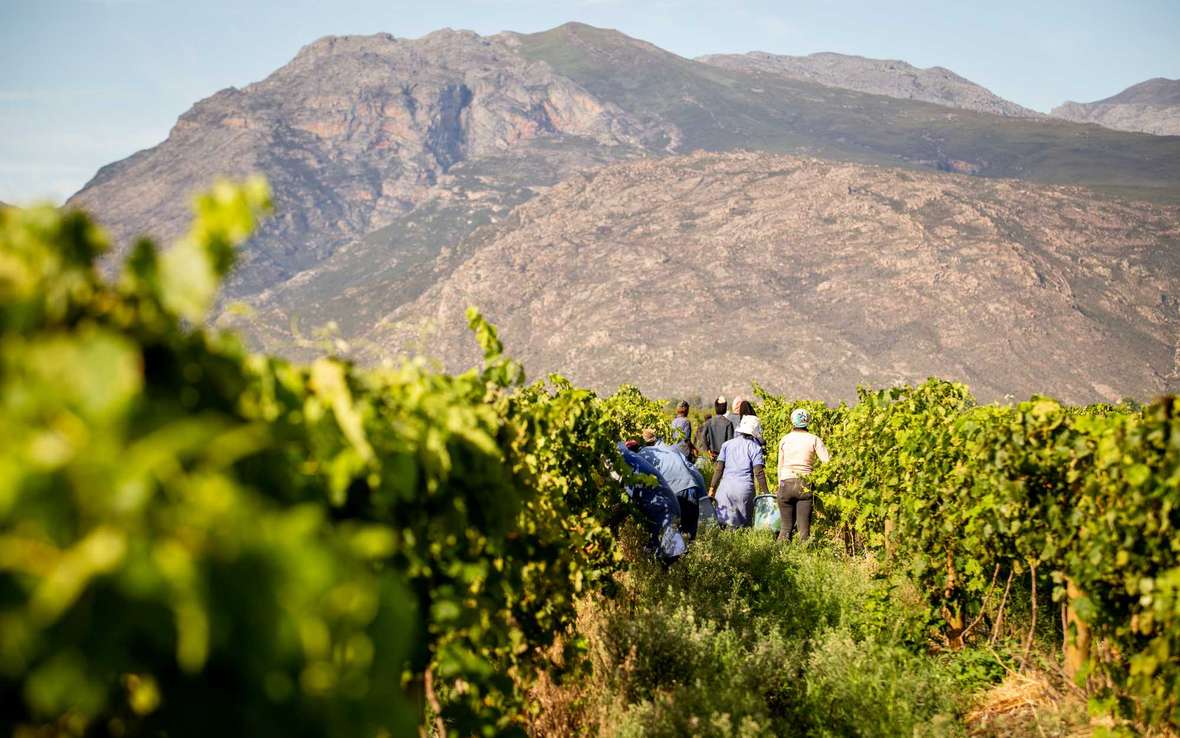
A new roadmap for meaningful engagement in global food supply chains centers the voices, knowledge, and agency of those most affected—workers, farmers, and communities.
Across the world, people who plant, harvest, process, and live alongside our food systems carry knowledge companies will never find in audits or distant reports. Yet too often, those people remain unheard. Workers facing unsafe conditions, communities protecting land and water, women and migrant workers confronting daily discrimination. Their lived experience rarely makes it into the rooms where decisions are made.
Seven organizations came together to shift that reality. Primarily written by Oxfam and co-created together with AIM-Progress, amfori, Ethical Trading Initiative (ETI), Ethical Trade Sweden, the Fair Labor Association (FLA), and the Food Network for Ethical Trade (FNET) , we developed Meaningful Stakeholder Engagement: Practical Guidance for Companies in the Agriculture and Food Manufacturing Sector. A practical tool to help companies engage stakeholders in ways that are safe, respectful, and enable them to genuinely influence the decisions that affect their lives. The guidance focuses on rightsholders including workers, smallholder farmers, communities, and their legitimate representatives. It was created through a consultative process that reflects the principles of stakeholder engagement it promotes, including dialogue with companies, civil society organizations, trade unions, and rightsholders. This process and collaboration itself signal something essential: meaningful engagement is not a solo effort. It requires dialogue, negotiation, and shared purpose.
The reality we must confront
Companies across agriculture and food manufacturing are under growing pressure to identify and address human rights and environmental risks. Many recognize the need for stronger engagement but struggle with how to do it meaningfully, particularly in complex, often opaque and multi-tiered supply chains. Evidence shows that rightsholders are rarely consulted in risk assessments and even less frequently involved in shaping solutions (WBA, Social Benchmark, January 2026). This means people facing the greatest risks remain the least likely to be heard.
Meanwhile, communities speak to the realities they face. As a member of the Barro Branco community in Jaqueira, Brazil told us:
“The company has no relationship with the community. The only relationship is conflict.”
When rightsholders’ voices are missing, companies miss critical signals and harms that could have been prevented continue unchecked.
Companies see this too. One representative captured the gap clearly:
“As a buyer we are 1–2 steps removed from the rightsholder. Understanding who can speak on their behalf, who is the right representative or channel, and making sure they can speak openly is key.”
This guidance was created to help bridge that divide between those who make decisions and those who experience their consequences.
Why meaningful stakeholder engagement is urgently needed
The agriculture and food sector is the world’s largest labor sector, but also one of the most unequal and high‑risk. And yet, meaningful engagement with workers and communities remains rare. Based on rightsholder testimony, Oxfam’s field experience, and global evidence, five realities make MSE indispensable:
- Hidden risks in long, often opaque and high‑risk supply chains
Many impacts are invisible to audits or desk‑based assessments. Only direct, respectful engagement can reveal how risks actually show up in people’s lives. - Intersecting and compounding forms of inequalities among rightsholders
Women, migrant workers, Indigenous peoples, and children in smallholder households often experience multiple, intersecting and compounding forms of inequalities – including gender, age, migration status, ethnicity, race, income level, and disability. Without deliberate engagement, their concerns remain unheard — even when they make up most of the workforce. - Interlinked social and environmental harms
Low wages, unsafe conditions, heat stress, land conflicts, water scarcity, discrimination, and gender‑based violence compound each other. Understanding these dynamics requires listening to those directly affected. - Power imbalances silence voices
Concentrated buyer power and thin margins limit the ability of farmers, suppliers, and workers to speak up safely. MSE helps create trusted channels for honest dialogue. - Companies are struggling — and the consequences are visible
Many companies are still struggling to operationalize human rights due diligence social inclusion and living incomes. Without meaningful engagement, early warning signs are missed—and harms persist.
These realities shape why this guidance is needed: people closest to risk must be central to identifying, preventing, and remedying harm.
How does this guidance help companies conduct meaningful engagement?
The guidance is grounded in something simple but transformative: rightsholders must be able to shape the decisions that affect their lives. Not symbolically, not as an afterthought, but as cocreators of solutions. To support this, the guidance offers:
- Clear actionable steps on who to engage, how to engage, and when across due diligence processes.
- Practical tools and templates including stakeholders mapping approaches, engagement planning frameworks, and methods for collecting and using input safely
- Real examples from agricultural and food manufacturing supply chains.
- Guidance for implementation, designed for use by procurement, sustainability, and human rights team
Designed for real-world use, companies can integrate these tools directly into existing risk management and due diligence systems.
Why meaningful engagement changes outcomes
When rightsholders influence decisions, companies:
- Identify risks earlier and more accurately
- Prevent harm before it escalates
- Strengthen human right due diligence processes
- Build trust that makes supply chains more resilient, and grounded in reality.
This is not only a social imperative—it is a business one. Better engagement leads to better information, stronger decisions, and reduced exposure to operational, legal, and reputational risk.
For rightsholders, meaningful engagement is about recognition, agency and safety. It creates space for people to speak without fear, influence decisions, and claim a role in processes that have long excluded them.
This guidance aims to support a shift away from extractive consultation and towards engagement that redistributes voice, influence, and dignity.
A collective invitation
This is not a one-size-fits-all model. It is a roadmap for companies ready to engage differently, ready to center workers and communities, listen deeply, and build decisions with those most affected.
We invite companies and investors
- Download and use the guidance
- Adapt it to your context and operations
- Integrate it into due diligence and risk management processes
- Share feedback on the guidance here
Because engagement should not be symbolic. It should be transformative.


 via feedly