The human rights abuses flowing from U.S. companies don’t stop at our borders. Neither should accountability
Big Tech Profiting Off the Disfavored
Jane sits at her kitchen table and cracks open her laptop. She glances over her shoulder; no one else is home. She activates the VPN, and navigates to a website forbidden by her government.
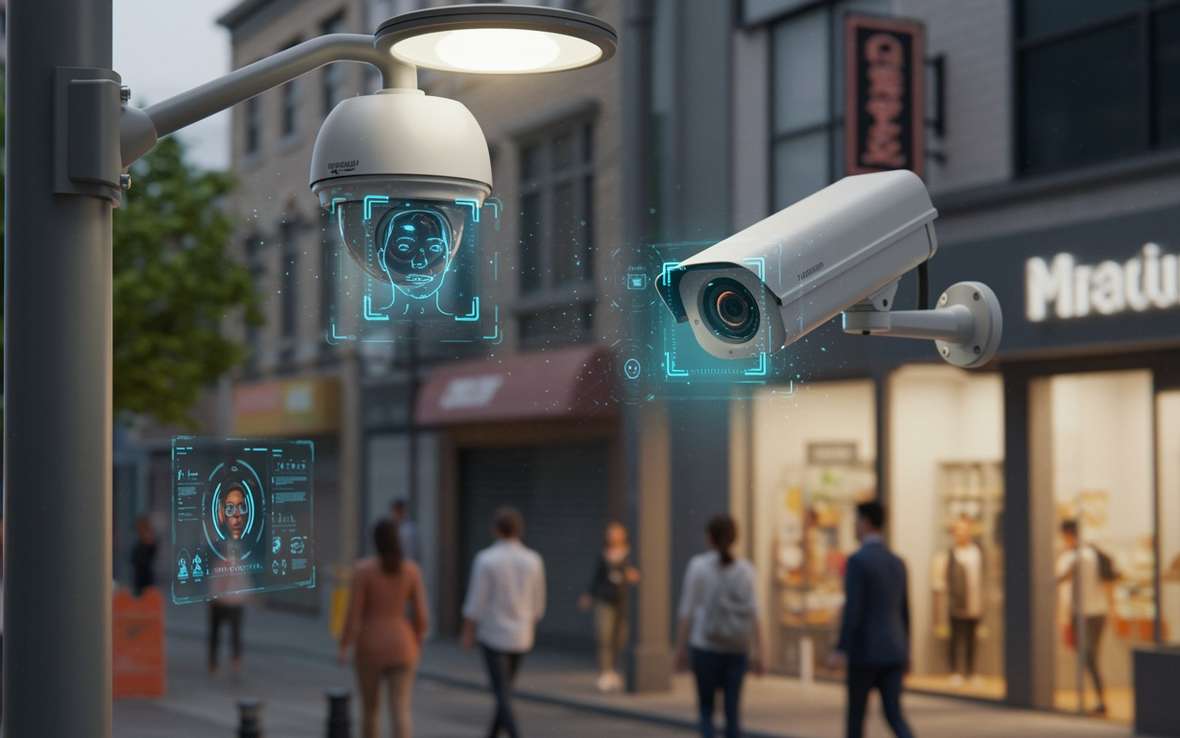
While Jane may have been alone, she was not invisible: within minutes, authorities enter her home, seize her devices, and whisk her away to a detention center. Jane reports being repeatedly tortured. During these sessions, the police justify their torment by alluding to private information they gathered while stalking her keystrokes with a U.S. company’s surveillance technology.
***
A continent away, children digging in cobalt mines toil under hazardous conditions. They excavate the earth for mineral ores by hand, risking tunnel collapses, toxic dust, serious injury and death in exchange for minimal wages and a life of poverty. They – and their adult counterparts – endure human trafficking and modern slavery in order to procure the rare earth minerals purchased by rapacious U.S. technology companies, which install these into cell phones, batteries, and other electronics.
Morally, the culpability of these companies is unquestioned. Legally, it shouldn’t be either.
Corporate accountability before the Supreme Court
This week, the Supreme Court will hear oral arguments in Cisco v. Doe, a landmark case challenging a company’s construction of tools that an authoritarian regime allegedly deploys to persecute - and attempt to erase - a disfavored minority.
While the Justices will weigh whether the San Jose-based company can be held liable for aiding and abetting torture overseas, the ramifications of the decision extend far beyond this particular dispute: if the Court rules in favor of the survivors, U.S. companies could be hauled into court for facilitating extraterritorial human rights violations. Given the extensive reach of U.S. companies into every corner of the globe, and the very real potential for them to cause incalculable harm – as communities facing American extractive companies, technology companies, and pharmaceutical companies know all too well – affirming that businesses cannot profit by helping abusers commit their crimes is of paramount importance.
The Economic Reality
Business, of course, is fighting back. In an attempt to evade liability, several amici, or “friends of the court,” submitted amicus curiae briefs arguing that companies should not be liable for facilitating atrocity crimes. Chief among these is the amicus curiae authored by the Chamber of Commerce, which pleads for corporate impunity, reasoning that accountability for human rights abuses would devastate the U.S. economy.
We disagree.
Alongside Nobel Prize winners Simon Johnson, Joseph Stiglitz, and a slate of influential economists, Oxfam submitted an amicus brief detailing why corporate accountability for human rights abuses will not damage the U.S. economy. In fact, the converse is true: ensuring U.S. companies are held accountable for their impacts simultaneously buttresses our economy while protecting American jobs. As the amicus explains:
I. Accessorial liability is an economically efficient means enforcing laws against the most egregious human rights abusers. Those with the strongest incentives to enforce compliance – survivors – can initiate proceedings at their own expense, while inducing good behavior via the threat of financial punishment for companies engaging in the most outrageous conduct.
II. Corporate accountability does not place U.S. companies at a competitive disadvantage, despite the Chamber’s claim to the contrary. First, there is no evidence that the risk of human rights litigation has ever compelled a U.S. company to halt operations, making this a specious claim on a practical level. Second, the rise in corporate accountability regimes across Europe and beyond means that our hypothetical competitors are faced with similar – and indeed, stronger – accountability regimes. Finally, the Chamber’s argument does not follow logically: holding American companies accountable for abusive behavior creates a level playing field for U.S. companies that respect human rights, and spurs a race to the top. This ultimately benefits U.S. corporations – an outcome that emerged when U.S. companies actually profited after the passage of the Foreign Corrupt Practices Act’s anti-bribery laws made U.S. companies seem more appealing. The specter of liability may be loathed by bad companies that refuse to comply with moral or legal dictates, but is painless and even lucrative for those playing by the rules.
III. Corporate accountability does not discourage foreign direct investment (FDI) in low-income states, as the Chamber also contends. Empirical evidence shows that countries with strong human rights records attract more FDI, not less; corporate impunity for human rights abuses would actually render these riskier and ultimately less attractive investments. Indeed, the defendant’s own business decisions disprove their argument: the company continues operating in countries with problematic human rights records despite protracted litigation over these very operations.
IV. Finally, surveillance technology companies hurt the U.S. economy by enabling the suppression of foreign workers, which in turn depresses domestic wages. Accessorial liability can discourage tech companies from creating artificial intelligence surveillance regimes that autocrats use to oppress workers. Because suppression of foreign workers leads to downward wage pressures at home and significant American job loss, U.S. tech companies selling abusive technologies ultimately hurts our own economy.
In an interconnected world, where the ripple effects of bad business decisions over here wreak havoc on lives over there, there is growing urgency to ensure that we can hold firms accountable for their impacts. Human rights abuses are no longer restricted to more antiquated notions of police jailing protestors or silencing political opponents; rather, these abuses are increasingly made possible by highly paid, highly educated engineers sitting behind a computer an ocean away, completely invisible to the lives they devastate. We urge the Supreme Court to recognize this reality lest companies’ penchant for prioritizing profit over human life takes an ever-increasing toll - with vulnerable communities paying the price.



 via feedly