This post is part of the Localization (R)evolution blog series, exploring why locally led humanitarian action – rooted in power, rights, and accountability – is essential to transforming the humanitarian system (read the introduction here and other posts in the series here).
This blog post was developed through a conversation between Flower Aceh and Oxfam, based on an interview with Flower Aceh’s Executive Director, Riswati. It has been collaboratively shaped to reflect Riswati’s voice and experiences.
For years, despite repeated commitments to localization, the humanitarian system has continued to confine local and women-led organizations to the role of subcontracted implementers. This must change. Evidence from our organization, Flower Aceh, a women-led organization in Indonesia, shows that when local women leaders drive the response, they do more than meet immediate survival needs effectively—they actively challenge structural inequalities and advance long-term gender justice.
Drawing on the experience of Flower Aceh and our response to the 2025–2026 floods in Aceh, this post demonstrates that feminist, locally led humanitarian action, backed by flexible and accessible funding, transforms how aid is delivered.
Responding to the “Blind Spots” of Crisis
When the mega-floods struck Aceh in late 2025, the scale of devastation was immense. Infrastructure collapsed, thousands of villages inundated, and 3.3 million people impacted.
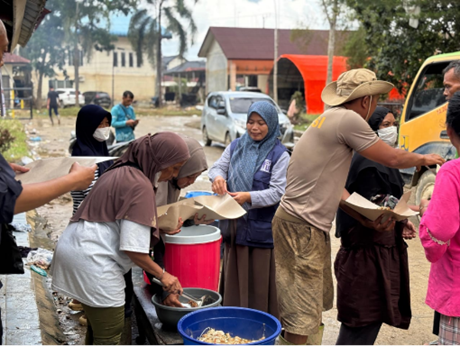
We chose to focus on what we call the “blind spots,” remote areas such as Aceh Tamiang and Aceh Utara, where communities were unable to access mainstream relief systems for days. In these spaces, we acted as first responders, as we could not afford to wait for government action.
The Critical Role of Flexible Funding
Our ability to act quickly and effectively was made possible by accessing flexible funding through the Humanitarian Fund of the Supporting Humanitarian Initiatives for Feminist Transformation in Asia (SHIFT Asia) project.
SHIFT Asia works in four countries – Bangladesh, Indonesia, Myanmar, and the Philippines – and is funded by the Gates Foundation and the Kane Family. The project champions women’s humanitarian leadership by placing women’s organizations and women leaders at the heart of decision-making spaces.
SHIFT Asia’s Humanitarian Fund is dedicated to helping women’s organizations prepare for emergencies, respond quickly when disasters strike, and support recovery in ways that reflect real community needs. Funding decisions are made by women’s organizations and for women’s organizations, an approach that stands apart from other flexible funding mechanisms.
We used the SHIFT Asia Humanitarian Fund to cover what other donors couldn’t, the small but vital costs that keep our team moving. Donations are often expected to go directly toward assistance, such as covering basic needs, and not toward operational costs. So, this can limit what organizations like ours are able to do. In this regard, support from the Humanitarian Fund has been incredibly helpful, as it provides much needed flexibility.
This flexibility allowed us to respond immediately, adapt to changing conditions, and prioritize what communities needed most, without being constrained by rigid procedures. Flexible funding supported and enabled our leadership. We had the ability to respond immediately, and we were able to leverage our proximity, trust, and deep knowledge of the community.
Practicing “Power With” Through Women’s Leadership
Our response was guided by a feminist principle we call “Power With”: collective power through solidarity and collaboration. We realize that we cannot be experts in everything, but by moving together, we can achieve so much more. This is the essence of ‘Power With’.
One of our first actions was establishing Dapur Umum (community kitchens), led entirely by women survivors. These kitchens became sites of food distribution where women made decisions, organized resources, and supported one another. Flower Aceh and our partner, Lifeguards Aceh, a volunteer disaster response rescue team, was able to support over 1,000 women and girls through these efforts. Centering women’s leadership, our women survivors determined what food was needed, ensured proper nutrition for children, and led distribution of the meals.
Centering Dignity, Protection, and Care
From the outset, we recognized that loss of shelter immediately increases risks, such as gender-based violence, especially for women and children. Protection and psychosocial support cannot wait until later phases. We established Posko Tanggap Bencana (disaster response posts) as safe, informal spaces where women and children could access counselling and support. Alongside this, we distributed over 750 kits containing menstrual supplies, diapers, and clothing, items that are often overlooked but essential for maintaining dignity.
Producing Knowledge With Communities
Flower Aceh also challenged how assessments are typically conducted during humanitarian emergencies.
As part of our response efforts, we conducted a rapid gender assessment, organized in partnership with the Women in Local Humanitarian Leadership Consortium and Oxfam. Through this assessment, we identified the gender-specific impacts of the crisis. Crucially, we worked alongside women in affected communities not just as respondents, but as co-researchers. Women involved in communal kitchens and community spaces became enumerators, documenting the needs of those around them. This approach generated deep insights and ensured that assistance was shaped by the priorities identified by the community itself.
From Immediate Response to Systemic Change
Our work was just beginning with our flood response. By documenting evidence from the ground, we are now leveraging our experience to influence the Aceh provincial post-disaster and rehabilitation construction plan, successfully gaining access to local government decisionmakers. This is a critical part of localization: ensuring that communities and local and women-led organizations are also influencing the decision-making spaces that shape recovery and future resilience.
A Call for a Different Humanitarian Future
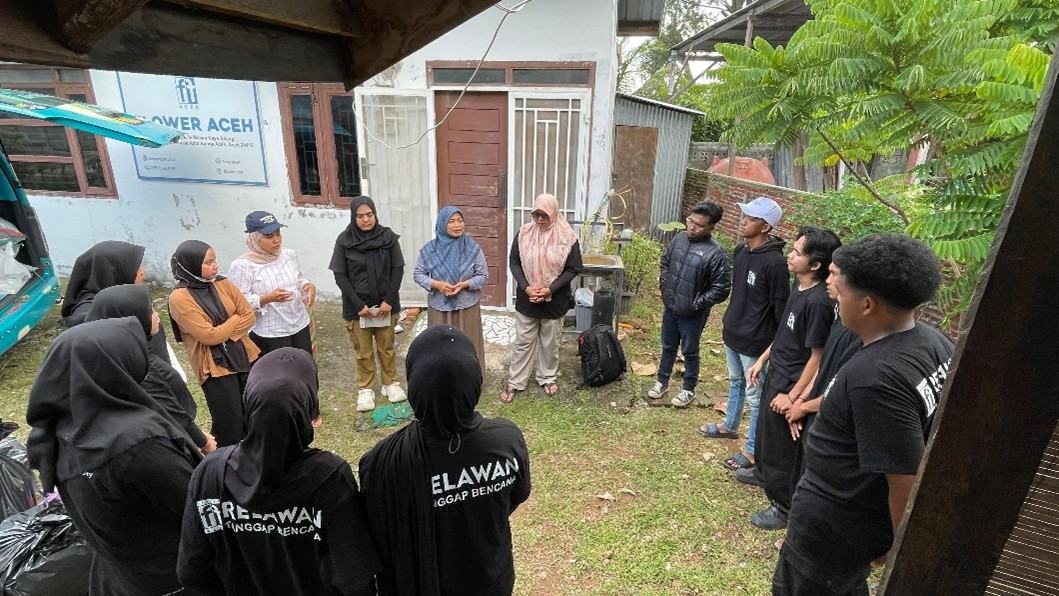
For Flower Aceh, feminist local humanitarian leadership shows that when power is placed in the hands of those closest to the crisis, humanitarian action can be effective and accountable. It shows that when local women leaders are trusted to lead recovery, humanitarian action can move away from top-down approaches, strengthen community resilience, and support people to shape their own futures.
 via feedly