Posts Tagged ‘World Bank’

Mining development in Haiti: A golden dream or nightmare?

June 18th, 2013 | by
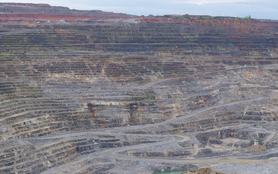
Will mining lead Haiti to a brighter future? Photo: Liz Lucas / Oxfam America, outside Port-au-Prince

Will mining lead Haiti to a brighter future? Photo: Liz Lucas / Oxfam America, outside Port-au-Prince

Haiti has $20 billion in gold reserves, of course with some disputing these estimates. Whether these reserves end up helping the country out of poverty or worsening its already intense socio-economic problems will be determined by how the Haitian government manages competing concerns about mining development.

I was in Haiti last week to participate in two forums about the future of the mining industry in the country. Although Haiti is at a very early stage (currently there are no operating mines), it was obvious that the industry is already provoking intense passions on all sides.

The Haitian government and the World Bank convened the first conference I attended in Port au Prince. It featured the usual World Bankish combination of bureaucrats, corporations, Bank officials, academics and lawyers. Haiti’s Prime Minister Laurent Lamothe also made an appearance, along with precisely zero representatives of Haitian civil society (as is often the case with Bank-sponsored events of this type). International civil society was limited to an appearance by Oxfam America’s feisty Haiti associate country director Yolette Etienne on a Davos-style comfy chair panel. She stressed the importance of addressing the governance and environmental challenges posed by mining, including protecting the country’s already fragile water resources, which Haiti’s rural farming communities depend on for their livelihoods.

The second forum I attended, aimed at supporting the public debate on the potential risks and benefits of mining to Haiti, was far livelier. It took place in the northern town of Limonade and Oxfam helped sponsor it with the National University of Haiti. There, too, we heard from Haitian government, academics and Newmont Mining (which has exploration areas across nearly the entire northern half of the country), but also from community leaders and Haitian civil society, notably PAPDA, the Haitian Advocacy Platform for Alternative Development, an Oxfam partner. Oxfam also invited partners from Guatemala, the National Coordination of Indigenous Peoples and Campesinos (CONIC) and Madre Selva, to speak about the environmental and social problems mining has caused in that country. Passions ran high at various points and debate flew fast and furious past my head in Haitian Creole. At one point, a consultant working for the Haitian government stormed out of the meeting after being sharply challenged by community representatives who alleged that the industry has already damaged their lands without adequate compensation.

Mining development in Haiti is clearly on the minds of civil society, policy-makers and, of course, mining companies. What is also clear after my week in Haiti is that the government, by the admission of several representatives with whom I spoke, has nothing like the capacity that will be needed to effectively regulate mining. Haiti has pretty much every governance challenge you can have, ranking near the bottom on nearly every governance-related indicator. It’s hard to imagine how dumping mining on top of those challenges, at least at the moment, would do anything more than make these problems even worse.

The good news is that the government appears to be aware of these challenges. It recently cancelled all current mining licenses, pending a review of contracts signed by the previous government and revision of its mining law (which dates from 1976). This may create some breathing space for the government, with help from donors, to address its capacity issues. It may also provide time for Haitian civil society to build its own capacity and further organize.

As I’ve written previously, Haiti could take some steps now that could help it avoid some of the worst impacts of the “resource curse.” It must be said, though, that past efforts to build government capacity at the same time a new extractive industry develops, as was the case in Chad, don’t inspire much confidence. If Haiti’s economic development is the primary goal here, and given the country’s multiple governance and environmental challenges (severe water contamination, deforestation, vulnerability to earthquakes and hurricanes among them), there’s a heretical notion to some that should seriously be considered.

Leaving the gold in the ground is an option.

The Growing Battle between Mining and Agriculture

April 17th, 2013 | by

“Si a la vida, no a la mina” (Yes to life, no to the mine) is a rallying cry heard across many parts of rural Latin America these days. Mining, as well as oil and gas extraction, has exploded across the region in the last decade, driven by high prices for gold and industrial metals like copper that are needed primarily to feed the Chinese economy. This boom has also been experienced in Africa and Asia, where governments have sought to exploit their resource endowments to drive development. Fragile states like SudanBurma and Afghanistan have also begun to develop their mining sectors. The expanding mining sector has contributed to strong economic growth in some countries but has also generated social conflicts in rural areas that must be urgently addressed.

Area near Tintaya Copper Mine (Espinar), Cusco, Peru. Photo: Chris Hufstader / Oxfam America

The heart of the issue is that mining activity has come into direct competition with another predominant means of economic development in rural areas: small-scale agriculture. Tensions over control of land and, most importantly, water have led to community protests and violent conflict. Reconciling these two important development drivers has become a critical governance issue, particularly in the most fragile states where the conflicts between the two can often be seen most starkly.

In theory, both mining and agriculture can provide pathways out of poverty. The World Bank and development-focused academic researchers have emphasized the critical role of agriculture in promoting rural development. (Three-quarters of the world’s poor live in rural areas.) Agriculture provides direct benefits to those who engage in it. Farmers receive payments for crops they produce, which they can then use to invest in future production and to pay for their families’ basic needs. Mining can also play a role in promoting development, although more indirectly, by generating revenues for governments. Governments can use taxes and royalties paid by mining companies for infrastructure investments and other productive purposes. Mining companies also pay for community development programs, build schools and roads, and make other investments.

Unfortunately, the compatibility of these two development paths, which tend to take place in the same rural areas, is at best questionable. Mining generates significant “externalities,” e.g. water pollution, that can have a direct impact on agricultural production. These negative impacts can be permanent and render previously fertile agricultural land unusable. Mining also requires large amounts of land that could otherwise be used for agricultural production. This sets up a direct competition with small-scale agriculture for control and use of land. In some countries such as Ghana, farmers displaced by mining projects turn to small-scale mining as a replacement livelihood. This can perpetuate a cycle of poverty and conflict in which these farmers-turned-miners are forcibly evicted and beaten by police for coming onto land claimed by large-scale mining projects.

Mining companies argue that mining and agriculture are not necessarily incompatible. But there are few examples of where this has been the case, particularly in developing countries, where oversight of the mining industry is often very weak. Finding ways to reconcile these two economic activities is urgently needed to reduce conflicts and ensure that mining’s benefits contribute to long-term sustainable development in rural economies.

Communities relocated to make way for gold mines in Ghana struggle with loss of agricultural land, unemployment, and environmental damage. Photo: Neil Brander / Oxfam America

Governments and companies should take specific steps now to address this situation. First, the environmental impact assessment process for mining projects needs to be significantly strengthened and made more independent. At present, governments rely on information provided by companies, which is most often not reviewed by an independent third-party. Companies thus have an incentive to downplay potential impacts of their operations on land and water in agricultural areas. In countries such as Peru, local agricultural communities’ lack of confidence in these environmental reviews contributes to anxieties about the impacts of mining, which in turn contributes to conflict. Additionally, mining is increasingly done in “clusters,” meaning several mines operate in the same geographic area in order to take advantage of shared infrastructure and processing facilities. The cumulative impacts on land and water of several mines operating in the same area have not been thoroughly examined. The use of what are known as “strategic” environmental impact assessments, which take into account these cumulative impacts, would be an important step to increasing communities’ confidence.

Improved planning on how land will be used is another crucial step that governments should take. Mining concessions are often awarded without consideration for impacts on agricultural production. Later this year Oxfam America will publish research that shows graphically how mining and oil concessions have expanded dramatically in recent years in agriculturally productive areas of Peru and Ghana. Zoning land for particular uses, e.g. mining or agriculture, would help reduce conflict by establishing clear rules for how land will be used. Greater dialogue between the mining and agricultural sectors would be helpful. In Peru recently, the mining and agriculture ministries have signed a cooperation agreement. This is potentially a positive, although overdue, step.

Reconciling mining with agriculture in developing countries, particularly in the most fragile states, won’t be easy. It may ultimately require the admission that the two simply are incompatible over the long-term in particular areas. What is clear is that these discussions are urgently needed now so that conflict and violence produced by the juxtaposition of these two sectors diminishes and that countries can benefit from both their above-and below-the-ground resources.

This post originally appeared on the blog of the US Institute of Peace’s International Network for Economics and Conflict.

A pop-up gallery event—Cambodia: Losing Ground

April 10th, 2013 | by

For our readers who live in Washington, DC or who are planning to visit this month, you are cordially invited to a pop-up gallery exhibit in Washington, DC, from April 10th to the 21st,  featuring photographs from the acclaimed photographer Emma Hardy, just in time for the World Bank’s Land and Poverty conference and the World Bank/IMF Spring Meetings.

Woman collecting water snails for food, Andong slum, Cambodia. Photo: Emma Hardy / Oxfam


Where: Avenue Suites Hotel, 2500 Pennsylvania Ave NW, Washington DC 20037. (Metro: Foggy Bottom)

When: Wednesday, April 10th to Sunday April 21st, 5 to 10pm daily.

Access to the gallery is free. Visitors who mention Oxfam at the bar enjoy specials from 5 to 7pm daily.

For more information, email krobbins@oxfamamerica.org or see www.oxfam.org/land.


A community of 1,367 families were uprooted from central Phnom Penh in June 2006 and forcibly relocated to open swamp land in Andong, 13 miles from the city and their livelihoods. Why? To make way for a shopping mall that is yet to be built. Hardy traveled to Cambodia to capture the story of this community and others, fighting to reclaim their rights to own, inhabit, and work the land they once owned.

The World Bank influences how land is bought and sold on a global scale. Oxfam’s GROW’s campaign is calling for urgent action from the World Bank to halt the speed and scale of land grabbing around the world.

Add your voice here and consider yourself invited to the exhibit! We hope to see you there!

Is sustainability just a sideshow at African mining conference?

January 29th, 2013 | by

Mining industry big-wigs will gather in South Africa next week for Mining Indaba, billed as the “world’s largest mining investment conference.”  As has become de rigeur in recent years at this kind of event, there will be some discussion of social and environmental “sustainability” issues.  The final day of the event is in fact devoted to this and boasts an impressive-sounding set of panels featuring mining company CEOs, World Bank executives, government officials, and a smattering of NGOs.  This is consistent with a recent spate of mining sector sustainability initiatives including, among several others, the International Council on Mining and Metals’ Resource Endowment series, which looked at how mining can contribute more to economic development.

While this attention to sustainability is in general positive, it hasn’t driven the fundamental change in industry practice that is urgently needed.  US-based Newmont Mining’s history in Peru is one example.  Following a series of problems in Peru and elsewhere in the mid-2000s, the company commissioned a report that produced recommendations on improving its relationships with local communities.  The company’s implementation of these recommendations has been spotty at best.  Last year it was forced to postpone its massive Mina Conga project in the face of community opposition.  In December the company released another damning external review that described a “state of fear” among communities living near the mine.  Clearly the learning from past reviews hasn’t sunk in with company management.

To address this situation and the critical sustainability challenges facing the mining sector, we offer a few recommendations for the mining execs gathered in in Cape Town to consider as they schmooze, golf, and down some of those delicious South African red wines.  (Goats do Roam is my personal favorite.)

Dominic Nyame, a member of the Concerned Citizens Association of Prestea, an organization in southwest Ghana negotiating with a mining company around issues related to air and water pollution, and the proposed expansion of mining operations. Photo: Jeff Deutsch / Oxfam America

First, mining companies need to start fully respecting community consent.  While industry rhetoric on this point has improved significantly in recent years (which Oxfam has highlighted in a recent report), good examples of implementation are still lacking. Industry types often make the practice out to be more difficult than it really is and worries about communities vetoing a project are overblown.  Newmont’s problems at Mina Conga in Peru exist not because communities there are inherently anti-mining.  Rather they stem from the company’s bungled handling of community relations (by its own admission) during the early days of its presence in the community.  Getting these relationships right from the beginning and actively addressing to community concerns are critical to avoiding these problems.

Ensuring respect for the rights of women in the communities where companies operate is also critical for ensuring sustainability.  Women are often the guardians of communities’ long-term interests.  They suffer most directly from the negative impacts of mining, via the domestic violence and alcoholism to which mining often contributes.  Mining companies must carry out more rigorous and independent gender impact assessments.

Transparency has become somewhat of a cliché in discussions of sustainability in the extractive industries, but it’s an area, like women’s rights, where much work still remains to be done.  Mining companies should fully disclose all payments they make to governments – down to the project level where their impacts are felt.  To its credit, the mining industry hasn’t joined the American Petroleum Institute’s odious lawsuit seeking to block a new US law requiring these disclosures.  This is positive and should be coupled with all companies publicly embracing the law and disclosing this information beginning this year.

The thirsty folks gathered in South Africa will know that there is no sustainability issue more critical to the mining industry than protecting water resources.  South Africa itself is awash in acid mine drainage, or sulfuric acid that leaches out of mine sites and destroys ground and surface water.  This problem is a ticking time bomb in developing countries and it is incredibly expensive to fix once it starts.  Once it does, the acid needs to be treated forever.  Mining companies have the technology now to know when mining in particular ore bodies is likely to cause this problem.  They also know they shouldn’t mine there.

Finally, if mining companies want to contribute more to sustainable development, they should accept the fact that that may mean reduced profits for themselves.  Mining companies are masters at negotiating deals that enable them to avoid paying significant amounts of taxes.  In contract negotiations, industry lawyers routinely take under-trained and under-resourced government officials to the cleaners.  Yes, companies should be able to make profits, but they shouldn’t do so by exploiting unfair advantages.

Ultimately, making progress on these issues will depend on the degree to which mining companies incorporate community consent, the rights of women, transparency, and protection of water resources into their business models.  Creating incentives for performance on these issues will be critical.  Investors can play a role by only buying shares of companies with independently-verified performance metrics on sustainability, including demonstrable progress on the issues listed above.  Companies themselves can link compensation and career advancement to performance on sustainability.

It’s time for sustainability to become a central part of mining industry standards in Africa and elsewhere, rather than a sideshow.

Fighting poverty means solving the inequality problem

November 2nd, 2012 | by

Last week, the World Bank released a new report assessing declining income inequality over the 2000s in Argentina, Brazil, and Mexico. Each country experienced significant reductions in inequality over the last decade. This finding is not new, but the authors helpfully tease out some nuance behind the trend.

Their findings suggest two factors drove the contraction in inequality. First, the skills premium (the wage distribution based on education) fell. In other words, the difference in pay between skilled versus unskilled workers declined. In Argentina, declining labor income inequality was driven by a boom in trade that caused a drop in demand for skilled workers. These conditions were bolstered by strong unions and a rise in the minimum wage. Focused government spending on higher education increased the supply of skilled labor in Mexico. Both factors—reduced demand and increased supply for skilled workers—were in play in Brazil.

The second factor is more progressive government transfers, as expanding coverage of cash transfer and social security programs played a significant equalizing force in the distribution of non-labor income in each country.

All three cases put in relief that solving inequality is fundamentally a problem of politics, not economics. In each, government spending on education, conditional cash transfers, and other social expenditures helped drive down inequality.

The authors provide some astounding figures highlighting why tackling inequality is crucial.

In Mexico, nearly 60 percent of the poverty decline since 1996 is attributed to reducing inequality. Argentina’s inequality drop accounts for 40 and 50 percent of extreme and moderate poverty declines, respectively. For Brazil, 50 to 60 percent of extreme poverty decline is attributable to reducing inequality.

These figures remind us that the fight against inequality and the fight against poverty are one in the same.

Disappearing Land. Is World Bank’s Head In the Sand? “Invisible Hand”

October 4th, 2012 | by

Two campesinos (farmers) in northern Guatemala (2012). Pablo Tosco/Intermón Oxfam


Paul O’Brien is the vice president, policy and campaigns, for Oxfam America.

Washingtonians: I regret to inform you that we need your home. Please remove yourself and your belongings by the end of the month, or we will have our armed goons do it for you. Unfortunately, we are not going to talk about this, and there is no money for your troubles. We need your land. It is for the greater good. Thank you for understanding.

Sound crazy? Somewhere in the developing world, that speech, or something like it, will probably happen today. Over the last decade, in developing countries, a land area larger than Washington, D.C. has been sold from under the feet of poor communities every day. 500 million acres—enough to feed a billion people—have been traded, mostly to cash-rich countries, foreign agribusiness and equity investors over the past 10 years. Think about California, Arizona, New Mexico, Nevada, and Texas being sold off in a mad, unregulated, land rush without any real transparency on who is doing the buying, under what terms, or what they plan to do with the spoils. All those Southwesterners wondering what the hell happened to their land and their lives?

Why am I writing about this now? Honestly, because we are launching a report today laying out these facts, Our Land, Our Lives, and I want you to read it and join our new campaign. We may have an opportunity to meaningfully address this madness in the next few months.

The World Bank is about to gather the mighty in Tokyo for their Annual Meeting. It’s the coming out party for the new Bank president, Jim Kim—and we are going to hear what he cares about. If he makes stopping bad land grabs a priority, the Bank could play a massive role in fixing this Achilles heel in the global food system.

Early signs are discouraging. Today, the World Bank rejected our report recommendations, claiming “[the Bank] does not support speculative land investments or acquisitions which take advantage of weak institutions in developing countries or which disregard principles of responsible agricultural investment.”

Having watched the Presidential debates last night, I’m acutely sensitive to spin, and that feels like spin to me. Of course the Bank doesn’t actively “support” bad acquisitions or investments in land. But here is the thing—they don’t even know if their land investments are good or bad for affected communities. When we asked them to show us good large scale land investments where communities weren’t kicked off their land and were adequately compensated, they couldn’t find one.

That’s why we are asking the World Bank Group to take a breath! We want them to temporarily stop funding new large scale agricultural land acquisitions until they can be sure these deals aren’t going to violate human rights or harm communities. We want the Bank Group to put solid guidance in place, particularly because we want the 100+ major investing institutions that follow the IFC’s Performance Standards to take basic, reasonable precautions when doing a land deal.

Personally, I still have hope that Jim Kim will commit to doing this in Tokyo. My gut says he is “one of us”—a development activist who wants the poor to know what his institution is doing across the board. He can be proud in other areas: A new aid transparency index rated the Bank second of all major donors on aid transparency this week. Human Rights Watch (notoriously hard to please) recently applauded the Bank for using transparency to fight corruption.

The Bank knows that information is power. It is time to acknowledge that fact in the global land free-for-all. Our report suggests precisely how the Bank can lead an honest public effort to grapple with this issue.

And let’s not spin this proposal as an investment-killing idea. Oxfam has called for greater investment in poor countries for decades. We want communities to benefit from sound investments in agriculture. The Bank can leave its head in the sand and ask communities to trust the market’s invisible hand, or sort this mess out before we see even more community-used land disappear.

How to keep score when donors make promises

April 18th, 2012 | by

Last November, in Busan, Korea, donors reaffirmed their past promises to make their aid more useful to people developing countries. They also agreed to measure themselves so the world could track how well they were implementing these promises. But the debate over *how* they are willing to be measured is still raging—and won’t be decided until June. At the World Bank on Friday, Oxfam will be hosting an event to talk about progress towards implementing the Busan Partnership. New research by Oxfam and others provides new data as to how important keeping score is for driving political change—as well as suggesting how to best measure the promises made at Busan.

Bureaucracies are hard to move; they seldom ever move when bureaucrats feel comfortable. So, one of the key components of forcing political change is being able to make policymakers uncomfortable enough with the status quo that they make hard changes.

One thing that gets policymakers’ attention is being compared to one another. A government that is shown to be falling behind its peers can be shamed into making changes to catch up. But that shaming requires good, comparable data that governments cannot hide from. Naturally, governments are often reluctant to endorse effective scorecards because it shines a light on their behavior.

This new research affirms that keeping score on implementation of the Paris Declaration helped push implementation of Paris principles. Signatories to Paris instituted a global monitoring framework to measure and account for how well governments were living up to their promises. A review of donor peer reviews conducted by the OECD’s Development Assistance Committee indicates that the global monitoring system was a success in incentivizing policy changes in donor capitals.

The Busan Outcome Document emphasizes that the focus of work to make aid more effective should be “global-light, country heavy”; in other words, the emphasis should be on progress made at the country level. And development progress indeed happens at the country level. Nonetheless, accountability for such progress requires comparing the progress of different countries against one another. In fact, the research shows that Global Monitoring is a huge guiding factor in determining the strength of national results frameworks. To quote one partner country respondent, “The Paris framework was crucial to getting donors to agree that they should be monitored.”

Of partner countries who are successfully implementing National Monitoring Frameworks (NMFs):

Paris Framework


Some research respondents went so far as to argue that the biggest constraint to a national framework was the lack of political commitment on the part of their donor partners. In fact, some respondents said most donors were not willing to increase their national level obligations beyond what Paris called for.


So from this evidence
, what conclusions can we draw about what the Busan monitoring system look like? Here are some thoughts:

You need globally comparable indicators to drive country level change. A key feature of the Paris monitoring framework was the ability to hold stakeholders accountable by comparing them with their peers.

The framework needs to monitor all major Paris, Accra, and Busan commitments, in line with the Busan Partnership Declaration. Rule #1 of development strategy is, “what’s measured is meaningful.” If any particular commitment is left out of the final monitoring framework, it will inevitably be deprioritized by stakeholders.

Civil society stakeholders should be included in the design, implementation and accountability of the global monitoring framework through a transparent and representative process. If civil society isn’t actively engaged and does not have the space to hold their government accountable, the monitoring framework won’t push those changes that poor people most need.

The new monitoring framework must integrate cross-cutting gender equality and women’s empowerment targets in all commitments measured, as stated in the Busan Partnership Declaration. Again, without measuring against these criteria, gender issues could be neglected.

RSS Feed