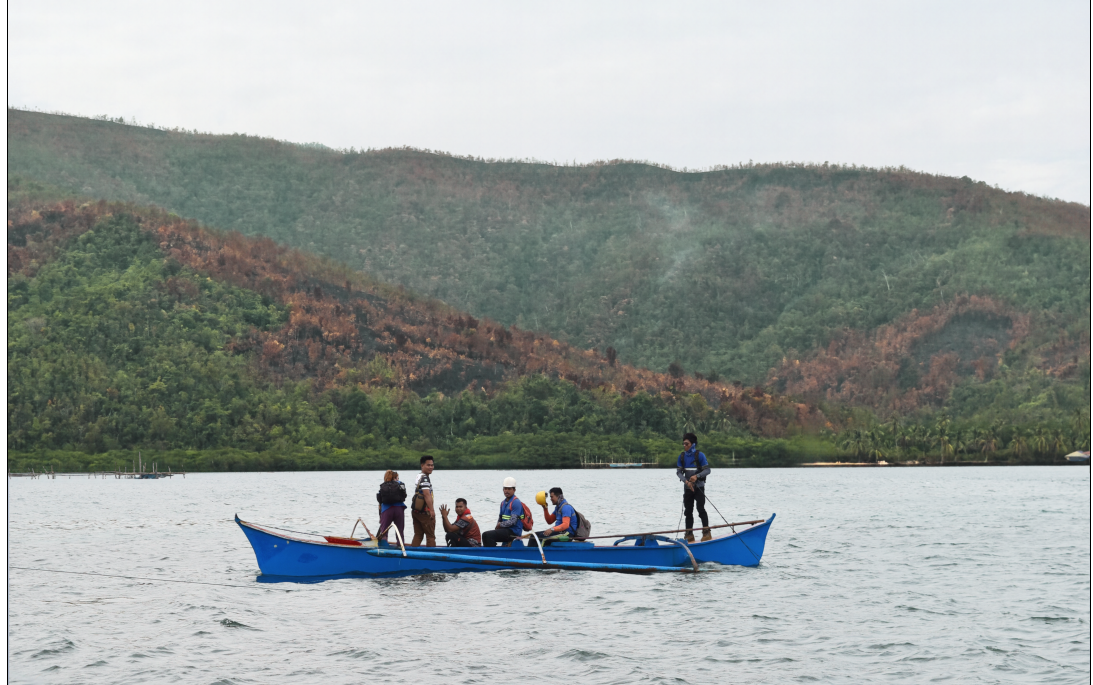
Pax Silica puts renewed attention on extraction in a country where mining has been linked to attacks on defenders and restrictions on civic space.
This blog is the second in a series discussing EITI Standard implementation ahead of its Global Conference. Read the previous blog, on gender equality, here.
The Philippines is emerging as an important target in the global race for the minerals and infrastructure that will power artificial intelligence (AI) and other advanced technologies. But that interest comes against the backdrop of a long and troubled human rights record in the country’s extractive industries. Since 2012, the Philippines has been the deadliest country in Asia for people protecting land and the environment, with mining linked to a third of the killings documented in a 2024 Global Witness investigation.
In April, the Philippines joined Pax Silica, a U.S.-led initiative focused on critical minerals, semiconductors, artificial intelligence, and related supply chains. Discussions around the initiative have included proposals for investment in mineral extraction and processing, advanced manufacturing, and AI infrastructure in the Philippines.
At the same time, the upcoming Extractive Industries Transparency Initiative (EITI) Global Conference offers an opportunity to reflect on what the Philippines’ experience can teach us about governing this new wave of investment. EITI is a global standard for transparency and accountability in the oil, gas, and mining sectors, bringing together governments, companies, and civil society in participating countries. The Philippines’ near-suspension from EITI during its 2021 validation provides a powerful example of why unobstructed civil society participation is fundamental to meaningful extractive-sector transparency.
Decisions about whether proposals under Pax Silica move forward, what form they take, and who benefits from them have enormous implications for the Philippines. The country’s experience with mining offers important lessons for these decisions, particularly about who has a voice in shaping development and whose interests are protected.
The costs of extraction have often fallen on communities
The Philippines is one of the world’s leading producers of nickel and holds significant deposits of copper, gold, and other minerals. Yet mining-affected communities have long raised concerns about environmental degradation, displacement, land dispossession, loss of livelihoods, and inadequate consultation.
Indigenous peoples face particular risks because mineral deposits frequently overlap with ancestral lands. Over the past three decades, Indigenous communities have lost an area equivalent to roughly one-fifth of their formally delineated territory to mining tenements, while more than a quarter of the land currently covered by transition-mineral mining overlaps with ancestral domains. This makes the right to free, prior, and informed consent (FPIC) critical to decisions about whether projects proceed at all.
Ignoring these concerns can also carry enormous economic costs. A 2026 study of 28 mining projects involving Indigenous communities in Peru identified more than $31.9 billion in conflict-related costs, overwhelmingly from lost productivity. The authors specifically identify critical-mineral producers, including the Philippines, as places where these lessons are relevant. Their findings underscore that failing to meaningfully engage communities and respect Indigenous rights can put projects and investment at risk.
Bantay Kita, a Philippine coalition advocating transparency and accountability in the extractive industries, has spent years working with communities to understand mining contracts, revenues, environmental obligations, and their rights. Its work has also documented a fundamental problem: access to information does little good when people do not feel safe using it.
During the administration of former President Rodrigo Duterte, Bantay Kita documented restrictions on civic space surrounding natural resource governance, including surveillance, intimidation, and “red-tagging,” in which activists and organizations were accused of links to communist insurgents. These conditions affect whether communities can meaningfully influence decisions about their land and resources in the first place.
The Philippines’ EITI experience offers a warning
The Philippines joined EITI in 2013, using the initiative to expand public access to information about extractive-sector contracts, revenues, and governance and create a forum for government, companies, and civil society.
But the Philippines’ experience also demonstrated the limits of transparency when civic space is constrained.
During the country’s 2021 EITI Validation, civil society raised serious concerns about whether organizations and communities could participate freely in extractive sector governance and called for the Philippines to be suspended from the Initiative. EITI ultimately assessed the Philippines as only “partly meeting” its requirement for civil society engagement and required corrective action.
In 2024, EITI upgraded the Philippines to “mostly met” on civil society engagement, while identifying continued challenges, particularly at the local level. EITI also noted that although the broader environment had improved, some stakeholders considered red-tagging to have become institutionalized.
While the Philippines has made progress, its experience highlights exactly why the EITI’s Requirement 1.3 on civil society participation matters. Transparency is meaningful only when people can act on information. Accountability depends on whether journalists can investigate, Indigenous peoples can assert their rights, communities can challenge government decisions, and advocates can question powerful interests without fear of retaliation.
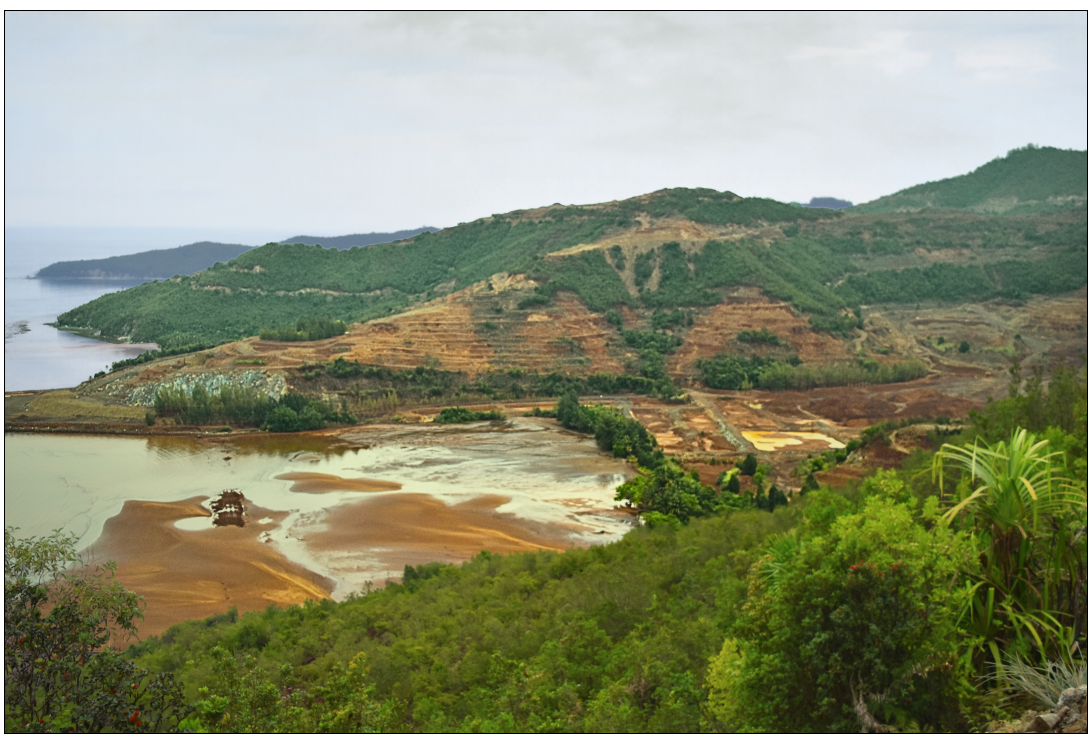
Pax Silica raises old questions in a new form
Pax Silica emphasizes “secure” and “resilient” supply chains. But secure for whom?
In his latest State of the Nation Address, President Ferdinand “Bongbong” Marcos Jr. highlighted Pax Silica as an opportunity for economic development. At the same time, communities and civil society groups have raised concerns about the proposed development and its potential impacts.
Those concerns are already translating into organized opposition. An Indigenous Aeta community and farmers in Tarlac have launched a petition calling for the Pax Silica project to be stopped, citing concerns about their land, livelihoods, and environment. The petition has attracted hundreds of thousands of verified signatures.
Their opposition brings the question of security into sharper focus. A critical-mineral supply chain may be strategically secure for governments or technology companies while creating insecurity for communities living near mines. Proposed AI infrastructure also raises questions about land, energy, water, environmental impacts, and who will ultimately capture its economic benefits.
These questions belong at the center of decisions about whether projects move forward, rather than in discussions about mitigating impacts after major decisions have already been made. Communities must be able to influence how projects are developed and to question whether they should be developed at all. Their right to say “no” to projects on their lands must be respected.
Transparency only works when communities have a voice
The Philippines’ experience with EITI and mining offers an important starting point for evaluating proposals emerging under Pax Silica.
Public disclosure of contracts, beneficial owners, project-level payments, environmental and social assessments, energy and water demands, and government commitments should be a baseline. Indigenous peoples’ rights, including FPIC, must be respected, and communities need accessible mechanisms for raising grievances and seeking remedy.
But transparency cannot substitute for participation. Civil society organizations, environmental and human rights defenders, journalists, Indigenous peoples, and affected communities must have the space to scrutinize proposals, challenge their assumptions, propose alternatives, and oppose projects without intimidation or retaliation.
The Philippines’ experience with extractive industries provides ample reason not to confuse speed with progress. Decisions being discussed under Pax Silica could shape the country’s resources, infrastructure, and communities for decades. They should not begin with the assumption that projects will go forward and then ask how their impacts can be mitigated. They should begin with a more fundamental question: what kind of development do Filipinos want, and who gets to decide?

 via feedly