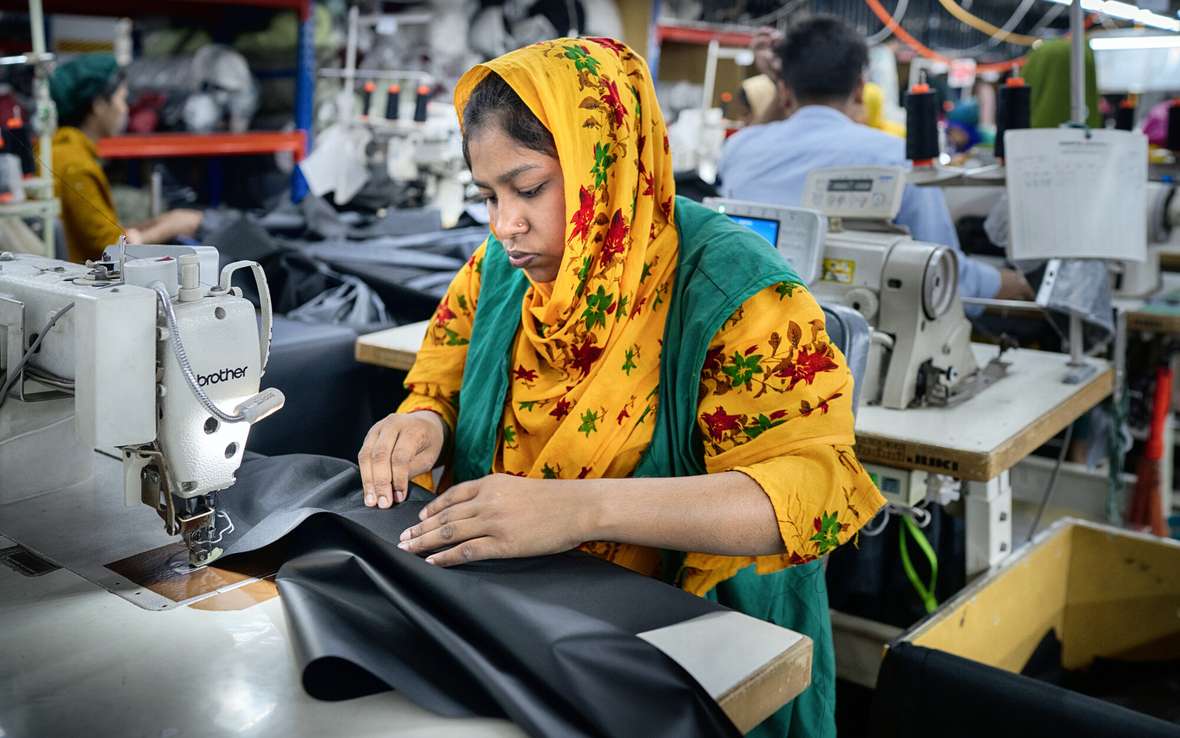
Oxfam’s new Briefing for Business sets out a practical, people-centered approach to redesigning grievance mechanisms—moving beyond compliance to systems that can deliver meaningful remedy in global supply chains
Across global supply chains, grievance mechanisms are often presented as a key pathway for workers and communities to raise concerns and seek remedy. In principle, they are meant to provide a safe, accessible way for people to be heard—and for harms to be addressed.
In practice, however, a different picture often emerges. Many grievance mechanisms remain compliance-driven, fragmented, and disconnected from the people they are meant to serve. Too often, this means that workers and communities face barriers to speaking up safely or do not see meaningful outcomes when they do.
Today, Oxfam is launching a new Briefing for Business on Grievance Mechanisms that invites companies, practitioners, and partners to reflect on this gap—and to consider what a more effective, more just approach could look like.
Why grievance mechanisms often fall short
Despite growing expectations on companies to ensure access to remedy, many systems are still designed primarily to meet internal requirements rather than respond to lived realities.
A narrow focus on metrics—such as the number of cases closed—can obscure a more fundamental question:
Are people actually receiving fair, timely, and meaningful remedy?
At the same time, grievance mechanisms are often:
- Difficult to access, particularly for workers in vulnerable or isolated conditions
- Poorly communicated, with limited awareness among intended users
- Fragmented across different levels, with little coordination
- Disconnected from rightsholders, whose perspectives and expertise are not meaningfully integrated
These challenges are not simply technical, they reflect deeper structural issues around power, trust, and accountability.
A shift toward people-centered systems
The briefing argues that improving grievance mechanisms requires more than incremental fixes. It calls for a shift in approach—from compliance tools to people-centered systems for remedy.
This means grounding grievance mechanisms in:
- Meaningful rightsholder participation, including in design and ongoing governance
- Strong roles for unions and civil society, recognizing their critical role in supporting safe access and accountability
- Transparency, inclusivity, and accessibility, so that mechanisms are usable in practice, not just in theory
- Clear communication and trust-building, particularly with those most at risk
- Buyer responsibility, acknowledging how purchasing practices shape risks and outcomes
At its core, this shift is about recognizing that effective grievance systems are not built for people, but with those most affected.
Connecting the dots: Toward a layered ecosystem
Grievance mechanisms do not exist in isolation. Workers and communities often navigate multiple channels—at the workplace, through brands, or via sector-wide initiatives—each with different strengths and limitations.
The briefing introduces the concept of a layered grievance ecosystem, where different mechanisms are intentionally connected:
- Operational-level mechanisms can address immediate, site-specific harms
- Brand or buyer-level mechanisms can respond to issues linked to purchasing practices or patterns across suppliers
- Multi-stakeholder mechanisms can help address systemic, cross-border challenges
When these layers are designed to work together—with clear pathways for escalation and coordination—they can help ensure that:
- Concerns surface earlier
- Risks are addressed at the right level
- Patterns are identified and acted upon
- Remedy leads not only to resolution, but to lasting change
Without these connections, grievance channels risk remaining siloed, underused, or ineffective.
From principles to practice: A roadmap for companies
To support companies in moving from intention to action, the briefing offers a practical roadmap for building a coherent, layered grievance mechanism architecture.
This includes steps to:
- Design systems that reflect the lived experiences of rightsholders
- Ensure mechanisms are accessible, safe, and trusted
- Create clear escalation pathways across operational, brand, and multi-stakeholder levels
- Strengthen learning and feedback loops so that grievances inform prevention
- Align roles and responsibilities across suppliers, buyers, and collective initiatives
The aim is not simply to improve individual mechanisms, but to support a transition toward integrated systems that enable:
- Meaningful remedy
- Continuous learning
- Long-term risk reduction
A call to make remedy work
There is growing recognition that access to remedy is central to responsible business practice.
At the same time, meaningful progress depends on how grievance mechanisms are designed, implemented, and connected in practice.
This briefing is an invitation—to reflect, to challenge assumptions, and to engage in a dialogue about what it takes to build systems that work for people.
Because ultimately, grievance mechanisms are not just about managing risk. They are about supporting the dignity, agency, and rights of workers and communities, while helping to build more accountable and resilient supply chains.

 via feedly