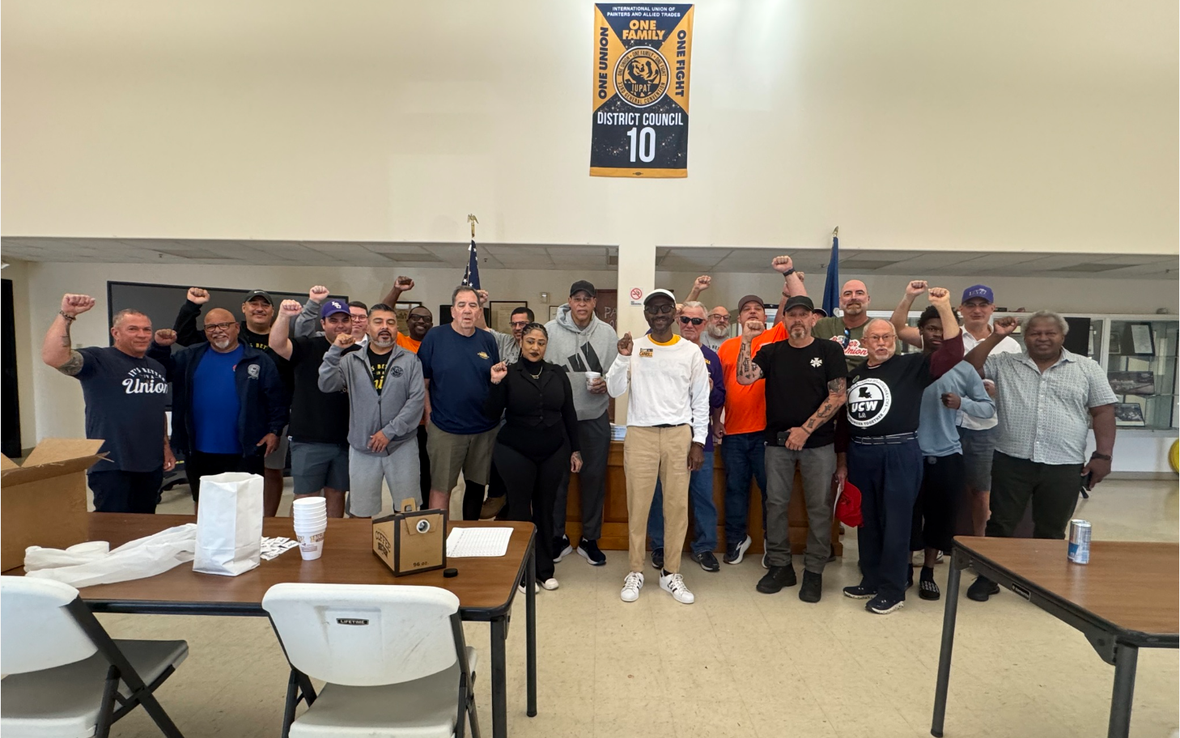
Louisiana’s continually poor ranking in Oxfam’s Best States to Work in the U.S. Report is steeped in our state’s history. With dozens of new projects coming to the state, we have a historic opportunity to change that history and build a better future for working families.
There are so many reasons why Louisiana is a great place to live. Our state is truly unique. Our history, culture, natural beauty and natural resources are second to none. Our people are some of the kindest and most welcoming you’ll find anywhere. There’s a reason why so many songs are written about Louisiana and why people from all over the world come to visit our state.
At the same time, while we in Louisiana have a lot to boast about, we also know we have a lot of shortcomings. Maybe chief among those shortcomings is how we treat working families. In its 2025 Best States to Work in the U.S. report, Oxfam ranked Louisiana #43 out of 52. As the President of the Louisiana AFL-CIO, where I directly represent nearly 300,000 working Louisianans, I can tell you that low ranking is a fair representation of the policies and practices in our state.
At the core of our mission as labor unions is to fight for all working people, regardless of whether they’re members of a union or not. And we take that mission to heart at the Louisiana AFL-CIO. So when I see a ranking like this, and know that it’s true to reality, it actually breaks my heart a little bit. I know Louisiana’s potential, and I know why we so often fall short of the mark. Mostly, it’s because we consistently fail to properly value our people and the work they do.
Our government and far too many of our employers fail to treat working people with the dignity and respect they’ve earned through their basic humanity and the sweat they put into their jobs. Nothing is more emblematic of that attitude than the fact that Louisiana is one of five states in the U.S. without a state minimum wage, which means we revert to the federal rate of $7.25 an hour. We all know no one can survive on a wage like that. We all also know that suppressing wages sends a message to people that they simply aren’t valued as full human beings, even when they make far more than the minimum wage.
Even more sadly, this latest ranking is a reflection of Louisiana’s history. We were an epicenter of slavery. The term “sold down the river” goes back to the days of slavery, when slaveowners in the Upper South would attempt to control their slaves by threatening to sell them down the river, i.e., the Mississippi River, which carried a lot of weight, since everyone knew that Louisiana plantation owners were often the cruelest in country.
To reference another cliche, that makes Louisiana’s current worker policies and practices the fruit of a poisoned tree. While slavery may have been abolished more than 150 years ago, its legacy still lives on today.
Slaves from Africa and their descendants weren’t and aren’t the only working people to suffer under Louisiana’s anti-worker ethos. People of all races and creeds have borne the brunt of our attachment to plantation economics. White subsistence farmers back in the 18th and 19th centuries lived lives that were barely better than Black slaves, and many of their descendants continue to be trapped in poverty, with no real path to working their way out of it. Hispanic workers, many of whom came to Louisiana over the past 20 years to help rebuild after natural disasters, have few opportunities to build a more prosperous life for themselves and their families. And Louisiana has become an epicenter for the federal immigration crackdown that has mostly focused on Hispanic immigrants.
Fortunately, Louisiana’s history, and how it winds its way into our modern-day life and work, aren’t set in stone for eternity. We can, and I believe must, change course.
While raising the minimum wage, reversing “Right to Work,” and providing more opportunities for workers to collectively bargain are some of the obvious policies that would help change our course, it’s also incumbent upon us as unions to recruit more members and build power that can be wielded in the public and private sectors. We are uniquely positioned to help turn the tide, and that’s something I and many of our other union leaders and members are committed to accomplishing
Right now, Louisiana is undergoing an industrial building boom, with huge projects being announced on a near-monthly basis, including new data centers all over the state, a world-class steel manufacturing plant near our state capital Baton Rouge, and a SpaceX project in Southwest Louisiana that will come with an estimated investment of $100 billion.
Our Governor, Jeff Landry, continually talks about “workforce development” and training Louisiana workers to fill the good-paying jobs that are needed to fulfill the promise of these projects. If he is serious about those ideas, and I believe he is, then it’s incumbent upon him and the multinational, billion- and trillion-dollar corporations behind these projects to invest in our people, pay them what they’re worth, give everyone in our state that opportunity to thrive, and lift our state up so that we no longer find ourselves at the bottom of rankings like Oxfam’s.
This sea change in what it means to live and work in Louisiana is possible. We’re in the midst of a unique opportunity to make it happen. If we don’t seize this moment, we might not get another chance any time soon. Together with our union leaders and members, government and private sector leaders, and every working family in Louisiana, we have to push this state into a place where we become one of the best states in the U.S. in which to work. If we don’t, we’ll only have ourselves to blame.

 via feedly