The humanitarian system is lagging in ensuring the inclusion of people with diverse Sexual Orientation, Gender Identity and Expression, and Sex Characteristics (SOGIESC). There is an assumption that localizing efforts will result in the needs and voices of the most vulnerable being elevated and addressed, yet evidence shows otherwise.
This post is part of the Localization (R)evolution blog series, exploring why locally led humanitarian action – rooted in power, rights, and accountability – is essential to transforming the humanitarian system (read the introduction here and other posts in the series here). In this post, Sebastián Molano, Senior Advisor in Gender Justice at Oxfam, shares his reflections on the importance of a Sexual Orientation, Gender Identity and Expression, and Sex Characteristics (SOGIESC) perspective in localization efforts.
Note: For decades, the LGBTQIA+ acronym has been used to recognize diverse identities and experiences and advocate for equal rights. Over the last few years, the concept of SOGIESC has gained momentum as it better reflects the common characteristics shared by all people while allowing room for an expansive and evolving understanding of people’s experiences and cultures and advancing human rights for all people. For this blog, we use both acronyms interchangeably.
A more intentional approach is critically needed to better uplift SOGIESC voices and LGBTQIA+ organizations in localization spaces.
Need for Inclusion and SOGIESC-sensitive programming
It is widely documented that LGBTQIA+ people face unique challenges and risks in times of humanitarian crises because pre-existing inequalities, discrimination, and violence are exacerbated during such periods. Also, organizations and staff responding in crisis contexts often have limited understanding and underdeveloped approaches to working with people of diverse SOGIESC and their specific needs in different contexts.
As a result, humanitarian action can result in unmet needs for people with diverse SOGIESC, leading to a greater chance of exposure to new and old risks, as they are often denied access to essential services, including housing, health care, inheritance rights, protection, and more.
Additionally, data disaggregation often stops at gender and age, with gender defined as, or presumed to be, biological sex assigned at birth. All of these issues can be perceived as bureaucratic challenges, but in aggregate, they create dire, life-threatening consequences for people who tend to be excluded for being who they are.
Back in 2020, while working on projects promoting gender justice in Puerto Rico, I learned about Beba, Karian, Angélica, and Alexander. The pattern of the story was the same: as trans people, the systems and the institutions that were supposed to serve them during a humanitarian crisis (Hurricane María in 2017) instead further ostracized them. The discrepancies in legal names and the denial of gender-affirming care – such as hormonal therapy – as not being considered lifesaving, greatly limited their ability to cope with and recover from the crisis and further exposed them to dangers such as a lack of mental health care and the need to turn to the black market for hormones and other necessities.
Every time a natural or human-induced disaster happens, I think of them.
Stark Funding Environment for LGBTQIA+ Organizations
The funding landscape for LGBTQIA+ organizations globally is in a critical state. A report by Outright International, Breaking Point: The Urgent Need to Invest in Global LGBTIQ Movements, surveyed 229 LGBTIQ local organizations in 94 countries between February 2025 and April 2026. Their research shows that 89% of those organizations had lost funding since January 2025, when the Trump Administration’s reckless, devastating gutting of US humanitarian assistance set off a global funding crisis in the sector. The findings from Outright International are clear: Among the 60 respondents who identified humanitarian crisis or armed conflict as part of the context in which they operate, 73% are unable to respond to emergencies or protection needs.
Nonetheless, LGBTQIA+ people and organizations are already doing the work of showcasing what it takes to put inclusion at the center. This has been widely documented by organizations like Outright International and the Edge Effect.
For instance, Outright International launched in 2022 a Ukraine LGBTIQ Emergency Fund, disbursing US$3.6 million to 40 groups in Ukraine and neighboring countries hosting Ukrainian refugees.
Recent research by Oxfam in Ukraine, Two Years at the Forefront, corroborates and reaffirms the challenges and opportunities, showcasing the difficulties faced by thousands of people, including discrimination, intimidation, lack of funding, and overall lack of recognition. This research also offers specific recommendations on how organizations can make a substantive difference, such as:
- Integrating LGBTQIA+ perspectives into humanitarian design;
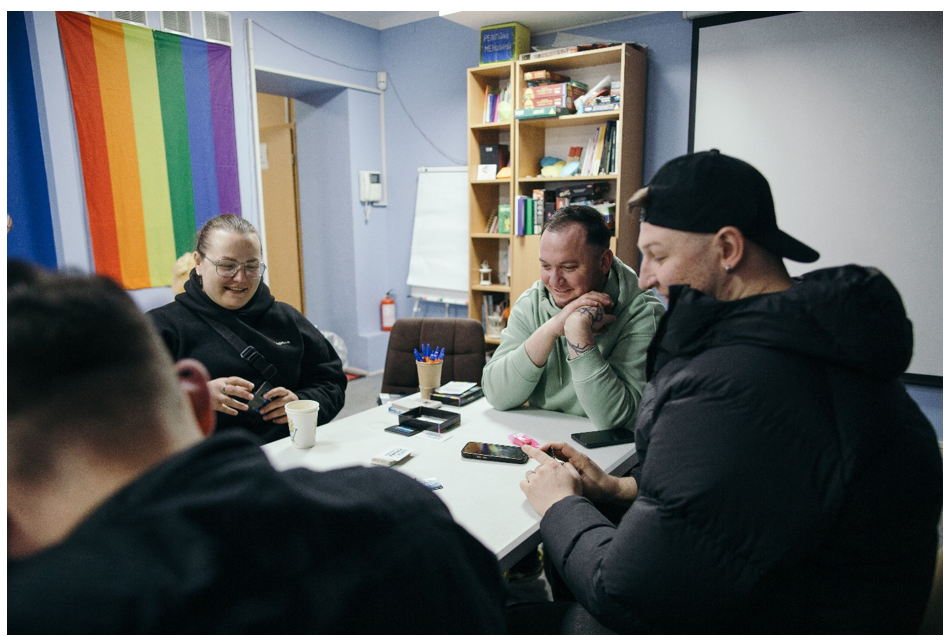
- Creating safe spaces for those organizations;
- Serving as a genuine ally; and,
- Creating funding mechanisms specifically for LGBTQIA+ organizations and communities.
Though encouraging examples exist, they remain the exception, not the rule.
A More Intersectional Definition for Localization
It is critical for localization efforts to explicitly include people with diverse SOGIESC and LGBTQIA+ organizations that represent them, as the current systems exclude them by default. Strengthening the power of local actors should mean challenging the exclusion of certain people and interrogating the power that keeps those excluded from realizing their full humanity. When excluding or avoiding LGBTQIA+ rights, instead of localizing power, international actors reinforce unequal power dynamics.
As a sector, we need a broader, intersectional definition of localization. A definition that recognizes language not merely as a technical system, but as a living reflection of identity, dignity, and belonging.
Localization should be seen as an opportunity to defy exclusion and to support the meaningful inclusion of LGBTQIA+ organizations in humanitarian response in practice. The specific knowledge and experience of such organizations are essential to ensuring that the needs and priorities of LGBTQIA+ communities are not overlooked in humanitarian response.
Many of the places where people with diverse SOGIESC are persecuted and criminalized based on colonial-era laws are also in the process of challenging these colonial legacies of how the current humanitarian system works. As such, a localization agenda that meaningfully includes people with diverse SOGIESC in decision-making spaces is also contributing to challenging outdated, imposed colonial laws. The inclusion and promotion of SOGIESC rights directly challenge power. These agendas are mutually reinforcing.
A Collective Call to Action
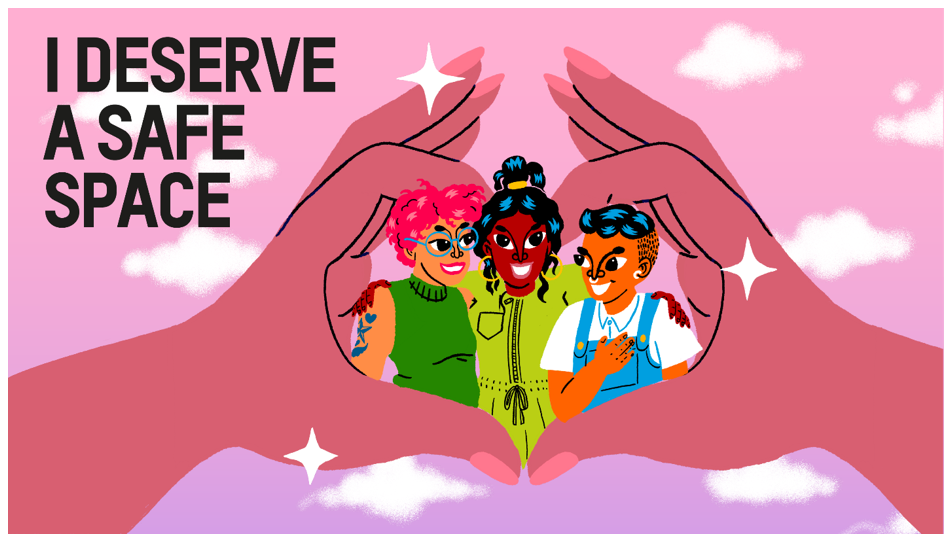
People with diverse SOGIESC need more than a place at a bigger humanitarian table. They need people and organizations committed to localization to make a meaningful, full, equal, and safe space for them to join, not as a favor but as an overdue right.
In a humanitarian system that is, in the words of UN Emergency Relief Coordinator Tom Fletcher, “over-stretched, under-funded and under attack”, is the inclusion of people and organizations working with LGBTQIA+ communities a nice-to-have, instead of a must-have? We need to ask ourselves: To what extent can localization truly happen when vulnerable groups of people are not represented in decision-making or leadership spaces? How can the sector deliver on its principles when a group of people is being left behind, intentionally or inadvertently?
We are in a moment where human rights are under constant attack, and systematic actions are being taken by powerful actors – including governments – to institutionalize exclusion and discrimination and defund this work. Organizations and people committed to supporting LGBTQIA+ communities are nevertheless continuing their work, very often at their own expense, as they too struggle to navigate the impacts of a humanitarian crisis.
When there is a growing challenge to principled humanitarian work, addressing head-on the historical exclusion of people with diverse SOGIESC creates an opportunity to vindicate, in practical terms, the principle that transforming the humanitarian system starts with a shared responsibility to human rights for all people, without asterisks or exceptions.
It is imperative to acknowledge such exclusion, and for organizations committed to localization and reform to resist the temptation to accommodate global rollbacks of human rights, and specifically to gender and gender equality. Localization cannot mean shifting power while knowingly excluding people with diverse SOGIESC and LGBTQIA+ organizations from this process. The time for smart, bold, and brave collective action is now.
 via feedly