Women and girls experience heightened vulnerability in emergencies, but often their knowledge, skills, and agency are not recognized or appreciated, and their needs not adequately addressed. Ironically, the very organizations best equipped to respond to these realities, women’s organizations, remain marginalized and underfunded in the humanitarian system. How can we resolve this critical problem and save more lives? Enter SHIFT Asia, a project meant to support the leadership of women’s organizations in humanitarian action.
This post is part of the Localization (R)evolution blog series, exploring why locally led humanitarian action – rooted in power, rights, and accountability – is essential to transforming the humanitarian system (read the introduction here and other posts in the series here).
Designed by Oxfam and a consortium of women’s organizations, SHIFT Asia (Supporting Humanitarian Initiatives for Transformation in Asia) works in Bangladesh, Indonesia, Myanmar, and the Philippines. More a movement than a project, SHIFT Asia champions women’s leadership in humanitarian action and places women’s organizations and women leaders at the heart of decision-making spaces. Using a feminist lens, it challenges the structural norms, funding models, and institutional cultures that keep women’s organizations on the margins of the humanitarian system.
Why SHIFT Asia Exists
The idea for SHIFT Asia, with funding from the Gates Foundation, stemmed from a recognition that the humanitarian system has consistently failed women. This failure to recognize the harmful impact of gender norms on vulnerabilities in humanitarian emergencies remains a critical gap to effective humanitarian action.
What does this mean during emergencies? It means that work to prevent and protect the survivors of gender-based violence is not seen as lifesaving. It means that dignity kits to support reproductive health needs are often forgotten or poorly made. It means that women – often the majority of the affected population in conflict or displaced settings – are excluded from decision-making spaces. Such policy and political choices can weaken the resilience of women and girls, jeopardize their well-being and safety, and can even cost lives.
With SHIFT Asia, we answer these problems of gender-insensitive responses by focusing on one simple yet radical solution: ensuring that the experts, women’s organizations, have what they need – networking space, capacity, connections, funding – so they can better support their communities.
The Need
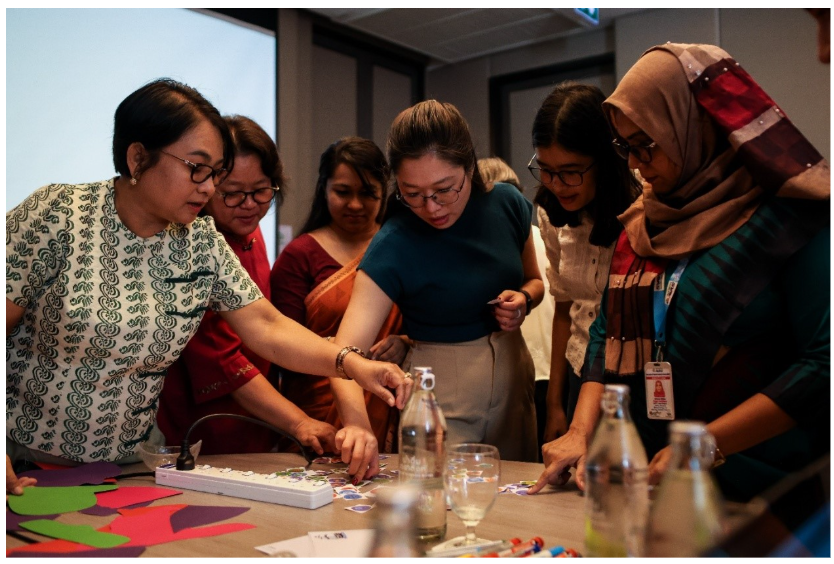
Evidence shows that the meaningful participation and leadership of women’s organizations can help deliver more gender-sensitive humanitarian programming. Their knowledge and expertise and their deep roots in the communities enable them to identify needs and capacities that might be otherwise overlooked.
Yet despite their expertise, women’s organizations face severe challenges:
- Exclusion from Power Spaces: Women’s organizations are often excluded from mainstream humanitarian coordination mechanisms and systems, leading to their lack of access to decision-making spaces.
- Underfunded: Women’s organizations are often underfunded. If local actors in general are not able to access sufficient quality funding in the humanitarian system, women’s organizations get an even smaller slice of the pie.
- Isolated: Many women’s organizations have limited networking and mentorship opportunities. Such isolation reduces their ability to collectively advocate and influence the system, share cross-learnings, form consortia, and engage with other humanitarian actors.
Without addressing these barriers, humanitarian action risks overlooking the experts best placed to understand and respond to the gendered impacts of emergencies. Women’s organizations therefore play a vital role in addressing the gender-based inequalities within the humanitarian system.
SHIFT Asia tackles the above challenges faced by women’s organizations, providing opportunities for funding, network building, capacity strengthening, and improved visibility for their work.
What Positive Changes Are We Seeing?
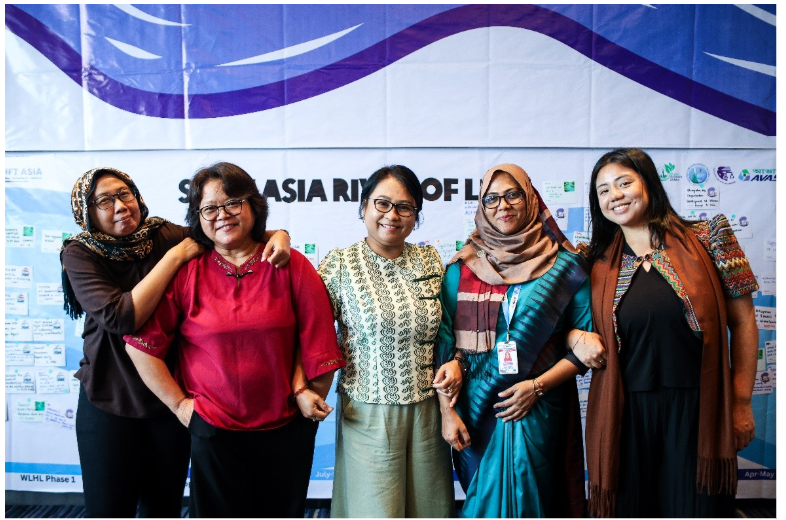
Though we know the long-term change we are seeking takes time, SHIFT Asia is already demonstrating that women’s organizations are crucial architects in creating a more inclusive, effective, and locally led humanitarian systems (check out these wonderful stories about our women leaders from SHIFT Asia). And more importantly, the women’s organizations and Oxfam teams participating in SHIFT Asia are creating innovative pathways to better integrate a gender-transformative vision of the humanitarian system, informed by close communication with local communities. For instance:
- In Bangladesh, they are experimenting with a network-to-network pathway. Working with our partner AVAS, the project connects the Bangladesh Women's Humanitarian Platform – a national network of women-led organizations – with the Women Community Leadership Platform, a grassroots network. Together, these networks are engaging in national advocacy informed by strong community knowledge to influence disaster preparedness and response. As shared by our partner, “Women are at the forefront of disaster preparedness initiatives.”
- In Indonesia, we are seeing the power of a multi-stakeholder collaboration, specifically women’s organizations and local humanitarian actors. Through our partner LBH Apik, the project established the Women’s Leadership for Humanitarian Coalition (WLHL), the country’s first national network dedicated to women’s local humanitarian leadership. The Coalition has become a recognized voice within Indonesia’s humanitarian system, ensuring women’s leadership and expertise are reflected in humanitarian policy and practice. Our partner notes that, “First responders in emergencies are frequently non-humanitarian actors, reinforcing the need for broader partnership models.”
- In Myanmar, humanitarian leadership is growing from women’s self-help groups, as a form of “business-to-leadership pathway.” Across two conflict-affected states, our program builds power from within, reinforcing local women-led and community-based organizations' own capacities. Our partner counseled: “Women should have agency, resilience, and capacity, to be a leader.” By combining economic empowerment with leadership development and flexible funding, they are piloting a pathway that is rooted in women drawing strength from one another.
- In the Philippines, feminist humanitarian leadership is being fostered by working with local government leaders through a fellowship training model. Through this fellowship program led by our partner Bayi Inc., local policymakers and elected officials are improving their understanding of women’s local humanitarian leadership. As stated by a woman leader, “As women leaders, let’s not allow ourselves to be sidelined. We should join in, take part, and speak up, because we believe that women can lead.”
- Across the region, SHIFT Asia is rethinking who controls humanitarian funding. Through the project’s Humanitarian Action Fund, women’s organizations can access flexible funding to respond quickly to the needs they see in their own communities. The fund is jointly managed by Oxfam and women’s organizations, with the long-term vision of transitioning governance entirely to women’s organizations themselves. (To see the Fund in action, read Flower Aceh's story from Indonesia.)
The Bottom Line
One year into SHIFT Asia, we are beginning to see what becomes possible when women's organizations have the resources, relationships, and recognition to lead. The lesson extends well beyond the Asia region. If we are serious about building humanitarian systems that are more locally led, accountable, and effective, then investing in women's organizations should not be the exception – it should be the norm. The question is no longer whether women can lead humanitarian response. It is whether the humanitarian system is ready to make space for that leadership.
 via feedly