For too long, communities in Central America’s Dry Corridor relied on centralized weather information and warning systems that arrived too late or were not adapted to the local context.
This post is part of the Localization (R)evolution blog series, exploring why locally led humanitarian action – rooted in power, rights, and accountability – is essential to transforming the humanitarian system (read the introduction here and other posts in the series here).
The Case of Central America’s Dry Corridor
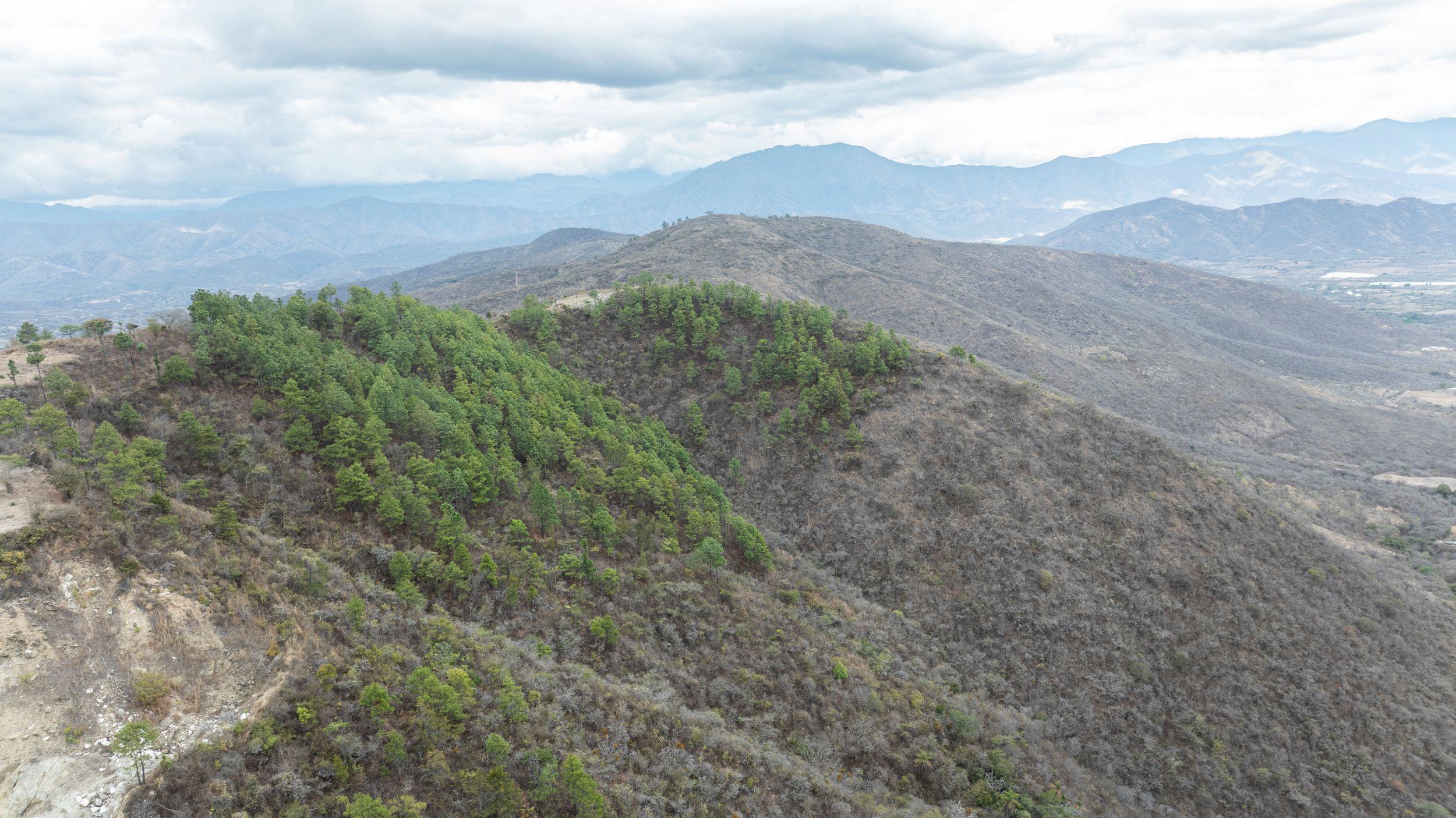
The Dry Corridor extends across more than 30% of Central America, spanning Guatemala, El Salvador, Honduras and Nicaragua, and is home to more than 10 million people. Irregular weather patterns associated with the El Niño-Southern Oscillation (ENSO) affect between 1.7 and 2.7 million people in the region each year, as most of the population depends on subsistence farming and can lose up to 80% of their crop.
Bottom line, many communities fall short on their own food production, leaving them annually food insecure. Every year, slow-onset droughts loom over millions of lives. Inhabitants of the hilly parts of the Dry Corridor used to rely on the ancestral ‘milpa’ system, an intercropping system also known as ‘The Three Sisters’ but now are facing water scarcity. Today, people no longer have control over this ancestral way of producing food. The stakes are high for people who live in remote locations with no access to alternative livelihoods.
Because an entire region is affected by the intensity of El Niño phenomenon for many decades, Oxfam in Central America has started a regional program: Acción Temprana en Centroamérica (ATECA), meaning Early Action in Central America. This multi-country program partners with four local non-government organizations (NGOs), ASEDECHI and Corazón del Maiz in Guatemala and Fundación Campo and CORDES in El Salvador, to strengthen communities’ disaster preparedness and their capacity to respond to and recover from recurring small-scale disasters induced by the El Niño/la Niña oscillation.
Back in 2017, when the Oxfam and local partner teams carried out a capacity and vulnerability assessment across 48 communities, many participants did not perceive drought as a disaster or a risk, but simply as an everyday phenomenon that they had lived with for decades. The first step toward change was to recognize that what had become normalized was, in fact, a recurring climate risk that shaped people’s lives, livelihoods, and food security, and one that could be anticipated and prepared for. Since then, Oxfam and partners have been supporting families with livelihood strengthening and diversification. By adapting their livelihoods to unpredictable climate changes, families can produce diverse, nutritious food without worrying about getting the next meal.
Local Humanitarian Leadership in Central America Fighting for Climate Resilience
Understanding the habits and customs of communities, even speaking Mayan languages (Achí and Chortí), the local NGOs have been very intentional in including women and youth – who have long been excluded. Before ATECA, these groups never felt confident enough to participate in communal decision-making spaces to voice their needs. The local NGOs established Women’s Leadership Schools, youth vocational training, and delivered Disaster Risk Reduction trainings to equip Community Emergency Committees’ (CEC) members with technical capacities.
Youth and women have gradually taken on strategic leadership roles. The recent Oxfam evaluation (available in English and Spanish) conducted in 2025 reported that 90% of the women interviewed in El Salvador reported feeling “confident to act proactively.” In Guatemala, 38 women formally joined their respective Community Development Councils, an existing government-accredited structure that has integrated CEC members and DRR responsibilities, with one woman assuming presidency of this local structure. Youth and women have become key players in their local Early Warning Systems through technological monitoring, as part of the Network of Local Weather Observers.
From Local Leadership to Community Power
What the 2025 evaluation report also tells us is that, instead of reacting to disasters the new community leaders have now put preventive measures in place and manage a community-based Early Warning System. Without the support of local NGOs to effectively equip and establish an efficient weather data system, this community-managed Early Warning System would not exist. With rain gauges spread around different geographical locations (highlands, midland, and lowlands) and climate monitoring devices, youth, female and male farmers have taken ownership of the system, collecting weather information, interpreting it, and sharing it widely on a daily basis. With this simple yet essential technology, community leaders use the information to take the necessary actions to adapt their practices, protecting the cycle of the plants and their production, supporting hundreds of families.
Weather Observers are volunteer women and men from highly climate-vulnerable communities who generate localized climate information and directly and periodically share it in different spaces. When the Weather Observers share this information, which is not collected anywhere else in the country, and submit it to the municipal Civil Defense Services, it then feeds into the district’s Agroclimatic Roundtables and reaches the National Meteorological Services, where it is considered in their weather forecasts.
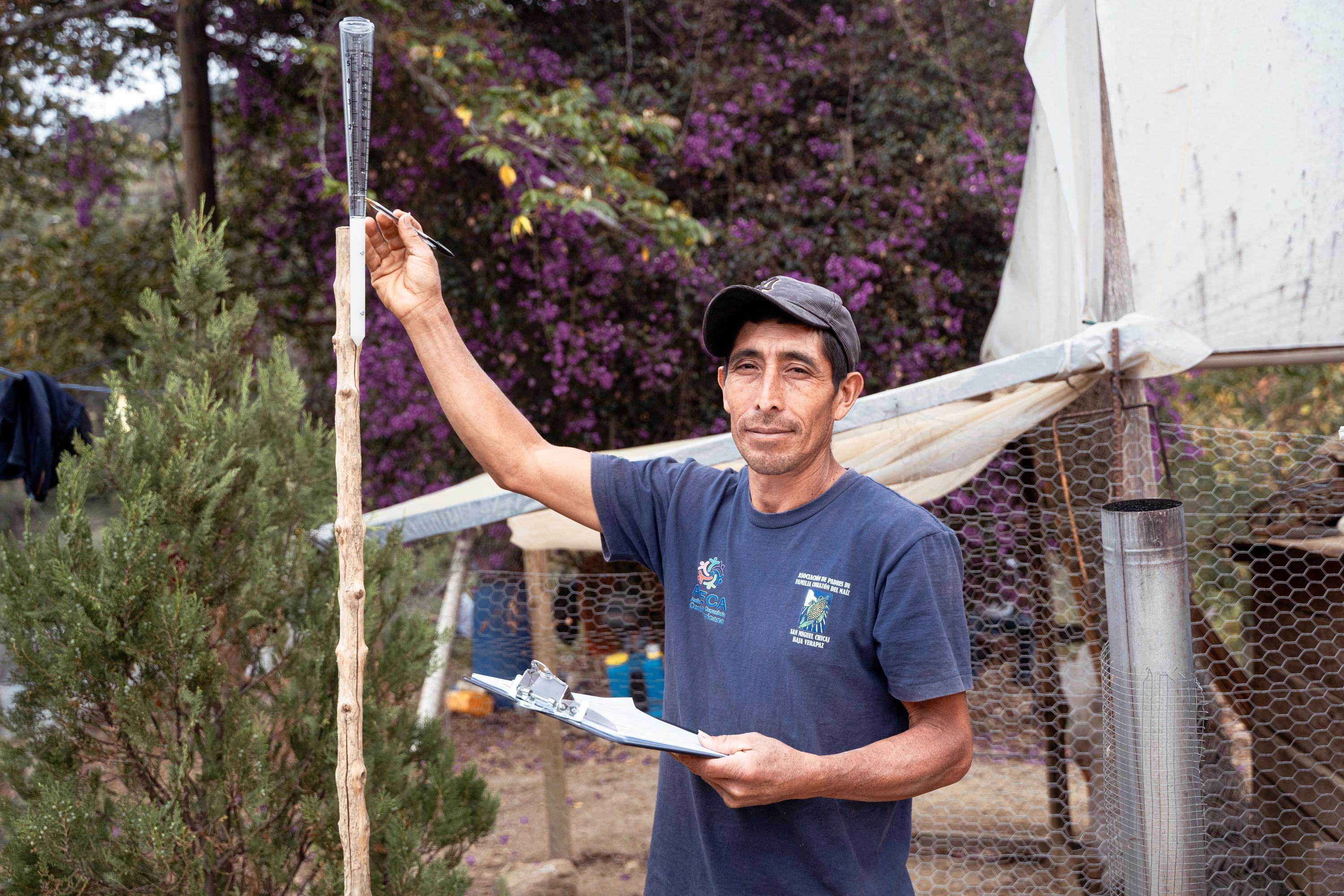
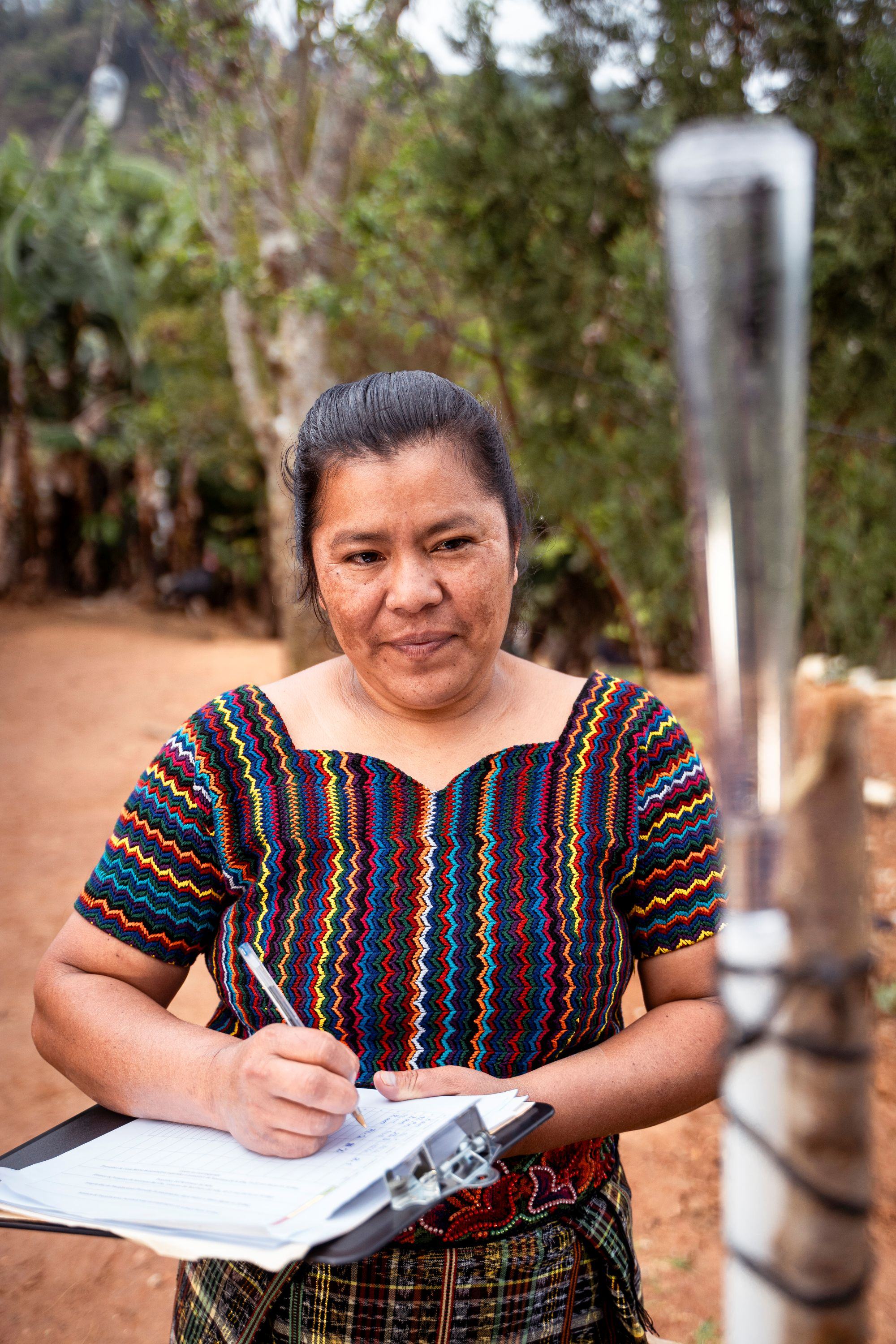
The daily work of weather observers pays off, as Don Mario Rene from the Xesiguan community shared: “During last year's drought, my data showed rainfall was short, so I waited. My neighbour cleared and fertilized his field, even though I told him not to. In the end, I harvested more. This shows that the system works."
Experiencing improved food production and food security by analyzing and learning from this weather information every day, community members have gained confidence not only in this new system, but also in their own technical skills and knowledge. Trusting the new climate-smart agricultural practices and combining them with their own ancestral knowledge has life-saving and economic benefits. Doña Ingrid Karina, from the highlands of the Chixím community, says, “Now we harvest fruits, corn, and beans. We don’t have to buy everything at the market anymore; there are savings and income. In my family, we rarely face shortages because we find ways to produce.”
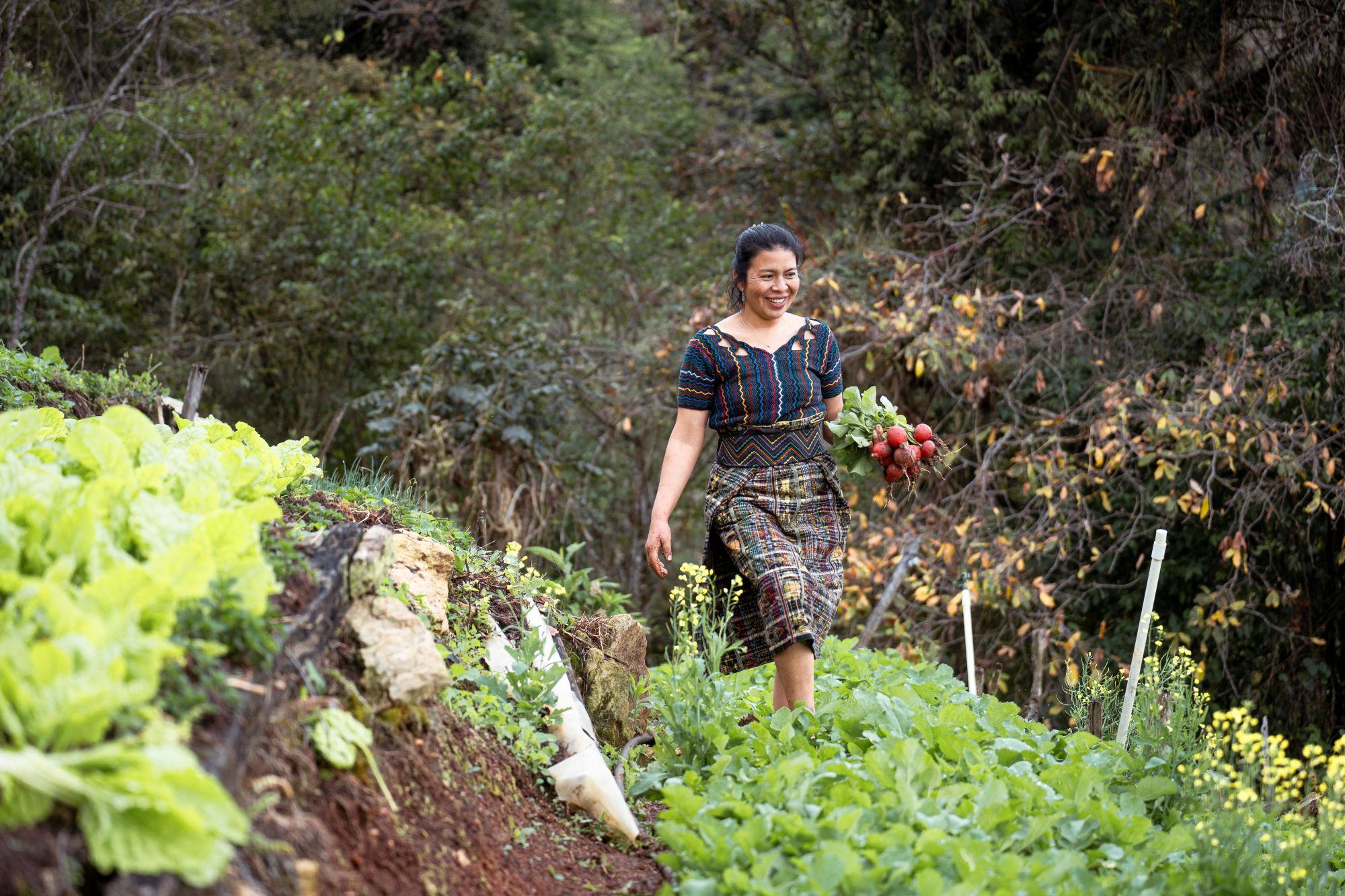
Empowered Local Leadership Transforms Community Resilience and Food Security
This empowering experience is life-changing for the current inhabitants of the Dry Corridor, especially for younger generations who were often forced to migrate for lack of opportunities at home. Now they have more choices. Local NGOs have enabled women, men and youth to lead from a place of confidence and clarity, ultimately serving the needs of their families, neighboring farmers, and thus, their communities, translating into greater food security.
Our data has found that in Guatemala, there is a 20% increase in households being food secure, from 8% in 2023 to 28% in 2025. Additionally, while in 2023, 32% of households in the country spent between 75% and 100% of their income solely on food to cope with food scarcity, the 2025 data show that this percentage decreased to 18% of households. In El Salvador, the data shows the elimination of severe food insecurity at the household level in 2025, with a reduction in marginal food insecurity from 72.5% in 2023 to 70.5% in 2025. There was also a slight improvement with 22.6% of households in 2025 being food secure, compared to 20% in 2023.
Over nine years of working with local organizations, we are proud of our transformative results:
- Improved food production and food security through more localized early warning systems, new climate smart agricultural skills/approaches and knowledge promoted by the project combined with ancestral knowledge;
- Opened a more inclusive leadership and governance for women and youth leaders who now sit in formal and informal DRRM structures and providing much needed solutions to community issues;
- Broke the cycle of chronic loss and communities are now into pre-emptive mindsets and not reactive, able to anticipate and prepare for future disasters better.
 via feedly