For years, the humanitarian system has talked about localization. In Dodhara Chandani municipality in Nepal, the question today is no longer why it matters, but how it works.
This post is part of the Localization (R)evolution blog series, exploring why locally led humanitarian action – rooted in power, rights, and accountability – is essential to transforming the humanitarian system (read the introduction here and other posts in the series here). Dwarika Prasad Ghimire is the Disaster Risk Reduction and Humanitarian Coordinator of Oxfam in Nepal.
Here, the leadership by Community Disaster Management Committees is taking root in the practical community actions that are shaping a safer and more empowered place for its people.
The Strengthening Community Preparedness, Rapid Response and Recovery (SCOP-R3) project, jointly implemented by Oxfam and our local partner National Environment and Equity Development Society (NEEDS) Nepal, operationalizes Nepal’s 2017 Disaster Risk Reduction and Management (DRRM) Act in the 40 most vulnerable communities across four municipalities in far-western Nepal – Dodhara Chandani, Bhimdatta, and Beldandi in Kanchanpur, alongside Parshuram in Dadeldhura.
In this blog, we do a deep dive into the experiences of Dodhara Chandani and reflect on the power of community-led leadership, now more important than ever considering the catastrophic floods that devastated Nepal in August 2026.
From National Commitments to Local Practice
Nepal’s DRRM Act was a huge shift for the country, as it moved emergency relief from a centralized model that only focused on post-disaster response to one that prioritizes more comprehensive – yet devolved – risk management.
Devolution allows local authorities to tailor their risk reduction plans, be in control of their own budgets, and continuously build their capacities to act before a disaster happens and not after. This way, risks can be reduced or even avoided. Or if a disaster lands, losses are reduced with proper and proactive risk management. As such, the DRRM Act empowers local leadership, especially local government, enabling municipalities to play a stronger role alongside civil society in planning and responding to risks.
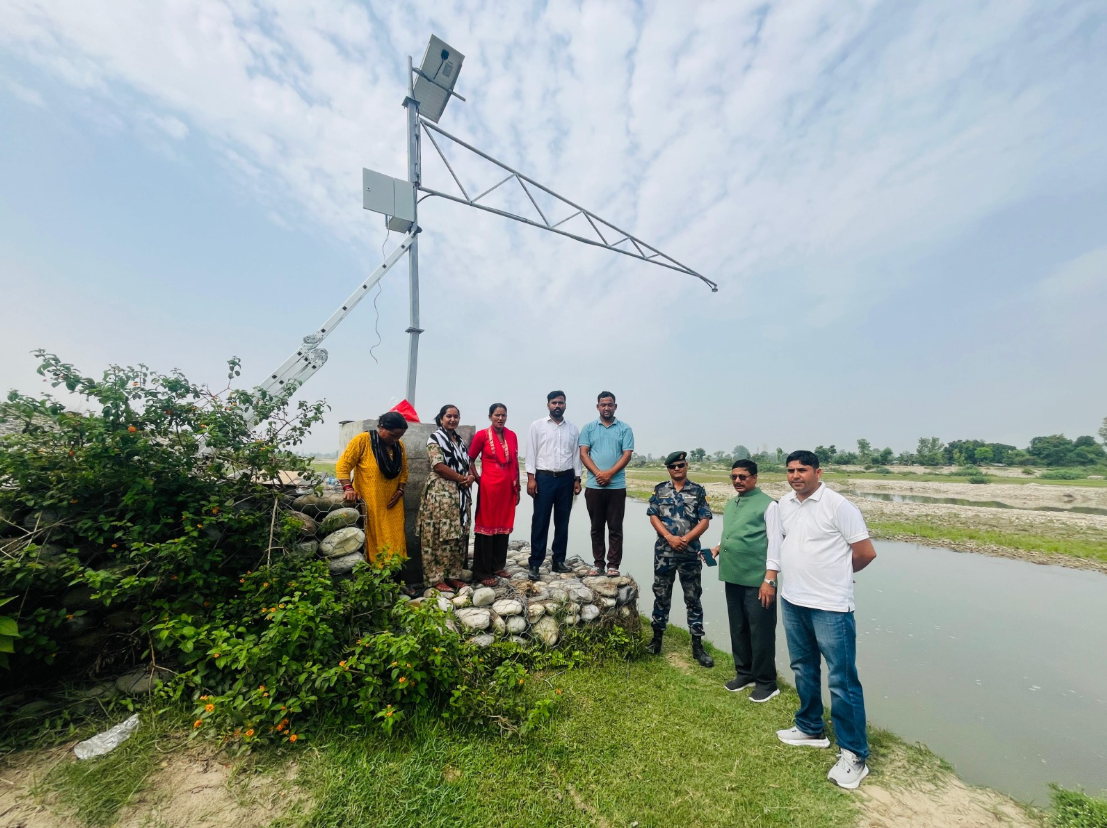
Supported by such strong national policies and frameworks, the Dodhara Chandani municipality has strengthened its preparedness and response systems over the past six years through locally developed plans, guidelines, and coordination mechanisms.
Local communities are leading this shift through practical, locally adapted solutions. These include using plants such as vetiver grass and sugarcane to strengthen riverbanks and reduce erosion, raising hand pumps to protect drinking water from flooding, and building elevated shelters (known locally as Machan structures) to provide safe spaces during floods.
Saving Lives: The Power of Community Leadership
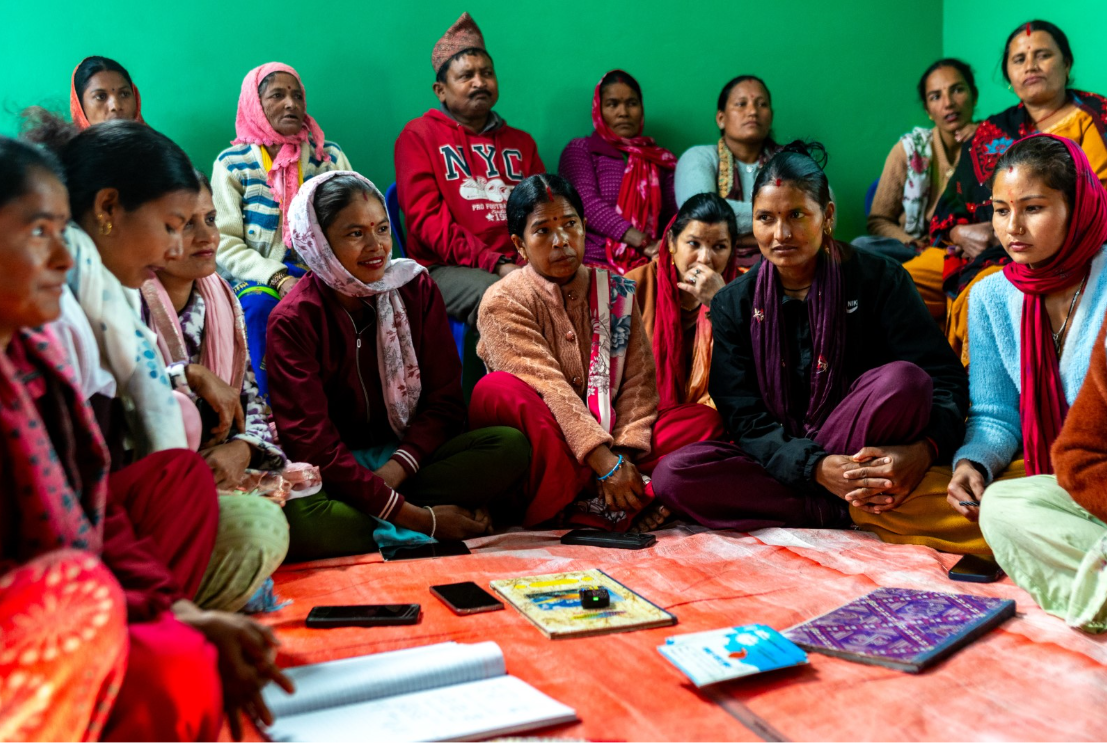
In Dodhara Chandani, community priorities are identified through participatory planning with Community Disaster Management Committees (CDMCs), which Oxfam and NEEDS Nepal have helped to set up.
CDMCs – community networks – have become the enduring heart of disaster risk governance across 10 partner communities in Dodhara Chandani. Beyond responding to active crises, frontline CDMC leaders, who are elected by their communities, convene monthly planning circles, run realistic simulation exercises, and carry their neighbors' real-world priorities directly into municipal budgeting halls.
CDMCs put a bottom-up approach into practice by connecting local communities to municipal decision-making. CDMCs help ensure that community voices and priorities are heard and reflected in local government decisions. This has contributed to a significant increase in the integration of community disaster plans into municipal systems, including budgets. In Dodhara Chandani, by 2026, all 10 partner communities were integrated into municipal Disaster Preparedness and Response Plans.
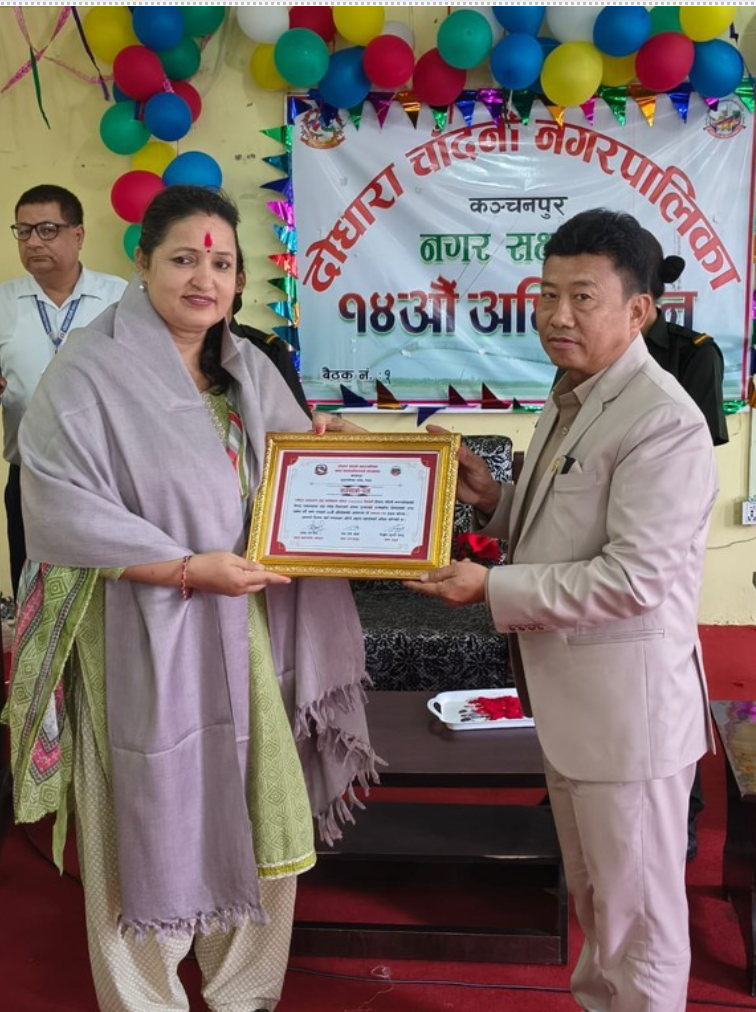
CDMCs also play a big role in improving early warning systems (EWS). They bridge Local Emergency Operation Centres (LEOCs) and vulnerable groups through a two-way EWS: CDMC leaders decode sensor data into door-to-door alerts, while relaying real-time field observations back to municipal decision-makers to trigger immediate, targeted evacuation actions.
By combining radar data with local knowledge, communities receive timely, easy-to-understand warnings through text messages and sirens, while local observations are shared with officials to improve early warning systems and help people take action.
The power of this approach was demonstrated during the earlier September 2025 floods, when local warnings and quick CDMC action helped safely evacuate 79 Dodhara Chandani households before floodwaters arrived. The combined work of LEOCs with CDMCs transforms multi-hazard early warning systems into swift, compassionate anticipatory action.
Women’s leadership is a key aspect of the CDMCs, with women leading 24 of the 40 CDMCs across the project’s four municipalities, and making up over half of total membership, ensuring that the safety and dignity of women, children, and vulnerable groups shape every decision.
Community-Led and Managed Emergency Funds
Rather than waiting for external aid, the communities in Dodhara Chandani have cultivated self-reliance from within. Residents have raised over US $12,000 for emergency response funds, over US $22,000 in community savings, and over US $2,000 to strengthen local safe shelters.
These self-managed, flexible funds allow CDMCs to address immediate, critical needs on the spot: establishing local seed banks, organizing community kitchens, and cushioning the most vulnerable families during crisis moments.
From 2025–2026, an estimated 470 households and over 1,450 individuals affected by emergencies in Dodhara Chandani have been supported by these funds. In doing so, these frontline leaders have transformed their communities from passive disaster survivors into proactive champions and investors of their own safety.
Over the past two years, the community-managed emergency funds have also gone toward helping thousands of community members take part in preparedness activities. More than 3,190 people participated in flood simulation exercises, and 1,120 stakeholders received training to strengthen preparedness, accountability, and inclusive humanitarian action.
These efforts have enabled communities to play a more active role in managing risks and building long-term resilience.
“We are no longer waiting for external assistance after disasters. Instead, we have the knowledge, skills, and confidence to take action, contribute to local decision-making, and help strengthen our community’s preparedness and resilience,” said Tika Thapa Magar, CDMC member and a community leader.
What This Means for the Future
Ultimately, our localization success is rooted in a strong community-municipality partnership, supported by national policies that prioritize local leadership.
Rather than replacing government responsibilities, Oxfam and NEEDS Nepal provide catalytic seed funding to pilot inclusive, community-led interventions. A key ongoing example is a multi-purpose evacuation shelter currently under construction through shared investment – backed by over US $13,000 in project seed capital, over US $4,500 co-financed by the municipality, about US $2,000 from the community, and locally donated land. Crucially, municipal leadership is taking ownership by embedding these co-financed models into official municipal planning frameworks, thus transforming short-term NGO seed funding into a long-term, state-led investment in resilience.
Mayor Kishor Limbu emphasized, "We are demanding real partnership, not charity. We stand ready to lead with our local expertise, legal mandate, and community trust. We look to our international partners for matching resources required to overcome aid dependency and move forward together."
From Oxfam's perspective, the CDMC-led model of preparedness and response, with municipal governments providing critical long-term ownership and support and Oxfam and civil society playing a facilitation role, provides an excellent example of complementarity. In Dodhara Chandani and across Nepal, this model is shaping a more resilient future.
 via feedly