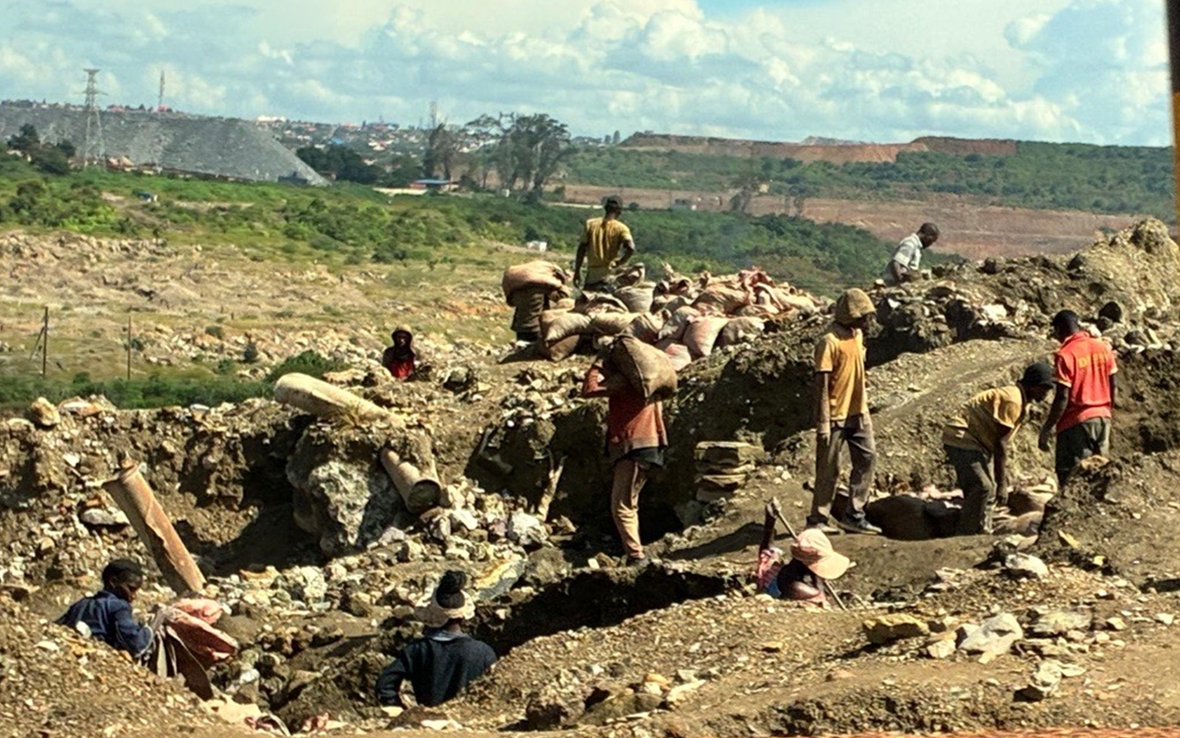
The US–DRC minerals partnership gives American investors preferential access to some of the world’s most sought-after resources. Congolese citizens deserve to know which assets are on offer, who stands to benefit, and on what terms
The Democratic Republic of Congo (DRC) is once again at the center of a global scramble for its mineral wealth. Governments and investors are racing to secure the copper, cobalt, and other minerals that power the energy transition and modern technology.
The question is the same as ever: will Congolese people share in the benefits, or will the minerals leave while poverty and inequality remain?
The US–DRC Strategic Partnership Agreement (SPA), signed in December 2025, brings this question into sharp focus. The agreement gives American investors preferential access to some of the country's most valuable mineral assets, which could shape who ultimately benefits from the DRC's mineral wealth for years to come.
This raises the stakes for transparency and public accountability. Congolese citizens and civil society need to know which resources are on the table, who is gaining access to them and on what terms—so they can have a say in decisions affecting their country's future and hold decision-makers accountable.
The DRC is currently undergoing a new “validation” under the Extractive Industries Transparency Initiative (EITI), the global standard for transparency and accountability in natural resource management. As a member of the organization, the country has to undergo this assessment every three years to evaluate its progress against the EITI Standard that it committed to uphold.
This process provides a timely opportunity to scrutinize the transparency gaps surrounding the implementation of the US–DRC partnership, alongside broader challenges in the governance of the country's extractive sector.
The stakes go way beyond DRC. Globally, decisions about access to mineral resources are increasingly shaped through broader government-to-government partnerships, memoranda of understanding, and other complex commercial arrangements. The DRC's ongoing EITI Validation is therefore an important test of whether the EITI can keep pace with these evolving practices—and ensure that new forms of mineral deals do not escape public scrutiny.
A major deal mired in opacity
The partnership between the US and DRC, forged against a backdrop of the escalating conflict in eastern DRC, grants US investors preferential access to Congo mineral resources, in exchange for broadly-worded commitments to support peace and security.
The process that produced the partnership already raises important transparency concerns. In DRC, the deal has been subject to civic pressure and a constitutional challenge for undermining sovereignty and bypassing democratic oversight. In the US, more than 50 members of Congress have also criticized the lack of congressional consultation and transparency surrounding the agreement, while raising concerns about human rights abuses and environmental degradation linked to mining in the DRC.
There is also a fundamental question about the bargain itself. While the DRC’s commitments are explicit and binding (with deadlines, percentages and export quotas), the US’ security assurances are far less defined and merely aspirational. What exactly will the DRC receive in return for opening its mineral assets, and how will the partnership deliver on its promises of peace and stability?
These questions make transparency over how the partnership is operationalized all the more important. And while the overall agreement is public, major decisions about its implementation are not.
At the heart of the agreement is the Strategic Asset Reserve (SAR): a list of mineral assets that the DRC is required to make available to potential US and US-aligned investors, who get a right of first offer—along with several other unprecedented perks.
This initial “shopping list” has been developed but is not public. Neither government has disclosed project or concession names, geographic locations, or development stages or ownership structures. Nor is there a comprehensive public inventory linking assets and projects identified under the partnership to subsequent awards, investments, transactions, and contracts.
Jean-Pierre Okenda, Oxfam partner and the Executive Director of Sentinel says, “Without knowing which assets are being offered, to whom and on what terms, Congolese citizens and civil society cannot meaningfully assess decisions over their country’s mineral wealth, or challenge arrangements that may put private interests ahead of the public good.”
Transparency matters particularly when mineral assets are in conflict-affected areas. One of the assets reportedly offered to US investors is Rubaya, a major coltan mining area in eastern DRC, at the heart of the ongoing conflict. Mineral exploitation and illicit trade in the area have helped finance the conflict, raising important questions about who stands to benefit from future investments, on what terms, and how to ensure they do not fuel further conflict and human rights abuses. Making the SAR and subsequent agreements public is essential so Congolese citizens can see what is being negotiated and hold those responsible accountable.
A test for the credibility of EITI
EITI has helped drive significant progress in transparency and accountability in the DRC's mining sector, bringing previously opaque contracts and transactions into the public domain and enabling greater scrutiny by civil society. Its impact has gone beyond mere disclosure, including when it comes to the landmark 2008 Sicomines deal, a large minerals-for-infrastructure development agreement which helped cement China’s influence over DRC’s critical minerals and set the template for wider China-Africa economic engagement. An EITI-backed investigation into the deal exposed major imbalances and helped inform a renegotiation that secured an additional $4 billion in infrastructure commitments. In 2022, the DRC received a high overall score in its EITI Validation.
The US–DRC partnership now presents a critical test. Can EITI effectively capture and scrutinize the complex web of decisions, agreements and transactions through which such a consequential deal is being implemented?
In a submission to the EITI Validation Committee, Oxfam and civil society partners argue that the current lack of transparency and traceability raises serious questions about compliance with existing EITI requirements – and that the SAR and other implementation agreements need to be disclosed. The EITI Standard requires countries to disclose key information about how their natural resources are governed, including who holds mining rights, how those rights are awarded or transferred, the contracts governing their exploitation, and the companies and individuals who ultimately benefit. These disclosures are intended to allow citizens to follow decisions over their country's resources and hold governments and companies accountable.
These requirements are not limited to documents formally labeled as mining contracts or licenses. What matters is what an agreement does, not what it is called. Where arrangements define the terms for extracting and commercializing oil, gas and minerals—as is the case with the SAR and related agreements — they must be disclosed. Otherwise, some of the most important decisions about the country’s natural resources will escape scrutiny simply because they have a different name.
How the EITI responds in the DRC could set an important precedent for transparency and accountability in mineral deals around the world.
If agreements, companies, ownership structures, and anticipated revenue flows associated with a partnership of this magnitude remain undisclosed, EITI must clearly identify those gaps, reflect them in the DRC’s validation assessment, and call for corrective action.
The EITI International Secretariat is expected to release a draft assessment in December 2026 or January 2027, followed by a period for stakeholder feedback before a final decision by the EITI Board, potentially in spring 2027.
EITI cannot reward general commitments to transparency while some of the most consequential decisions over mineral resources remain beyond public scrutiny.



 via feedly